

This election, many adults with disabilities won't be allowed to vote. That should change
- Written by The Conversation

This Saturday, most Australians over 18 will vote in the federal election. The right to participate in elections is enshrined in international and domestic human rights law.
Under Australia’s Commonwealth Electoral Act, all citizens over 18 are eligible to be entered on the electoral roll and vote in federal elections. Failure to do so, if you meet these requirements, is an offence.
There are some exceptions. Along with people convicted of serious crimes, people of “unsound mind” are ineligible to enrol to vote if they are unable to understand the electoral process or significance of voting.
Typically, this includes people with incapacitating mental illness (such as untreated schizophrenia), or intellectual disability.
Some people won’t be enrolled to begin with. For some, a carer will apply to have them removed from the roll. Endorsement from a medical practitioner is required to have someone removed from the roll.
A need for law reform
“Unsound mind” is archaic language. It predates the 1918 Commonwealth Electoral Act. Historically, people of “unsound mind” were presumed to lack capacity to make legally recognised decisions. Alongside other outdated stigmatising terminology such as “idiocy”, “insanity” and “lunacy”, “unsound mind” has largely been removed from Australian law.
Further statutory reform has responded to the international Convention on the Rights of Persons with Disability, to which Australia is a signatory. This convention fundamentally changed the law of capacity, including for people with intellectual disability.
Rather than paternalistically excluding people with disability from decision-making processes by denying them participation or permitting substitute decision-makers to make decisions on their behalf, the Convention requires that people with disability be supported in making their own decisions. That support includes provision of information at an appropriate level.
Guardianship laws, mental health laws, and medical decision-making laws throughout Australia have been updated to reflect a shift towards supported and participative models of decision-making for people with disability.
They reflect both the Convention on the Rights of Persons with Disability, and modern understandings of capacity, intellectual disability and mental illness. The Convention requires that people with disability have the right to participate in political processes, such as voting in elections.
Many Australians with intellectual disability have previously been declared ineligible to enrol under historic “unsound mind” provisions.
To become eligible, these Australians are required to positively demonstrate they can understand the electoral system, and the significance of voting. That usually requires medical evidence. No other group of prospective voters in Australia is required to demonstrate its competence to vote in this way, regardless of education, literacy, language or engagement with the political system.
This creates a discriminatory barrier for people with disability. It is inconsistent with international human rights law and other Australian law.
Read more: From 'demented' to 'person with dementia': how and why the language of disability changed
Is it feasible?
The Australian Law Reform Commission, in its inquiry into equality, capacity and disability in law, called for reform to the Electoral Act.
In its interim report, the commission called for the legislation to be reworded. Its final report called for the exclusion to be repealed entirely, recognising that retention in any form is discriminatory. Proposals for either reform have so far fallen on deaf ears, notwithstanding support from the Australian Electoral Commission.
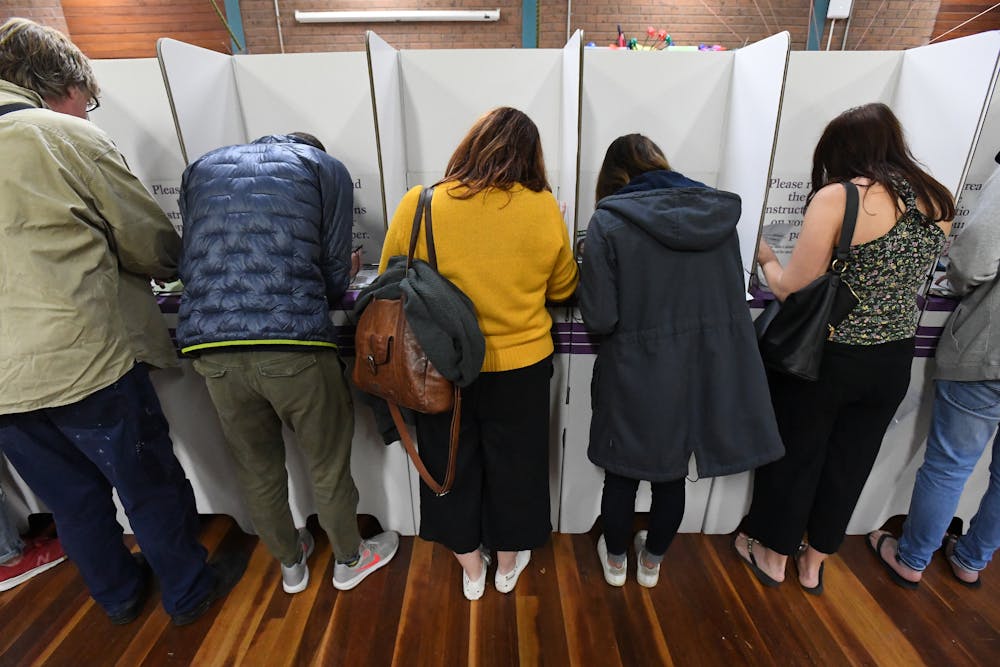
Australia is not the only country waiting to modernise its electoral laws. A range of other countries continue to exclude people with “intellectual disability” from voting. Several European nations such as France have progressively updated their laws. Change is feasible. It does not require that people who are permanently incapable of voting, vote.
One common argument against reforming voting laws to be more inclusive is a perception it would undermine the integrity of the electoral process. Critics claim people with intellectual disability are vulnerable to coercion and accordingly likely to be inappropriately influenced to vote a particular way. Others speculate institutions, such as aged-care facilities, may pressure their clients and residents to vote according to corporate objectives.
In the United Kingdom, where voting is not mandatory, laws that prevented people from voting due to lack of mental capacity were overturned. People with any form of intellectual disability are eligible to vote. However, the law also expressly states decisions on whether to vote, and how to vote, remain the person’s alone. No one is entitled to exercise a vote on their behalf.
If electoral integrity is a concern, the solution is to ensure safeguards adequately protect voters with intellectual disability from inappropriate coercion. Give people with disability an option as to whether they vote, and provide support. Do not deny them access to a fundamental human right.


