

Oyster ‘blood’ holds promise for combating drug-resistant superbugs: new research
- Written by The Conversation
Superbugs that are resistant to existing antibiotics are a growing health problem around the world. Globally, nearly five million people die from antimicrobial resistant infections each year. The annual toll of antimicrobial resistant infections is expected to rise by 70%, with an estimated 40 million deaths between now and 2050.
To address this, researchers must discover new antibiotics and agents that improve the efficacy of existing antibiotics.
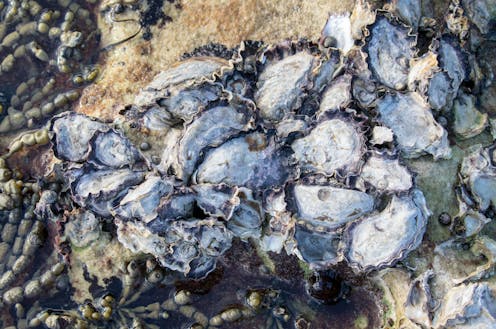
Hope may come from a surprising source: oysters.
In new research published today in PLOS ONE, we show that antimicrobial proteins isolated from oyster hemolymph (the equivalent of blood) can kill certain bacteria responsible for a range of infections. The proteins can also improve the efficacy of conventional antibiotics against problematic bacteria species.
Robust, resistant bacteria cause common infections
Pneumonia is an acute infection of the lungs, commonly caused by Streptococcus pneumoniae. It is the leading cause of death among children under five years of age, and a common cause of hospitalisation and death in older people.
Upper respiratory tract infections, such as tonsillitis, are also common. In fact, they are the most frequent reason children are prescribed antibiotics.
Persistent skin and throat infections caused by Streptococcus pyogenes can lead to the development of acute rheumatic fever and rheumatic heart disease.
The high prevalence of these bacterial infections and overuse of antibiotics have contributed to the evolution of drug-resistant bacteria. This makes these infections difficult to treat.
The formation of biofilms compounds the problem.
Biofilms are populations of millions of bacterial cells embedded in a self-secreted substance that sticks to surfaces. They protect bacteria from the host’s immune system – and from antibiotics. Almost all bacterial infections involve biofilms.
Because of this, new antibiotic treatments that can inhibit, disrupt or penetrate biofilms are very valuable.

Oysters as a source of new antimicrobial agents
Over 90% of antibiotics we currently use are derived from nature. The same is true for over 65% of antibiotics under recent development.
In the search for new antimicrobial drugs, researchers will usually start by looking at organisms that produce antimicrobial chemicals for self defence.
Oysters are exposed to high concentrations of diverse microorganisms in their natural marine environment. Because of this, they have evolved strong immune defences. For example, they rely heavily on antimicrobial proteins and strings of molecules known as peptides in their hemolymph (blood) to protect them from infection.
Research over the past few decades has found that oyster hemolymph contains antiviral and antibacterial proteins and peptides. These are active against a range of human and marine pathogens.
Oysters, along with other molluscs, plants and animals, have a long history of use as traditional medicines to treat infectious diseases.
In traditional Chinese medicine, various preparations from oysters are recommended for treating symptoms of respiratory infection and inflammatory conditions. Oysters have also played a significant role in the health of Indigenous people in Australia for millennia. This provides useful clues for drug discovery.
Our latest research confirms that antimicrobial proteins in the hemolymph of Sydney rock oysters (Saccostrea glomerata) are particularly effective at killing Streptococcus spp. bacteria.
The proteins were also effective at inhibiting Streptococcus spp. biofilm formation and could penetrate biofilms that had already formed.
 Extracting hemolymph from a Sydney rock oyster.
Kate Summer
Extracting hemolymph from a Sydney rock oyster.
Kate Summer
Boosting the drugs we have
To improve how well currently available drugs work, they are increasingly combined with antimicrobial peptides and proteins.
These peptides and proteins can disrupt bacterial cell membranes, helping conventional antibiotics reach their targets more easily. Many of these proteins and peptides can also boost the host’s immune system, making treatment even more effective.
We tested Sydney rock oyster hemolymph proteins for activity against a range of bacterial pathogens in combination with different commercially available antibiotics. At very low concentrations, the proteins improved the effectiveness of antibiotics between two- and 32-fold.
The results were particularly promising for Streptococcus spp., Staphylococcus aureus (also known as “golden staph”, a primary cause of drug-resistant skin and bloodstream infections) and Pseudomonas aeruginosa (a major problem for immune-compromised patients with cystic fibrosis). There were also no toxic effects on healthy human cells.
 The hemolymph proteins of Sydney rock oysters are able to kill Streptococcus spp. bacteria embedded in biofilms, as well as improve the efficacy of conventional antibiotics against a range of bacteria species.
Kate Summer
The hemolymph proteins of Sydney rock oysters are able to kill Streptococcus spp. bacteria embedded in biofilms, as well as improve the efficacy of conventional antibiotics against a range of bacteria species.
Kate Summer
What next?
Overall, oyster hemolymph proteins hold promise for future development as an antimicrobial therapy. They can kill pathogens embedded in biofilms, work in synergy with conventional antibiotics, and are non-toxic.
However, more work is needed, including testing in animals and clinical human trials.
Sustainable supply of the proteins for research and medical use is an important consideration, but this is helped by the fact Sydney rock oysters are commercially available.
The results of this work present an opportunity for pharmaceutical and aquaculture industries to collaborate with researchers on new, more effective antibiotics development.


