

Australians may soon be able to fly with their pets in a plane’s cabin – but not every pet is suited to it
- Written by The Conversation
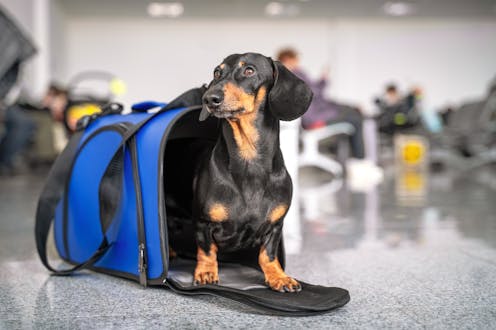
In some overseas countries, pets can travel with their owners in a plane’s cabin, in a carrier under a seat.
In Australia, pets must travel in the luggage hold of aircraft. But this may soon change. Virgin Australia last year announced it would allow small dogs and cats into the cabin from 2025. Now the plan has progressed further. The Australian newspaper this week reported two rows of Virgin aircraft will be designated as “pet friendly” on selected flights, although more work is needed before a trial begins.
Only small dogs or cats would be allowed in the cabin. They would have to be contained in a carrier and placed under the seat in front of their owner. The combined weight of pet and carrier must be no more than 8 kilograms.
Australians love their pets, and increasingly holiday with them. But the “pets on planes” policy is not without challenges. So how can the experience be made as smooth as possible for pets, pet owners and other passengers?

What are the potential negatives for pets?
Research shows pets kept in the luggage or cargo areas of planes face risks. These include being deprived of food and water and being exposed to extreme temperatures. Pet owners may also give their pets sedatives or other drugs to calm them down, which can cause harm.
Allowing pets to travel in a plane’s cabin, close to their owner, is likely to reduce these risks.
But the plane’s cabin is still an unfamiliar environment with strange smells, sounds and people. So, some dogs and cats may still find the experience stressful.
There are ways to minimise this. They include getting pets used to being in containers (a process known as “habituation”) and using positive reinforcement training to encourage pets to remain calm.
If a dog or cat is already anxious and you want to travel with them, it’s best to consult a vet well before you fly.
Some dogs and cats may benefit from a sedative or medication that reduces anxiety. This must be done in consultation with your vet, because these drugs may be dangerous for animals with certain health conditions.
Pets can die on flights
One study on dogs transported by air into the United States (many of which travelled in the cabin as “hand luggage”) found that every year, some pets die.
Media outlets have reported several instances of pets that died while travelling in the cargo hold or while left on the tarmac before their flight.
One risk factor occurs when the pet is a “brachycephalic” breed. These are dogs or cats with flat and shortened noses, such as pugs and the Boston terrier.
These animals have abnormal airways, meaning they are at higher risk of hyperthermia if the temperature is high, and can also have breathing difficulties.

What should pet owners do before flying?
Should the “pets on planes” policy at Virgin Australia come to pass, it’s still not clear how exactly practicalities such as offering food, water or managing toileting will work. The airline is yet to release these details.
It’s possible you would need to “fast” your pet before arriving at the airport – in other words, refrain from feeding them for a period of time, to reduce the chance they will vomit or need to defecate.
Melbourne and Sydney airports have reportedly upgraded their “pet relief” facilities – essentially pet toilets – to cope with increased future demand.
Guide and assistance dogs that currently use these facilities will always have priority. These dogs are trained to toilet on cue, making it much easier to travel with them.
If you and your pet would like to be frequent flyers, consider getting this type of training.
 If your pet gets anxious, consult a vet well before you fly.
MarinaTr/Shutterstock
If your pet gets anxious, consult a vet well before you fly.
MarinaTr/Shutterstock
What about other passengers?
Virgin Australia is still consulting doctors and vets on their policy, including about risks to passengers with dog or cat allergies.
Clearly, the allergy risk to humans must be well managed – especially when in the air, isolated from medical services.
Air is filtered more frequently in plane cabins than in homes. However, even very low levels of an allergen can trigger severe reactions such as anaphylaxis or asthma attacks in some people. Also, pet dander (from shed skin cells) can remain on seats long after a pet has gone.
What’s more, some people may be frightened of, or have a phobia relating to dogs or cats. Phobia to dogs may be linked to a direct traumatic event. People with serious phobias may not be able to enter a plane if they need to walk past a dog or cat. So, placement of the pets in cabins will need to be carefully considered.
Pets are part of human lives and will likely be integrated more into transport in future, including planes. Careful planning will allow us to maximise the benefits for all: people travelling with and without pets, and the animals themselves.


