

Do cats have ‘friends’, or do they always vie for territory? Animal experts weigh in
- Written by The Conversation

Domestic cats have been living alongside humans for an estimated 10,000 years, first as rodent control and then as the couch-warmers we know and love. A far cry from the lone predator lifestyle of their ancestors, today millions of cats worldwide live within human families. More than 30% of households in the United States and Australia own a cat.
We highly value the relationships we share with these furry companions, frequently considering them friends, family members or even “children”.
And this sentiment may be shared, with cats demonstrating affection through seeking out our company, physical contact and engaging in play. Like a secret language between friends, there is even evidence to suggest cats have developed specific vocalisations to communicate with their owners.
Despite this, cats are typically seen as aloof and elusive. But how true is this? Do cats form friendships beyond us?
A complex recipe
Firstly, what does a cat friendship look like? Behaviours that may indicate friendship between two cats include social grooming, such as licking each other’s fur, head rubbing, spending time together and playing together.
In contrast, behaviours such as charging, fighting or chasing may indicate a disagreement is brewing or already underway.
Cats also have very few “conflict defusing” signals in their behavioural repertoire, choosing to run away or avoid each other rather than attempt reconciliation during conflict.
Such disharmony can be stressful for the cats. Many owners end up wondering how to maximise the chances of fostering a positive relationship between their cat and other animals – or if they should get them a “friend” at all.
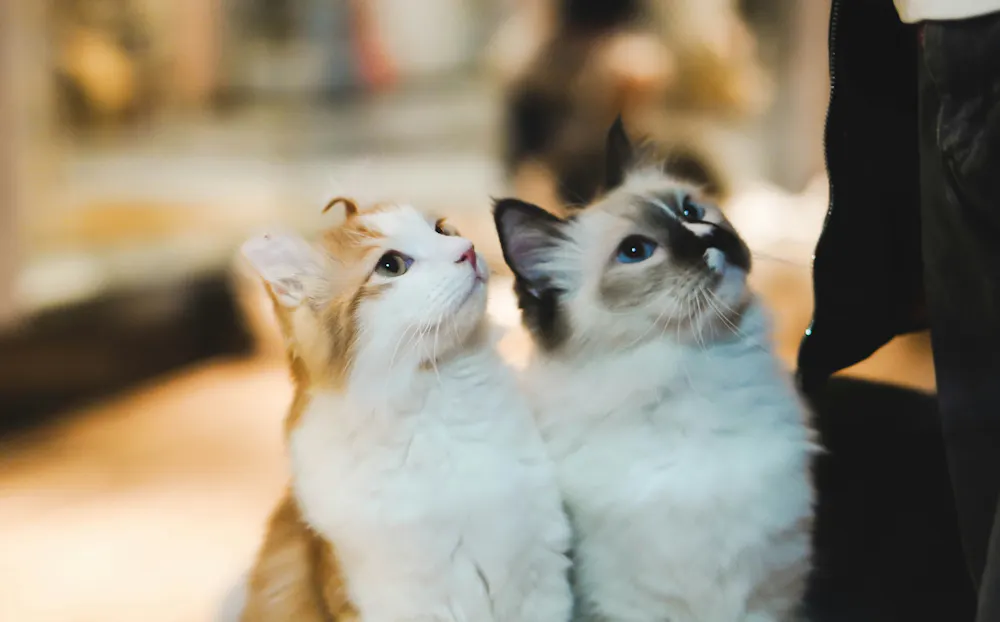
The recipe for successful feline friendships is a little complex. Research on cat dynamics in unowned, free-ranging cats has found close relationships are more likely to form – and last – if they are:
Indoor-only cats can also form strong friendships with other cats in the household. Similar to unowned free-ranging cats, cats who have been introduced to one another at a young age, who are related, and who have lived together for a long-time, are more likely to be close friends.
However, among de-sexed cats, male pairs show closer bonds than male-female pairs. Female pairs are the least likely to be friends.
Their first introduction is also the most predictive factor for positive long-term relationships.
What about outdoor friends?
We know less about the social lives of pet cats that are allowed to roam outside, but the default behaviour for most cats is one of competitiveness and territorialism.
That said, cats will typically try to avoid confrontations with others.
While some research has found interactions between roaming cats are usually calm, they can and do sometimes result in fights – particularly if food is around or they venture into an unfamiliar unowned cats’ territory.
To complicate things further, two cats are more likely to fight within a household if they are allowed outside – likely due to bringing in unfamiliar scents.
We also can’t forget the problematic relationship cats can have with native fauna, sometimes decimating local wildlife populations. In many places, especially in parts of Australia, cats are not allowed outdoors for this reason.
There are also dangers to their own health and safety if allowed to roam, such as misadventure, risks from road traffic or even disgruntled neighbours.

Cats and dogs … in harmony?
While research has mainly explored cats’ friendship with each other, cats can also have positive relationships with other species. For example, while cats and dogs are commonly depicted as mortal enemies, they can live harmoniously, often sleeping and playing together.
However, once again the importance of early exposure and slow introductions in developing this relationship cannot be overstated.
Interestingly, it also appears that indoor cats are friendlier towards their canine companions than cats allowed outdoors. This is possibly because outdoor cats may be exposed to multiple dogs, many of which aren’t happy to see them.
 Cats can have positive relationships with other species – like Alfie the cat who comes to visit Bingo the dog every day.
The Conversation
Cats can have positive relationships with other species – like Alfie the cat who comes to visit Bingo the dog every day.
The Conversation
Who’s your cat’s closest friend?
So, should your pet cat have a friend? As you may have guessed by now, the answer to cat friendships is complicated.
If you do plan to introduce your cat to a new companion, here are some suggestions to follow. Firstly, cat introductions should be slow and supervised to increase the chance of a positive first meeting.
Your house should also have plenty of safe spaces, toys and puzzle feeders, scratching posts, and separate food and litter areas in a quiet spot. Providing these resources will help prevent resource guarding (where cats stop other cats from accessing things they need or like) and reduce conflict between the animals.
At the end of the day, while cats can form friendships with other animals, they aren’t crucial to their health and happiness.
Your cat’s closest relationship is the one it has with you. Ensuring they have lots of opportunities to bask in your attention and engage in play is likely enough for even the most social of felines. After all, they have their “aloof and elusive” reputations to uphold.


