

Margaret Atwood's flamethrower of a stunt and the misguided moral certainty of book burning
- Written by The Conversation
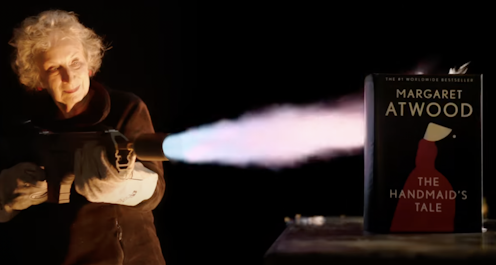
If someone had told me a few weeks ago that nearly every major news website and social media account in the English-speaking world would post a video of Margaret Atwood – the 82-year-old matron saint of Canadian letters, the subject of countless doctoral dissertations and at least ten forests worth of undergraduate student essays – firing a flamethrower at a specially made, unburnable copy of The Handmaid’s Tale, I probably would have been a bit sceptical.
Then again, in her public appearances, Atwood has always managed to combine an elegant self-possession with an unflinching, even rugged pertinacity. In every interview I have read or seen, she seems simultaneously demure and terrifying, like a diminutive grandmother – who also just happens to be holding a flamethrower.
The reason why you will have no trouble finding a video of Atwood trying and failing to burn an unburnable copy of her own book, should you be so inclined, is that she would like to draw attention to the eternal struggle against censorship.
More accurately, she would like to draw attention to an auction at Sotheby’s in which her unburnable book will be sold to the highest bidder, with all proceeds going to the writer’s organisation PEN America.
The Handmaid’s Tale has, it is worth noting, an all but unique status in the long history of literary censorship, including book burning, for it has come to exemplify the events it portrays.
It is a book about censorship that has itself been censored on too many occasions to count. It is thus, strangely but undeniably, a kind of dystopia of the real world, a speculative fantasy that describes, sometimes in frighteningly accurate detail, what is actually taking place.
Read more: Guide to the Classics: Margaret Atwood’s The Handmaid’s Tale
Power
While it has been lodged in popular consciousness as a decidedly political novel, anyone who reads The Handmaid’s Tale will quickly realise that it is a profoundly ambiguous work. The book offers moral certainty about nothing save the need for constant vigilance and suspicion with respect to all manifestations of moral certainty.
For Atwood, it is clear that moral certainty is a characteristic of power, and that power can take many forms, both violent and coercive.
And, beyond the purely negative suppression of dangerous or forbidden knowledge, book burning has always been a way of positively communicating power – part of the theatre of authority designed to instil both fear and awe, both a trembling compliance and a perverse fascination.
Indeed, the burning of books has often operated as a substitute for another historically common practice, namely the burning of people. We should never be allowed to forget that both the public spectacle of the conflagration of paper and the public spectacle of the conflagration of flesh have generally taken place with the approval, and even rapacious delight, of a significant popular audience.
Perhaps in part for this reason, it appears that humans have burned books for as long as there have been books to burn, and in every culture in which paper or something of that sort has been used to preserve and transmit information.
Naturally, the Nazis are everyone’s go to example. But did you know that on August 23, 1956, the American Food and Drug Administration executed a court order by placing six tons of books by the renegade psychiatrist Wilhelm Reich in a public incinerator on 25th Street in New York City?
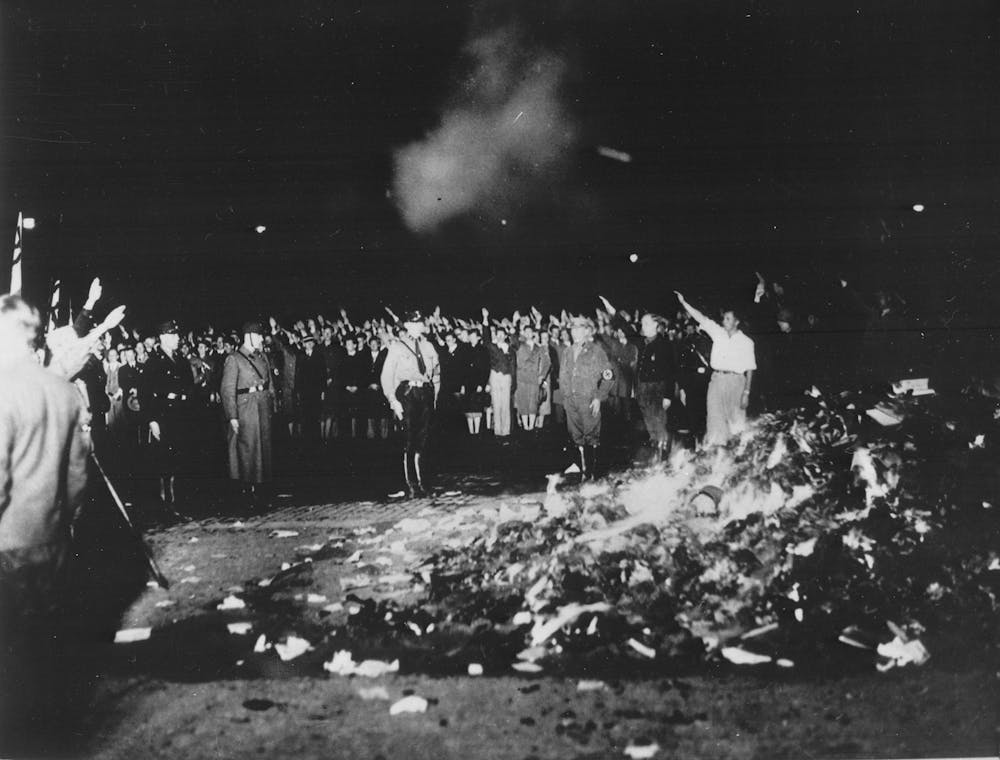
They included copies of his classic studies The Sexual Revolution, Character Analysis, and The Mass Psychology of Fascism – the last one being a book someone should also consider making an unburnable copy of right around now.
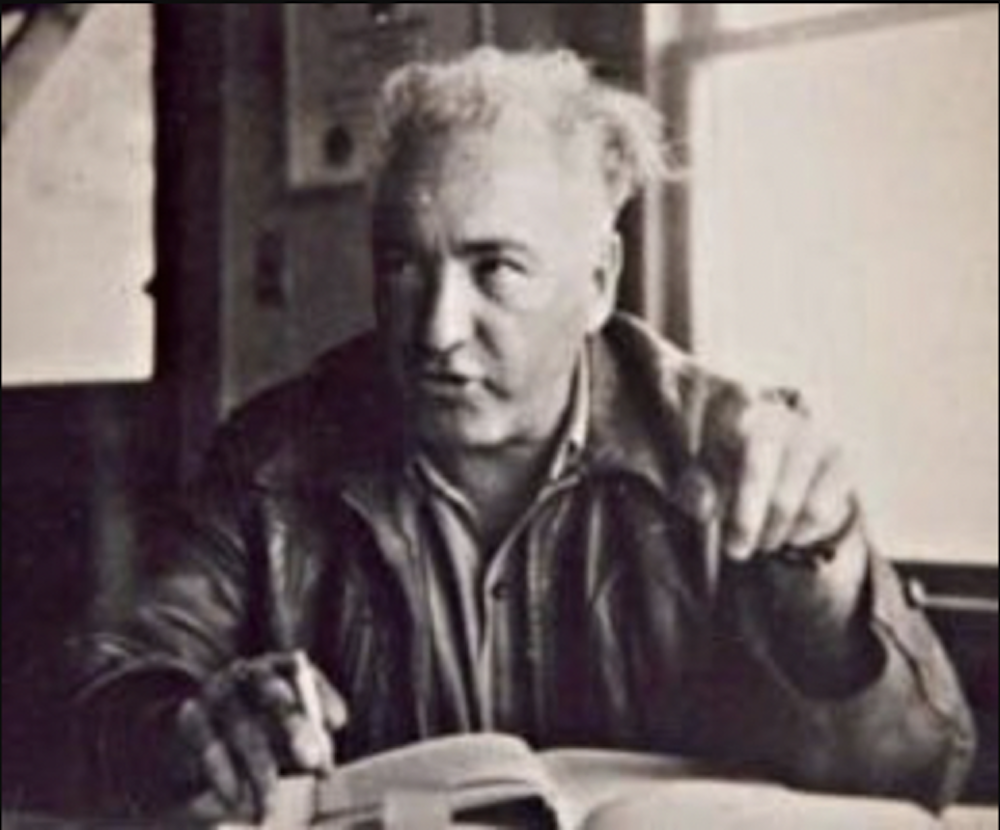 Wilhelm Reich at his desk.
Wikimedia Commons
Wilhelm Reich at his desk.
Wikimedia Commons
The dictatorship of Augusto Pinochet in Chile – notoriously propped up by the American regime and defended by the fathers of neoliberalism – also burned books, including academic studies of Cubism, which were presumably consigned to the flames on the assumption that they had something to do with Cuba.
The Venn diagram of those who burn books and those who read them is typically two separate circles.
Read more: World politics explainer: Pinochet's Chile
Words as weapons
But in Atwood’s curious stunt, she is the one holding the flamethrower. In doing so, she might be unintentionally reminding us of a completely different tradition of book burning: that of authors burning or asking others to burn their own books, or at least those papers and documents that we so suggestively call their “literary remains”.
Franz Kafka is undoubtedly the most famous example. We know of his work today almost exclusively because his literary executor Max Brod refused to fulfil his expressed desire to have his papers burned after his death.
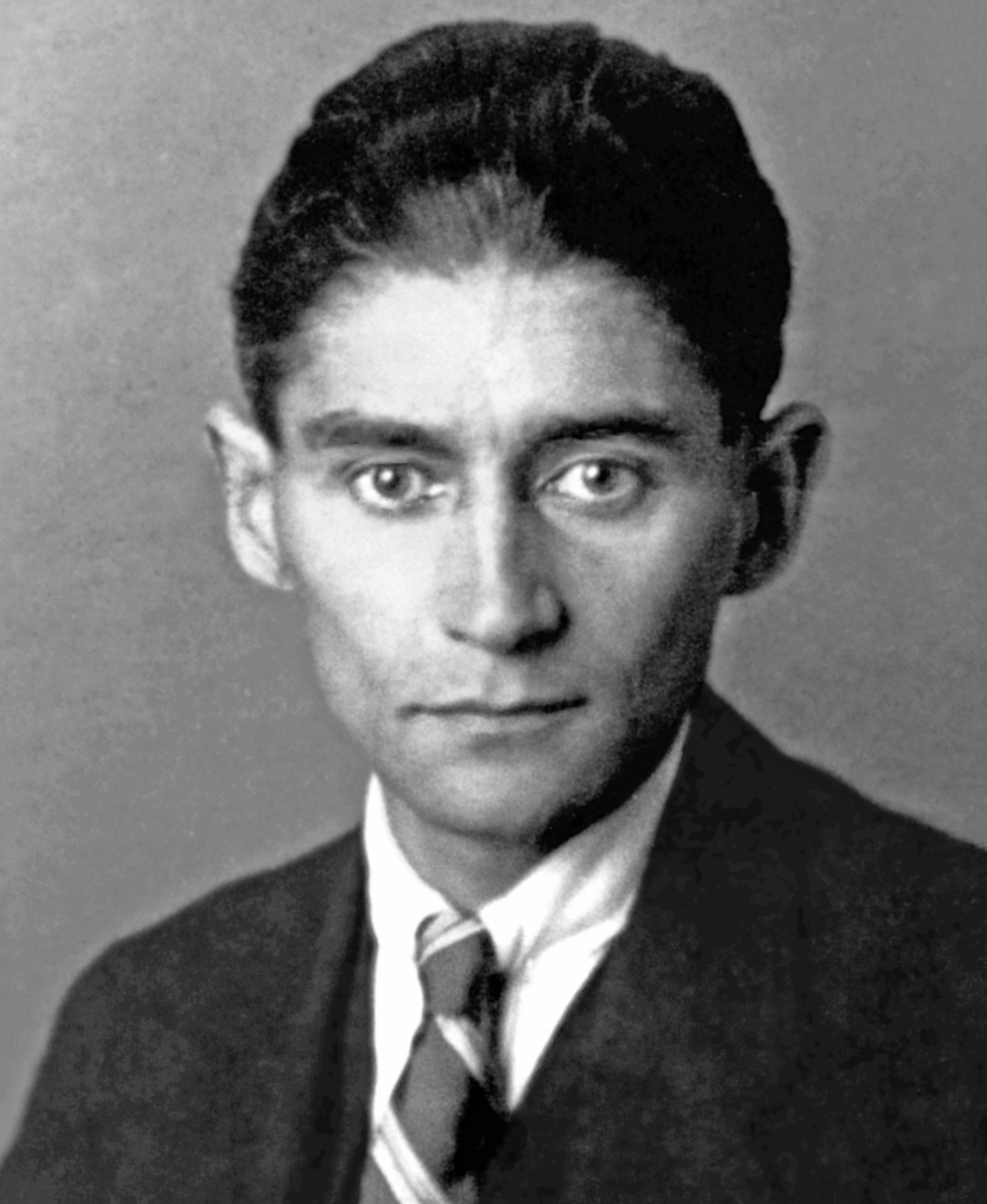 The last known portrait of Franz Kafka.
Wikimedia Commons
The last known portrait of Franz Kafka.
Wikimedia Commons
Brod’s justification was quite brilliant. It introduces some difficult questions about the concept of the will and the nature of posthumous consent. While he admitted that Kafka had made the request, Brod proposed that Kafka had asked him because he knew he would not follow through.
Maybe we all share this desire to have our past, or at least elements of our past, forgotten rather than remembered. And maybe the very social media that spread the video of Atwood and her flamethrower like fire, as it were, make that increasingly impossible.
In either case, we would be remiss to think that book burning itself is a memory, much less a joke.
For it is happening today. And it will unquestionably happen again. And the only real weapon we have against it is to write continuously about it.


