

What is hyaluronic acid – and is it OK for kids and teens to use this common skincare ingredient?
- Written by The Conversation
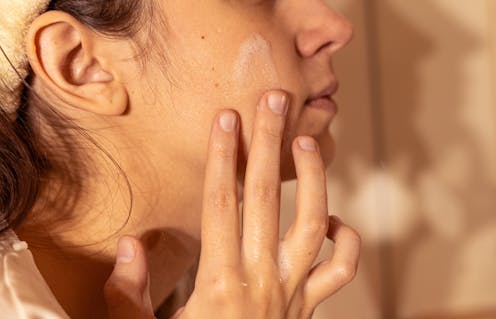
Earlier this month, Kmart pulled a “hyaluronic acid cleansing balm” from its shelves, after a teen who used the skincare product was hospitalised, reporting eye pain and blurred vision. It’s unclear what ingredient caused this reaction.
In a statement, Kmart said it was removing the product while conducting an investigation. The retailer also said:
We want to assure our customers that our cosmetics are designed to ensure that they comply with both Australian and European requirements on ingredients.
Hyaluronic acid – despite the name – is a gentle ingredient commonly used in skincare products.
But what does hyaluronic acid do to your skin as a skincare ingredient? And is it safe for tweens and teens?
What is hyaluronic acid?
Hyaluronic acid is a glycosaminoglycan – a sugar-based molecule found naturally in the skin, eyes, joint fluid and connective tissue.
It plays a key role in hydrating the skin and tissues, lubricating our joints and supporting tissue repair.
Beyond cosmetics, hyaluronic acid is used in drug delivery, regenerative medicine, wound repair, and to treat conditions such as atherosclerosis (where the arterial walls harden and narrow) and osteoarthritis (a degenerative joint disease).
It is also a key ingredient in many eye drops and contact lens care solutions.
How is it used in skincare?
While the word “acid” might suggest it is harsh and potentially damaging to the skin, hyaluronic acid is not used in its acidic form in skincare products. It is usually used in its salt form, sodium hyaluronate.
In skincare, active acids such as salicylic acid usually lower the skin’s pH and exfoliate it by breaking the bonds between dead skin cells.
Hyaluronic acid, in contrast, is used to hydrate the skin. It is a humectant, an ingredient that attracts and retains water molecules.
Hyaluronic acid has three qualities that make it suitable for skincare: it’s soluble (can be dissolved in water), biocompatible (meaning it’s not harmful to the body), and biodegradable (naturally breaks down into non-toxic, simpler substances).
It is usually safe and well-tolerated, meaning it has very few side effects.
In skincare products, hyaluronic is used in different forms. Smaller hyaluronic molecules can penetrate deeper into the skin and hydrate the lower levels. In products this is often advertised as “anti-ageing”, because it stimulates the production of collagen (a structural protein in the skin), and helps to improve elasticity and reduce the appearance of fine lines.
Larger hyaluronic acid molecules remain on the skin’s surface and have an immediate hydrating effect, preventing water evaporation from the skin.
Any risks?
Hyaluronic acid is generally a safe ingredient, even for sensitive skin. But products advertised as “hyaluronic acid skincare” may contain other ingredients which can cause irritation.
In particular, fragrances, preservatives and surfactants (ingredients that produce foam and help wash away oil and dirt) may be safe for skin but burn or otherwise irritate the eyes.
This is because the cornea and conjuctiva (the thin membrane covering the eye) are much more sensitive than the skin.
How are skincare ingredients regulated?
Unlike medicines and products used for therapeutic reasons, which are regulated by the Therapeutic Goods Administration (TGA), general cosmetic products do not require pre-market safety testing or approval.
Instead, companies need to register their business with the Australian Industrial Chemicals Introduction Scheme and verify that their ingredients are not banned or restricted in Australia.
This creates a potential gap where defective products remain on the market, only to be recalled after adverse reactions occur.
Are these products appropriate for children?
Most scientific research on active ingredients – including hyaluronic acid – has been evaluated in older populations. This leaves a gap in understanding how they affect teen and preteen skin.
Many products are designed for ageing and/or specific skin types, and are largely unnecessary for children and younger people.
In some cases, they can potentially be harmful to their skin. For example, unless prescribed by a dermatologist, it’s advisable for young people to avoid retinoid products (containing retinol or retinal) as they can cause redness, peeling and drying.
Similarly, products with alpha hydroxy acids can cause irritation, itching, redness and may worsen acne in young skin.
So, what should younger people look for?
Preteens and teens should avoid products containing active ingredients such as retinol, vitamin C, alpha- and beta- hydroxy acids, and peptides, as well as those labelled with terms such as anti-ageing, wrinkle-reducing, brightening, or firming.
To keep skin clean and protected, teenagers can use a good cleanser, a simple moisturiser and a broad spectrum SPF 30 or 50 sunscreen.
It’s best to opt for gentle, fragrance-free cleansers and moisturisers suitable for all skin types. Consulting with a pharmacist can provide personalised recommendations based on individual skin needs.


