

‘Germany is back’: 3 ways NZ can benefit from Europe’s renewed centre of power
- Written by The Conversation
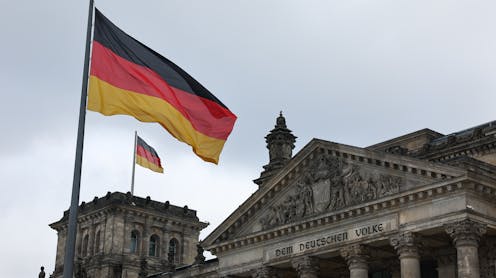
It’s unlikely many New Zealanders paid close attention to Foreign Minister Winston Peters’ statement late last year that “New Zealand and Germany are committed to enhancing their partnership”.
Peters had been visiting Berlin two weeks after Donald Trump’s US election victory, but well before the real contours of the second Trump administration came into focus.
The foreign minister’s diplomatic tone may have suited the less heated atmosphere of the time, but 2025 is a very different place. With the pillars of the international system New Zealand depends on crumbling, strong ties with an active Germany at the heart of Europe begin to look more important.
Germans, too, are grappling with the same uncertainties – not least Friedrich Merz, the Christian Democratic Union party leader who is all but certain to be the new chancellor when coalition negotiations conclude.
Among the most pro-American of Europe’s leaders, Merz will enter the Chancellery at a time when US relations are fraught. Even before the February election results were finalised, he acknowledged this new reality, calling to “strengthen Europe as quickly as possible so that […] we can really achieve independence from the USA”.
With Trump’s reversal of US support for Ukraine, his “might is right” foreign policy and hostile trade tariffs, Germany and the European Union have begun to reassess their place in the new world order. New Zealand will be watching closely.
Easing the ‘debt brake’
Former German Chancellor Olaf Scholz called Russia’s 2022 invasion of Ukraine a Zeitenwende – a watershed moment from which “the world afterwards will no longer be the same as the world before”. Trump 2.0 has only reinforced this rupture.
Responding to events even before assuming office, Merz (supported by the Social Democratic Party and the Greens) reformed Germany’s “debt brake”, or Schuldenbremse.
Restricting government borrowing to 0.35% of GDP, the brake was introduced by former chancellor Angela Merkel in 2009 to limit indebtedness following the global financial crisis. It achieved its aim, but contributed significantly to the current parlous state of German infrastructure and defence.
The reform allows greater borrowing for defence and establishes a €500 billion infrastructure fund (with €100 billion for climate and economic transformation as the price for Green support).
This is the first step in Merz’s goal to transform Germany from “a sleeping middle power to a leading middle power again”, and exercise greater leadership in the European Union alongside France and Poland.
With Emmanuel Macron’s French presidency ending in 2027, and France’s far-right gaining strength (Marine Le Pen’s recent embezzlement conviction notwithstanding), a strong Germany at the heart of Europe is essential to the maintenance of the EU and its approach to world affairs.
As an important – perhaps vital – partner for New Zealand and the Pacific, three key considerations stand out.
Pacific re-engagement
Germany’s ties with Samoa and the Pacific may be a century old, but it has recently begun looking south again, including opening an embassy in Suva in August 2023.
Now, the Trump administration’s axing of USAID has put foreign aid in the region under a cloud. Pacific states are not eligible for German bilateral development support, but are covered by more general climate change and disaster preparedness programmes.
Since stepping up Pacific engagement in 2022, Germany has also joined the Partners in the Blue Pacific and been an advocate for Pacific projects within the EU’s Global Gateway Initiative (a framework for global infrastructure investment).
Importantly, Germany does not intend to establish significant independent Pacific aid projects. Rather, it sees itself as a “force multiplier”, partnering with other donors to support their efforts. New Zealand therefore has an opportunity to both strengthen relations with Germany and add impact to its own Pacific projects.
Climate resilience
Climate change is the single greatest security threat to Pacific island states, and yet another area the US is pulling back from. But while Germany has been a strong player on climate policy, Merz has been a critic of the Greens and environmental policy in general.
The balance of power in the new Bundestag may now force a change of mindset. Merz’s coalition will hold just 328 seats in the 630-seat chamber, meaning Green support cannot be discounted. A more serious commitment to climate policy will be the price.
There is a base to work from, too. Germany co-founded the UN Group of Friends on Climate and Security with Nauru in 2018, and has identified climate issues as a driving force behind its Pacific engagement. Again, this is an area where New Zealand’s interests can be served by closer engagement with Germany.
The rules-based order
Ultimately, the international trade system and multilateral frameworks for cooperation and conflict resolution are crucial pillars of the Germany-New Zealand relationship.
With the US no longer a reliable backstop, Germany and the EU are also the bulwark for a rules-based order grounded in international law. Merz’s debt brake reform, seen as strengthening Europe, was framed in these terms:
Our friends in the EU are looking to us just as much as our adversaries and the enemies of our democratic and rules-based order.
“Germany is back,” Merz said in March. We may well see New Zealand’s foreign minister back in Germany before long, too.


