

Homelessness – the other housing crisis politicians aren’t talking about
- Written by The Conversation
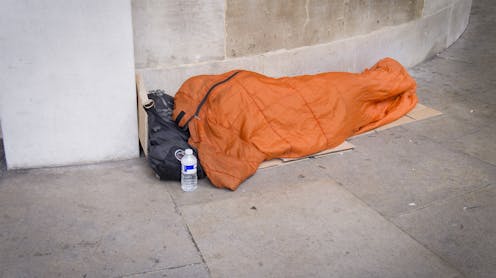
Measures to tackle homelessness in Australia have been conspicuously absent from the election campaign.
The major parties have rightly identified deep voter anxiety over high house prices. They have responded with a raft of policies, with big dollars attached, to try to make housing more affordable.
But in doing so, homelessness has been rendered a silent crisis. We all see the destitute and displaced on our city streets or sleeping in their cars. But we are hearing very little from Labor and the Coalition about how to help the 122,000 Australians who are without permanent shelter.
This is despite evidence that homeless services are witnessing significantly increased demand, with the rate of homelessness soaring above pre–pandemic levels.
Election efforts to promote home ownership should be welcomed. But they will not help Australia’s homeless, who will remain excluded from shelter, a basic human right.
Impossible dream
Although people experiencing homelessness are not a homogeneous group, they have one thing in common – poverty. People who are homeless are overwhelmingly likely to be living in financial hardship.
Even if they aspire to home ownership, their poverty means buying a home is an improbable solution to their homelessness, regardless of the various incentives on offer during an election campaign.

Further, the experience of homelessness creates health problems and barriers to accessing mainstream services. People’s lives become transient, unpredictable and often dangerous.
When homelessness is lost in major policy announcements about addressing only part of the housing crisis, we fail to confront and deal with the related harms homelessness inflicts.
Strategic plan
The first thing needed to confront the problem is a national housing and homelessness strategic plan. Governments should set measurable targets to end and prevent homelessness and avoid vague terms such as “address” or “respond”.
Overseas experience shows it can be done. A strategic plan in the United States contributed to massive reductions in homelessness among military veterans.
If a standalone homelessness plan sounds familiar, it might be because it was a Labor commitment leading up to the 2022 election. Despite an issues paper and consultation with the sector, the plan has never seen the light of day.
Housing supply
It is self-evident that ending and preventing homelessness, as the recent Australian Homelessness Monitor demonstrates, requires an increase in housing supply.
Trying to fix homelessness without providing shelter would be like trying to prevent polio without vaccines, or ending illiteracy without books.
Extra supply needs to include more social housing for people on low incomes. And permanent supportive housing, which combines affordable housing with health and social services for our most marginalised citizens.

Some progress has been made by the Albanese government, which has increased the availability of social housing and boosted subsidies to renters in the private market.
The Liberal Party’s policy platform for the election does not mention homelessness. Rather, it assumes increasing home ownership though measures like the tax deductibility of mortgage repayments for first homebuyers will be a remedy.
More than houses
Housing is critical to ending the scourge of homelessness. But it doesn’t tell the whole story.
A much broader approach is needed that recognises we don’t live siloed lives. Poor connections with a range of health, social and charitable services can drive people into homelessness, and make ending it even harder.
A more integrated approach would reduce the risk of homelessness. For example, ensuring people are not discharged from institutions such as prisons, hospitals, and foster care onto the street. The connections between homelessness and other critical areas of human need must be prioritised.
An exclusive focus on building more dwellings will never fix homelessness. This is because the problem and its solutions cut across society, ending and preventing homelessness will require a society wide approach.
Achieving that will be anything but simple.
What do we value?
Societies have worked out ways to overcome many harms to human life. Homelessness can also be remedied, but only if there is the social and political will to do so.
In Australia we achieved significant success for a short time during the COVID pandemic when many people sleeping rough were accommodated. It can be done again.
But any policies to end and prevent homelessness must confront the importance of values. Facts and data are needed to inform policy, but facts and data must always be framed by what we value in society.
The way we respond to people who are homeless would demonstrate how we value each other, and how we can achieve equity and social cohesion well beyond the election campaign.


