

‘I’m a failure’: how schema therapy tackles the deep-rooted beliefs that affect our mental health
- Written by The Conversation
If you ever find yourself stuck in repeated cycles of negative emotion, you’re not alone.
More than 40% of Australians will experience a mental health issue in their lifetime. Many are linked to deep-rooted feelings that develop from childhood experiences.
Changing these lifelong patterns takes time, energy and support. For some people, schema therapy can help.
What is schema therapy?
Schema therapy was developed in the 1990s by psychologist Jeffrey Young as an extension of cognitive behaviour therapy.
Cognitive behaviour therapy is a popular psychotherapy that helps people change problematic patterns in their thoughts and behaviour, improving how they feel.
Among psychological interventions, cognitive behaviour therapy has the strongest evidence for successfully treating the majority of mental health problems.
However, not all conditions benefit from it.
Cognitive behaviour therapy is brief (usually delivered across 10–12 sessions) and focuses on changing the “here and now”. But more complex issues – or those tied strongly to past experiences, such as multiple traumas – may need longer-term therapy.
Like cognitive behaviour therapy, schema therapy aims to help reframe unhelpful ways of thinking through regular sessions with a psychotherapist.
But instead of prioritising everyday challenges, it uncovers deep-rooted beliefs, explores how and why they formed, and how they affect day-to-day life and people’s perceptions of themselves.
What are schemas?
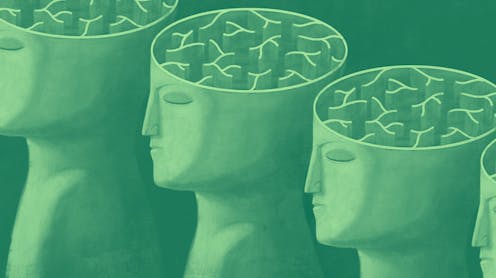
“Schemas” are mental blueprints that filter how we see ourselves, others and the world. Most of us are not consciously aware of them.
Yet schemas run deep. Problematic ones – such as “I am a failure” or “others can’t be trusted” or “the world is scary and unsafe” – can affect our mental health and lead us to destructive patterns of thinking, feeling, and behaving.
For example, someone with a “failure” schema may be highly sensitive to criticism, experience crippling anxiety, and have low self-worth. Having a “mistrust” schema may cause issues with forming close relationships and lead to loneliness and depression.
How does schema therapy work?
Therapists may specialise in schema therapy through additional training and supervision, which can lead to accreditation with the International Society of Schema Therapy.
During schema therapy you and your therapist will discuss your current concerns and develop a safe and trusting relationship before exploring the problematic schemas that are affecting you today. Schema therapy may involve talking, completing a schema questionnaire, and engaging in therapeutic activities during and in between sessions.
These activities are tailored to your situation, once you’ve explored which schemas affect you and what negative emotions arise. They are designed to help you process and heal from negative feelings such as helplessness, anger and shame.
One such activity involves using mental imagery to revisit challenging experiences in your past and to reframe how you think about them.
Another is to use empty chairs in the therapy room to speak to the different parts of yourself that are connected to the negative emotions. For example, talking to your child self, or to the side of you that tries to hide your feelings from others.
After this you will work with your therapist to come up with positive behaviour change strategies and apply them in daily life. These could include things such as reducing procrastination and self-sacrificing behaviour (prioritising others’ needs over your own), regulating emotions, and setting healthy boundaries in relationships.
Who does it work for?
Schema therapy was specifically designed to help conditions that don’t respond to cognitive behaviour therapy. Since the early nineties, it has shown promise among people experiencing chronic depression and personality disorders, and people in prisons.
Schema therapy is increasingly being used with children and adolescents, as it can effectively be adapted to suit younger age groups and help them understand the complex psychological processes involved.
Schema therapy can take more time than some other approaches, including cognitive behaviour therapy. You may be working with your therapist for several months to a year before seeing real results.
It is likely to benefit people who can commit to the time needed and prioritise their therapy tasks over other things.
Like all therapies, schema therapy will take emotional energy. As you implement changes planned in therapy, enlisting the support of close friends or family may help you achieve long-lasting change.
I’m interested in schema therapy – what next?
Maybe you are experiencing a problem that short-term therapies don’t easily address.
Perhaps you have already tried cognitive behaviour therapy and have noticed some improvements in your mental health, but realise you still have some way to go. Or it’s possible you have exhausted self-help options and are looking for something that will change the deep-rooted feelings you think are connected to your past.
Learning about different therapy approaches is the first step in finding the right help for you.
The Schema Therapy Institute Australia has a list of schema therapists practising around the country.
You may see “schema therapy” listed as a therapy approach on your local psychology practices’ web pages. You can also ask your GP about referrals using Medicare options.


