

Cannabis for therapeutic use is still out of reach for many sick New Zealanders, despite changes in the law
- Written by The Conversation
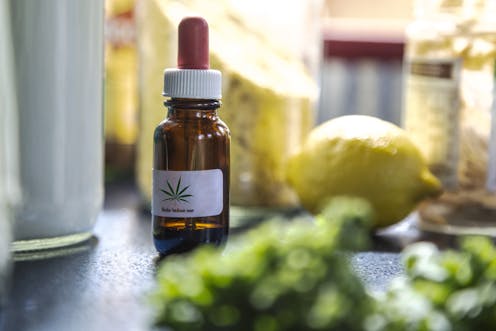
Access to cannabis-based products for medical reasons is technically legal in New Zealand. But changes to the legislation in 2020 have failed to make this potentially life altering option a reality for many.
Researchers from the University of Otago and Victoria University are exploring the therapeutic use of cannabis in New Zealand through interviews with people who use it to alleviate pain and the symptoms of debilitating illnesses.
Listening to stories of painful, highly complex medical conditions, and the efforts people have made to control their pain with various opioid-based drugs that left them feeling like zombies, has been hard.
But hearing how using cannabis products changed people’s lives and meant they could cut down or, in some cases, completely stop the use of pain killers and other drugs with crippling side effects, has been very positive.
Often these stories involved the work of so-called “green fairies” who focus on producing quality health products and have caring relationships with their patients – but who grow the cannabis illegally.
The role of ‘green fairies’
Some green fairies also have a great deal of knowledge about the potency of their products, what different varieties of cannabis can be used for, and how to prepare and use cannabis products for various conditions.
Read more: Cannabis education should aim to normalize — not prevent — safe and legal use
Those patients who have taken part in the research project so far have talked about cannabis products as a “miracle” and a “life saver” – literally, as some were so overwhelmed by living a life with chronic pain that they sought to end it.
Parents whose children suffered from difficult and sometimes debilitating medical conditions said using cannabis products eased suffering and enabled their children to live “normal” lives.
Miracles at the margins
Yet all these stories – these “miracles” – exist on the margins, as cannabis products are often unattainable outside of the underground illicit market.
Green fairies provide access for patients under constant threat of prosecution themselves.
Ironically, many of those who now sit outside the legal system advocated for the Medicinal Cannabis Bill in 2018. Their success meant the introduction of legislation aimed at large, for-profit corporations with the resources to make products following strict guidelines and complex regulations, but which excludes smaller producers.
Cannabis was first made available in New Zealand for therapeutic purposes in 2010, albeit under strict guidelines.
It was not until 2017 that cannabidiol (CBD) products containing non-psychoactive cannabis compounds were able to be prescribed more widely by general practitioners (GPs) without the approval of either the minister or the Ministry of Health.
It took a further three years for products containing tetrahydrocannabinol (THC), the psychoactive cannabis compounds, to be prescribed by GPs without the approval of the government.
For people living with painful, chronic conditions, this was a long time to wait.
Available and accessible? Not quite
The Misuse of Drugs (Medicinal Cannabis) Amendment Act of 2018 and the 2020 Medicinal Cannabis Scheme (MCS), should mean medicinal cannabis products are available and accessible.
Sadly, this is not the case for a large number of people.
Problems include the cost of prescribed cannabis products and the reluctance of GPs to prescribe them, alongside the complex regulatory and compliance scheme accompanying the new law.
Only a small number of products have been approved under the 2020 scheme, mainly due to stringent standards and licence requirements that exclude small producers and growers.
Although the cost has reduced in the past few years, the price of products – around $200 per month regardless of whether they are CBD or THC based – is still too high for those on limited incomes.
Research conducted in 2019 found fewer than 5% of respondents got their cannabis products via a GP, with most still accessing cannabis via the underground market or being gifted it by family or friends.
Only 1.56% of interview respondents involved in the current research project access cannabis products through their GP, with several citing cost as a barrier.
GPs are reluctant to prescribe cannabis as an alternative to conventional medications given the lack of clinical studies into its efficacy – despite studies showing the majority of those who used some type of cannabis product therapeutically did so to ease chronic pain.
A less complicated approach
The issues involved in developing a more affordable and accessible scheme to enable therapeutic use of cannabis in New Zealand are complex, fraught with seemingly insurmountable barriers, as well as bound by bureaucracy. However, cannabis-based products could be made available without the need for a GP’s prescriptions.
Some therapeutic cannabis products could also be reclassified as natural health products, allowing them to be purchased over the counter as has happened in the United States and Europe.
This approach could bring relief to thousands and give legitimacy to patients, growers and producers seeking to alleviate pain and suffering.
This would also allow clear labelling about dosage, CBD/THC content and warnings about incompatibility with other medications.
Patients would be able to access affordable products more easily and the need for GPs to prescribe products they may not be comfortable with is removed.
Recent legalisation on drug checking also means cannabis products could be tested to ensure some level of product safety.
Such alternative pathways urgently need to be developed, alongside clinical trials.
In the meantime, the bureaucratic processes around what is and isn’t acceptable under complex and onerous regulation grind slowly on, and those with severe and debilitating conditions risk criminalisation or financial hardship to use products that ease their suffering.


