

Whatever happened to Barbie’s feet? Podiatrists studied 2,750 dolls to find out
- Written by The Conversation
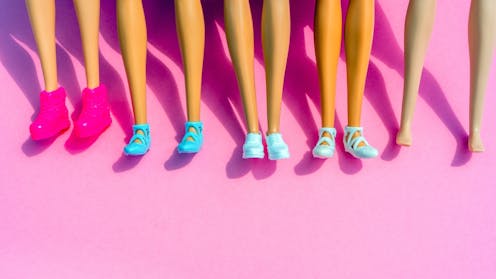
What do you get when a group of podiatrists (and shoe lovers) team up with a Barbie doll collector? A huge opportunity to explore how Barbie reflects changes in the types of shoes women wear.
It all started with the blockbuster Barbie movie in 2023. In particular, we discussed a scene when Barbie was distressed to find she didn’t have to walk on tip-toes. She could walk on flat feet.
Soon, we had designed a research project to study the feet of Barbie dolls on the market from her launch in 1959 to June 2024. That’s 2,750 Barbies in all.
How this scene from the Barbie movie inspired our research project.In our study published today, we found a general shift away from Barbie’s iconic feet – on tip-toes, ready to slip on high-heeled shoes – to flat feet for flat shoes.
We found, like many women today, Barbie “chooses” her footwear depending on what she has to do – flats for skateboarding or working as an astronaut but heels when dressing up for a night out.
We also question whether high heels that Barbie and some women choose to wear are really as bad for your health as we’ve been led to believe.
The movie that sparked the #barbiefootchallenge
Barbie’s feet – in particular her tip-toe posture – triggered TikTok’s #barbiefoottrend and #barbiefootchallenge. When the movie was released, fans made videos to re-create how Barbie stepped out of her high-heeled shoes, yet stayed on tip-toes. Margot Robbie, the Australian actor who played Barbie in the movie, was even interviewed about it.
Despite the obvious interest in Barbie’s iconic foot stance, there had been no specific research on her feet or choice of footwear.
So our research team decided to look at how Barbie’s feet had changed over the years to reflect the kinds of shoes she’s worn, and how that ties in with her different jobs and growing diversity.
What we did
One of our research team has an extensive Barbie doll collection. This guided our search through online catalogues to examine the foot positions of 2,750 Barbie dolls.
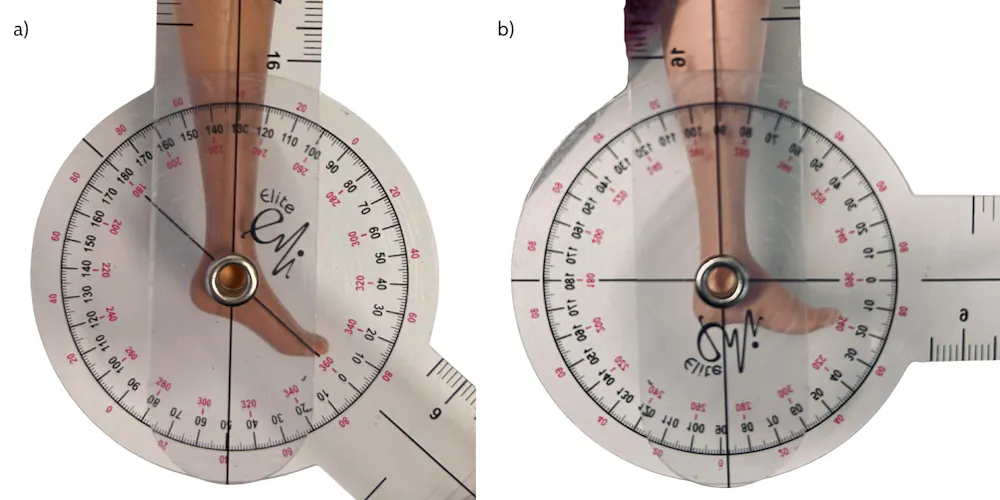
Our custom-made audit tool allowed us to classify Barbie’s foot posture as tip-toe (known as equinus) or flat.
We also looked at when the dolls were made, whether they were diverse or inclusive (for instance, represented people with disabilities), and whether Barbie was employed.
What we found
We were surprised that Barbie’s high-heel wearing foot posture was no longer the norm. Barbie does, however, still wear high heels when dressed for fun.
We found, just like Barbie in the movie, she’s made a transition from high heels (equinus foot posture) to flat shoes (flat foot posture), especially when employed.
We suggest this mirrors broader societal changes. This includes how women choose footwear according to how much they have to move in the day, and away from only wearing high heels in some workplaces.
Barbie ditched her high-heel wearing foot posture as she climbed the career ladder. In the 1960s, all Barbies tip-toed around, but by the 2020s, only 40% did.
Meanwhile, her resume expanded, going from not being represented as having a job to 33% representing real-world jobs.

She was an astronaut in 1965, before the Moon landing, and a surgeon when the vast majority of doctors in the United States were men.
US laws changed in the late 80s, supporting women to own businesses without a man’s permission. And Barbie mirrored this.
She started trading stilettos for flats and strutting into male-dominated fields. Barbie didn’t just break the mould, she kicked it off with low-heeled shoes.
Barbie also evolved to better reflect the population. We found a moderate link between her having flat feet and representing diversity or disability.
For example, she chooses a stable flat shoe when using a prosthetic limb. But it was also great to see her break footwear stereotypes by wearing high heels when using a wheelchair.
Are high heels so bad?
Some celebrities, the media and public health advice warn against wearing high heels. But we know women (and Barbie) choose to wear them from time to time. In fact it’s discussions about women’s shoe choices that also gave us the idea for this fun research.
For instance, health professionals often link high-heeled shoes with developing bunions, knee osteoarthritis, back pain or being injured.
However bunions, and knee and back pain are just as common in people who don’t wear high heels.
Studies exploring the risk of high heels are also often performed with people who don’t usually wear high heels, or during competitive sports.
We couldn’t find any investigations exploring the long-term effect of wearing high heels.
Research does show that high-heeled shoes make you walk slower and make it harder to balance.
But high heels have different features, such as heel height or shape. So different types of high heels probably present a different risk. That risk also probably differs from person to person, including how often they walk in heels.
Lessons for all shoe lovers
But back to Barbie and lessons we learned. We know Barbie is a social construct that reflects some aspects of the real world. She chooses heels when fashion is the goal and flat shoes when needing speed and stability.
Rather than demonise high heels, messages about footwear need to evolve to acknowledge choice, and trust women can balance their own priorities and needs.
As Barbie’s journey shows, women already make thoughtful shoe choices based on comfort, function and identity.


