

These 5 roadblocks are standing in the way of energy-efficient homes
- Written by The Conversation
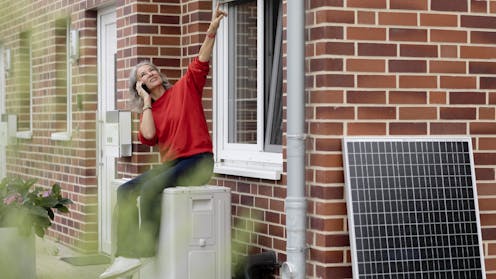
We all want homes that keep us warm in winter and cool in summer, without breaking the bank. However, Australian homes built before 2003 have a low average energy rating of 1.8 stars out of 10. This means they’re often uncomfortable to live in and expensive to run.
There’s a strong case for a “renovation wave” of home energy upgrades across Australia. Reducing the use of fossil gas and improving the energy efficiency of existing housing by nearly 50% is also central to achieving net zero emissions by 2050.
Energy-saving upgrades such as solar panels, batteries, insulation, draught-proofing and hot water heat pumps also reduce the cost of energy bills. So while there’s an upfront cost, upgrades can reduce household expenses in the long run.
We wanted to find out what’s holding people back from getting energy-saving upgrades. We surveyed 100 Australian households and interviewed 19 people about their experiences. Our new research revealed five major barriers that stop these upgrades from being accessible to most households. Suppliers, governments and community organisations can all help overcome these barriers.

1. Information about upgrades is confusing and overwhelming
Households told us the amount of information out there about energy saving upgrades is overwhelming and sometimes conflicting. There are many different types of upgrades and product choices, making it challenging to identify which options provide the best value and what to do first. People found it difficult to know what information and which suppliers to trust.
Households need clear information from a trusted source about what their homes need. Many governments internationally, such as Scotland, provide online resources and tools to provide tailored advice to help with this.
Energy upgrade programs run by neutral community organisations and councils can also help, such as Rewiring Australia’s Electrify 2515 or Geelong Sustainability’s Electric Homes Program. These programs use their expertise to vet suppliers and ensure households receive good deals and high quality products.
2. Homes need to engage multiple suppliers and tradespeople
Many households worked on their home gradually, one upgrade at a time. Each upgrade involved a labour-intensive process of researching products, selecting companies, getting quotes and managing the disruptions caused by the installation. One Sydney homeowner told us:
The process of needing both a plumber and an electrician to change to induction cooking was frustrating. [We had to] to coordinate availability times and appliance delivery.
Australians need companies that can do multiple upgrades at once, to simplify and streamline the process. In Ireland, the government helped stimulate a market for organisations that can cover all the upgrades needed by a household.
Ireland has “One Stop Shops” for home energy upgrades (Sustainable Energy Authority of Ireland)3. Households are losing opportunities for straightforward upgrades
Every year, Australians invest billions in home renovations. They spent more than A$3 billion in the December 2024 quarter alone.
One of the best times to improve your home is during major renovations or when old appliances, such as hot water systems, break down. If you’re already facing disruptions and need to spend money, it can be an easy and more cost-effective way to increase your home’s energy efficiency at the same time.
Yet our research found advice on energy-saving upgrades was rarely provided to people undertaking major renovations or emergency replacements unless they asked for it. Households needed to seek out builders, architects and tradespeople who specialised in sustainability to get advice on an energy-saving renovation.
Providing energy upgrades to homes should be a standard component of modern renovations. Otherwise, households are missing out on easy and more affordable opportunities to get these upgrades.
4. Many tradespeople lack knowledge of energy-saving upgrades
Our research found tradespeople are the most common point of contact for households. They can be a valuable source of information and advice to facilitate upgrades. However, many households reported difficulty finding tradespeople knowledgeable about – and willing to install – energy-saving upgrades.
Some upgrades, such as solar panels, require specialised workforces. Others, such as hot water heat pumps are usually installed by regular plumbers and electricians.
Some tradespeople lack the knowledge to advise on energy-saving upgrades or need training to install new technologies to a high standard. This situation leaves households vulnerable to misinformation, with a shortage of skilled workers to do their upgrades.
Tradespeople require increased support and incentives to make energy-saving measures part of their skill set. This is especially true in regional areas, where there are fewer products and workers available.
5. The costs are too high for many households
A final, significant barrier was the cost of home upgrades, which often caused households to drop out early in the process. Australian households, particularly those with less disposable income, need more help with the upfront cost.
One way to do this is through targeted government rebates, which are currently only available in some regions. Another is affordable and accessible financing, like that available in Tasmania and the ACT. The national Home Energy Upgrades Fund could also be extended to make sure available finance matches the scale of the challenge.
Also needed are long-term reforms such as mandatory disclosure of energy performance when homes are sold and minimum energy standards for rental properties, which are currently only required in some jurisdictions in Australia. When these are both addressed we can make comfortable, and affordable homes the norm rather than the exception.

A worthwhile journey
Roadblocks aside, households also shared the joy and satisfaction of completing home energy upgrades. While the journey was often difficult, those who reached the end of the road were overwhelmingly pleased with the results. A homeowner who had installed solar panels and undertaken draught-proofing and insulation in Adelaide said:
It’s nice not to have huge electricity bills, and but I find it’s that day to day stuff of actually being comfortable that makes the biggest difference.
This research was undertaken by Jaime Comber, Kamyar Soleimani, Ed Langham, Nimish Biloria, Leena Thomas and Kerryn Wilmot from the University of Technology, Sydney.


