

How Trump’s trade war is supercharging the fast fashion industry
- Written by The Conversation
When US President Donald Trump introduced sweeping new tariffs on Chinese imports the goal was to bring manufacturing back to American soil and protect local jobs.
However, this process of re-shoring is complex and requires years of investment and planning – far too slow for the world of ultra-fast fashion, where brands are used to reacting in weeks, not years.
Many clothing companies started to move production out of China during Trump’s first term. They relocated to countries such as Vietnam and Cambodia when the initial China-specific tariffs hit.
This trend accelerated with the newer “reciprocal” tariffs. Instead of re-shoring production, many fashion brands are simply sourcing from whichever country offers the lowest total cost after tariffs. The result? The ultra-fast fashion machine adapted quickly and became even more exploitative.
From Guangzhou to your wardrobe in days
Platforms such as Shein and Temu built their success by offering trend-driven clothing at shockingly low prices. A $5 dress or $3 top might seem like a bargain, but those prices hide a lot.
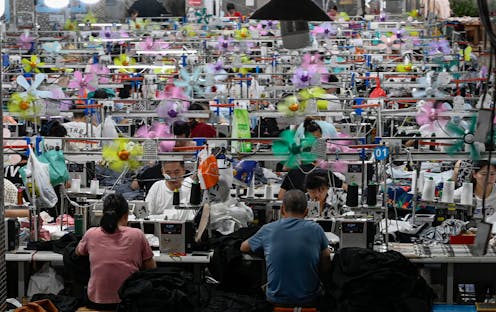
Much of Shein’s production takes place in the so-called “Shein village” in Guangzhou, China, where workers often sew for 12–14 hours a day under poor conditions to keep pace with the demand for new items.
When the US cracked down on Chinese imports, the intention was to make American-made goods more competitive. This included raising the tariff on Chinese goods as high as 145% (since paused), and closing the “de minimis” loophole, which had allowed imports under US$800 to enter tariff-free.
But these tariffs did not halt ultra-fast fashion. They just rerouted production to countries with lower tariffs and even lower labour costs. The Philippines, with a comparatively low tariff rate of 17%, emerged as a surprising alternative. However, the country can’t provide the industrial scale and infrastructure to match what China can offer.
So why does Australia matter?
Much of the cheap fashion previously bound for the US is now flooding other markets, including Australia.
Australia still allows most low-value imports to enter tax-free, and platforms such as Shein and Temu have taken full advantage. Australian consumers are among the most frequent Shein and Temu buyers per capita globally.
Just 3% of clothing is made in Australia and most labels rely on offshore manufacturing. This makes Australia an ideal target market for ultra-fast fashion imports. We have high purchasing power, lenient import rules and strong demand for low-cost style, especially due to the cost-of-living crisis.
The hidden costs of cheap clothes
The environmental impact of fast fashion is well known. However, amid the chaos of Trump’s tariff announcements, far less attention has been paid to how these policies – together with the retreat from climate commitments – worsen environmental harms, including those linked to fast fashion.
The irony is that the tariffs meant to protect American workers have, in some cases, worsened conditions for workers elsewhere. Meanwhile, consumers in Australia now benefit from faster delivery of even cheaper goods as Temu, Shein and others have improved their shipping capabilities to Australia.
Australian consumers send more than 200,000 tonnes of clothing to landfill each year. But the deeper problem is structural. The entire business model is built on exploitation and environmental damage.
Factory workers bear the brunt of cost-cutting. In the race to stay competitive, many manufacturers reduce wages and overlook hazardous working conditions.
Will ethical fashion ever compete?
Fixing these problems will require a global rethink of how fashion operates. Governments have a role in regulating disclosures about supply chains and enforcing labour standards.
Brands need to take responsibility for the conditions in their factories, whether directly owned or outsourced. Transparency is essential.
Alternatives to fast fashion are gaining traction. Clothing rentals are emerging as a promising business model that help build a more circular fashion economy. Charity-run op shops have long been a sustainable source of second-hand clothing.
Australia’s new Seamless scheme seeks to make fashion brands responsible for the full life of the clothes they sell. The aim is to help people buy, wear and recycle clothes in a more sustainable way.
Consumers also matter. If we continue to expect clothes to cost less than a cup of coffee, change will be slow. Recognising that a $5 t-shirt has hidden costs, borne by people on the factory floor and the environment, is a first step.
Some ethical brands are already showing a better way and offer clothes made under fairer conditions and with sustainable materials. These clothes are not as cheap or fast, but they represent a more conscious alternative especially for consumers concerned about synthetic fibres, toxic chemicals and environmental harm.
Trump reshuffled the deck, but did not change the game
Trump’s trade rules aim to re-balance global trade in favour of American industry, yet have cost companies more than US$34 billion in lost sales and higher costs. This cost will eventually fall on US consumers. In ultra-fast fashion, it mostly exposed how fragile and exploitative the system already was.
Today, brands such as Shein and Temu are thriving in Australia. But unless we address the systemic inequalities in fashion production and rethink the incentives that drive this market, the true cost of cheap clothing will continue to be paid by those least able to afford it.
Read more https://theconversation.com/how-trumps-trade-war-is-supercharging-the-fast-fashion-industry-257727


