

Pablo Picasso was not a lone genius creator – he was at the centre of several creative hubs, and changed the course of western art
- Written by The Conversation
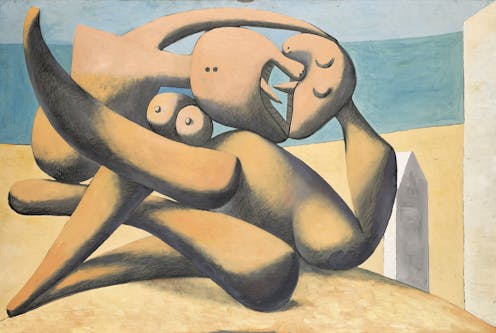
Review: Melbourne Winter Masterpieces exhibition 2022: The Picasso Century, NGV International.
The Picasso Century exhibition presents Picasso as we have never seen him before.
Pablo Picasso (1881-1973) is not presented as the lone genius creator – a mythology promoted by the artist himself – but as being at the centre of several creative hubs. He was surrounded by groups of brilliant creative men and women and his influence was a powerful presence for the whole 20th century.
In his life, Picasso rarely acknowledged his creative collaborators, this exhibition sets out to redress this omission.
The great French poet, critic and art collector Guillaume Apollinaire, wrote of his friend Picasso:
His insistence of the pursuit of beauty has changed everything in art […] The great revolution of the arts, which he has achieved almost unaided, was to make the world his new representation of it.
Leo Stein, another of Picasso’s friends and patrons, when writing on the rivalry between Picasso and Matisse observed:
Matisse saw himself in relation to others and Picasso stood apart, alone. He recognised others, of course, but as belonging to another system, there was no fusion.
Some people may not like the phallocentric persona of Picasso but he did effectively change the course of western art and, in the process, changed the way in which we see the world.
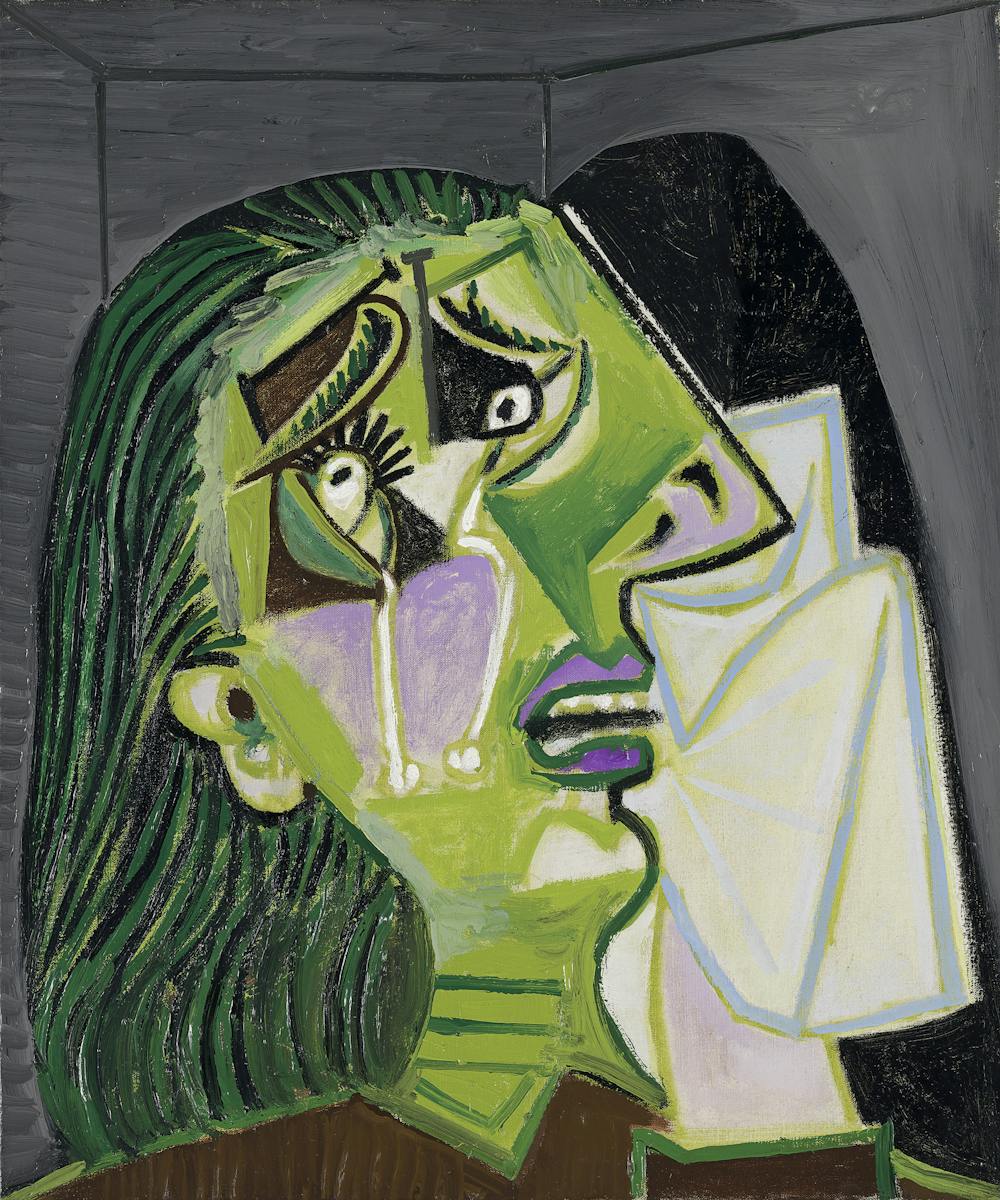
Picasso and his contemporaries
Picasso affected the art of his friends and contemporaries, as well as that of those who never met him.
Although Apollinaire described him as achieving a revolution in the arts “almost unaided” and for Stein “Picasso stood apart”, in reality Picasso also reflected the cultural and intellectual milieu that surrounded him.
This very ambitious multifaceted exhibition sets out to define “Picasso’s voice” during his long career through a selection of over 80 of his works, many quite major and never previously seen in this country. It also investigates his interactions with his surrounding cultural milieu.
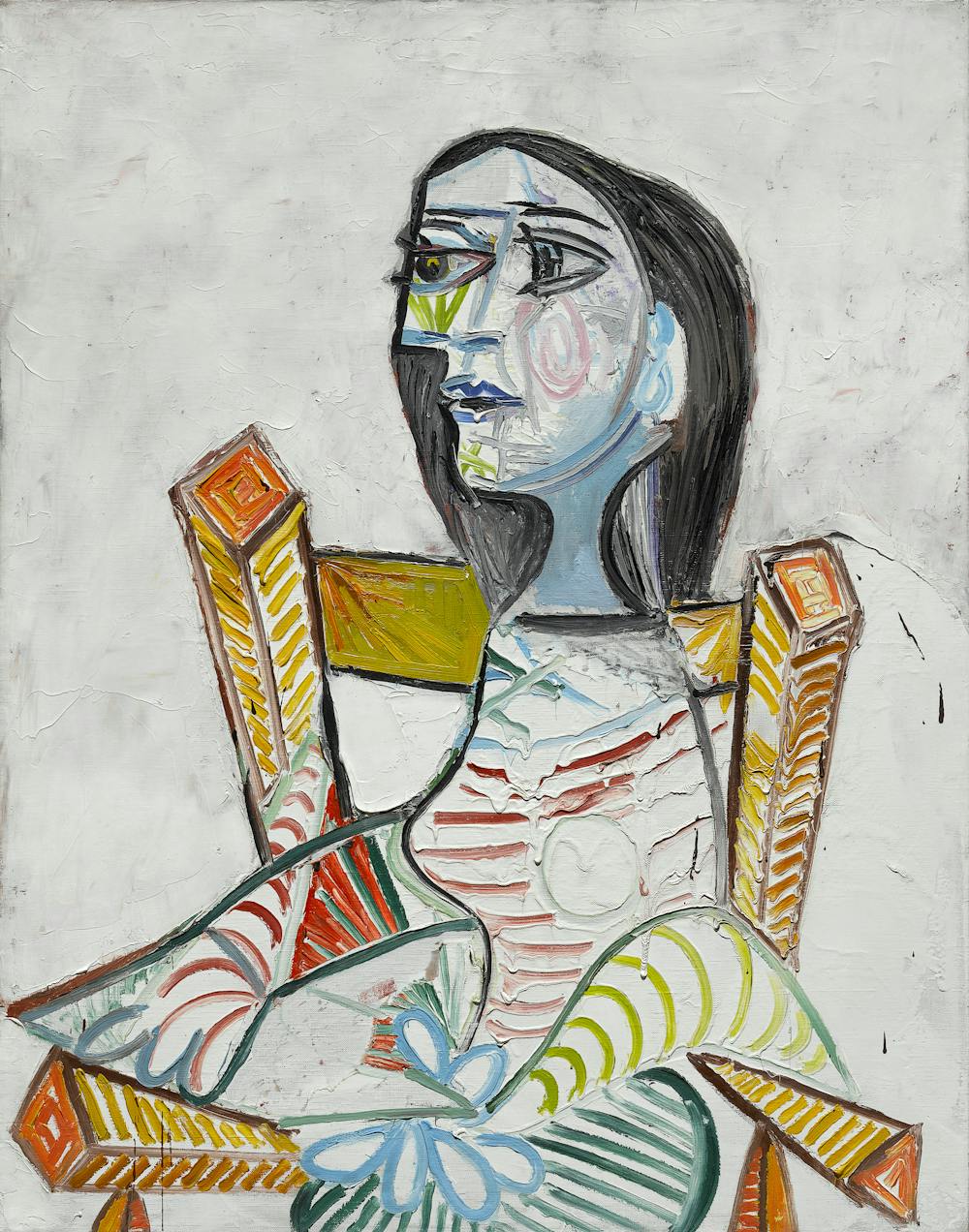 Pablo Picasso Spanish 1881-1973. Portrait of a woman (Portrait de femme) 1938 oil on canvas, 98.0 x 77.5 cm. 116.5 x 96.3 cm (framed) Centre Pompidou, Paris, Musée national d’art moderne-Centre de création industrielle Gift of the artist, 1947.
© Succession Picasso/Copyright Agency, 2022 Photo © Centre Pompidou, MNAM- CCI/Georges Meguerditchian/Dist. RMN-GP
The Picasso paintings, graphics, sculptures and ceramics are accompanied by about 100 works by more than 50 of his contemporaries to create a context through which his significance can be assessed.
Apart from Apollinaire, the contemporaries considered include Georges Braque, Salvador Dalí, Alberto Giacometti, André Masson, Juan Gris, Henri Matisse, Dorothea Tanning, Natalia Goncharova, Julio González, Wifredo Lam, Suzanne Valadon and Joan Miró.
A large, curious and little-known painting hanging near the entrance of the exhibition, Marie Laurencin’s Apollinaire and his friends (2nd version) (1909) from the Centre Pompidou.
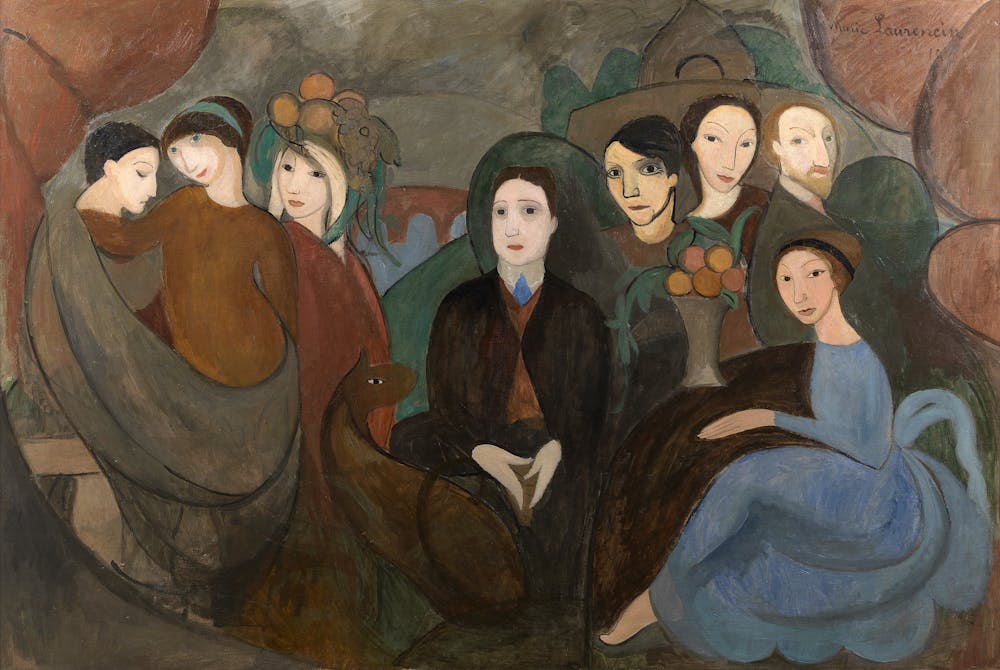 Marie Laurencin, French 1883-1956. Apollinaire and his friends (2nd version) (Apollinaire et ses amis [2ème version]) 1909 oil on canvas. 130.0 x 194.0 cm. Centre Pompidou, Paris, Musée national d’art moderne-Centre de création industrielle. Donated in lieu of tax, 1973.
© Fondation Foujita/ADAGP. Copyright Agency, 2022 Photo © Centre Pompidou, MNAM- CCI/Audrey Laurans/Dist. RMN-GP
The painting shows Apollinaire with Picasso looking over his shoulder and surrounded by a number of figures including Gertrude Stein, Fernande Olivier, Marguerite Gillot, Maurice Cremnitz as well as Laurencin herself in the foreground in a pale blue dress. Stein, on the left, appears in the role of one of the three inspirational graces or Muses.
Apollinaire admired this painting and had it positioned over the head of his bed for much of his life.
Picasso was to paint portraits of many in this grouping, including that of Apollinaire who was amongst the first to recognise the significance of cubism and collected Picasso’s work. Picasso was to refer to Apollinaire in jest as “the pope of cubism”.
Traversing artistic eras
In the exhibition, there are a number of iconic Picasso paintings, including his Portrait of a man (1902-03), a classic work from his so-called “blue period”.
 Pablo Picasso, Spanish 1881-1973. Portrait of a man (Portrait d’homme) winter 1902-03, oil on canvas, 93.0 x 78.0 cm/ Musée national Picasso-Paris Donated in lieu of tax, 1979.
© Succession Picasso/Copyright Agency, 2022 Photo © RMN-Grand Palais (Musée national Picasso-Paris) / Mathieu Rabeau
It is a brooding and introspective image where the tone defined an epoch.
Dated a few year later is the memorable Mother and child oil painting from the summer of 1907 that already speaks of primitivism and the radical formal transformation evident in the Les Demoiselles d'Avignon (1907) that was to become a defining moment in the course of western art.
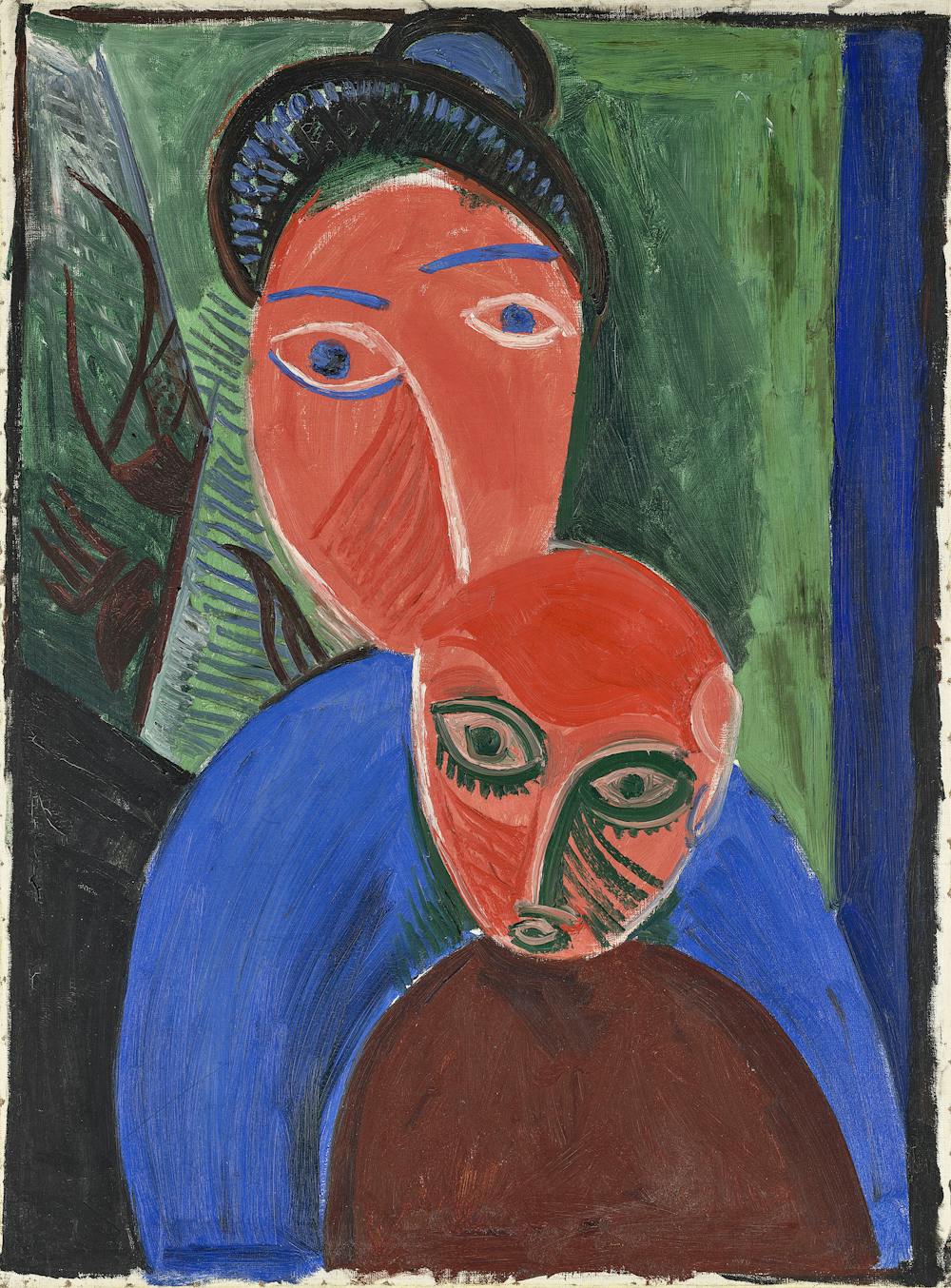 Pablo Picasso, Spanish 1881-1973. Mother and child (Mère et enfant) summer 1907, oil on canvas, 81.0 x 60.0 cm. Musée national Picasso-Paris Donated in lieu of tax, 1979.
© Succession Picasso/Copyright Agency, 2022 Photo © RMN-Grand Palais (Musée national Picasso-Paris) / Adrien Didierjean
The exhibition has a number of significant cubist paintings, Picasso’s The violin (1914) and Georges Braque’s Woman with a guitar (1913) both from the collection of the Centre Pompidou.
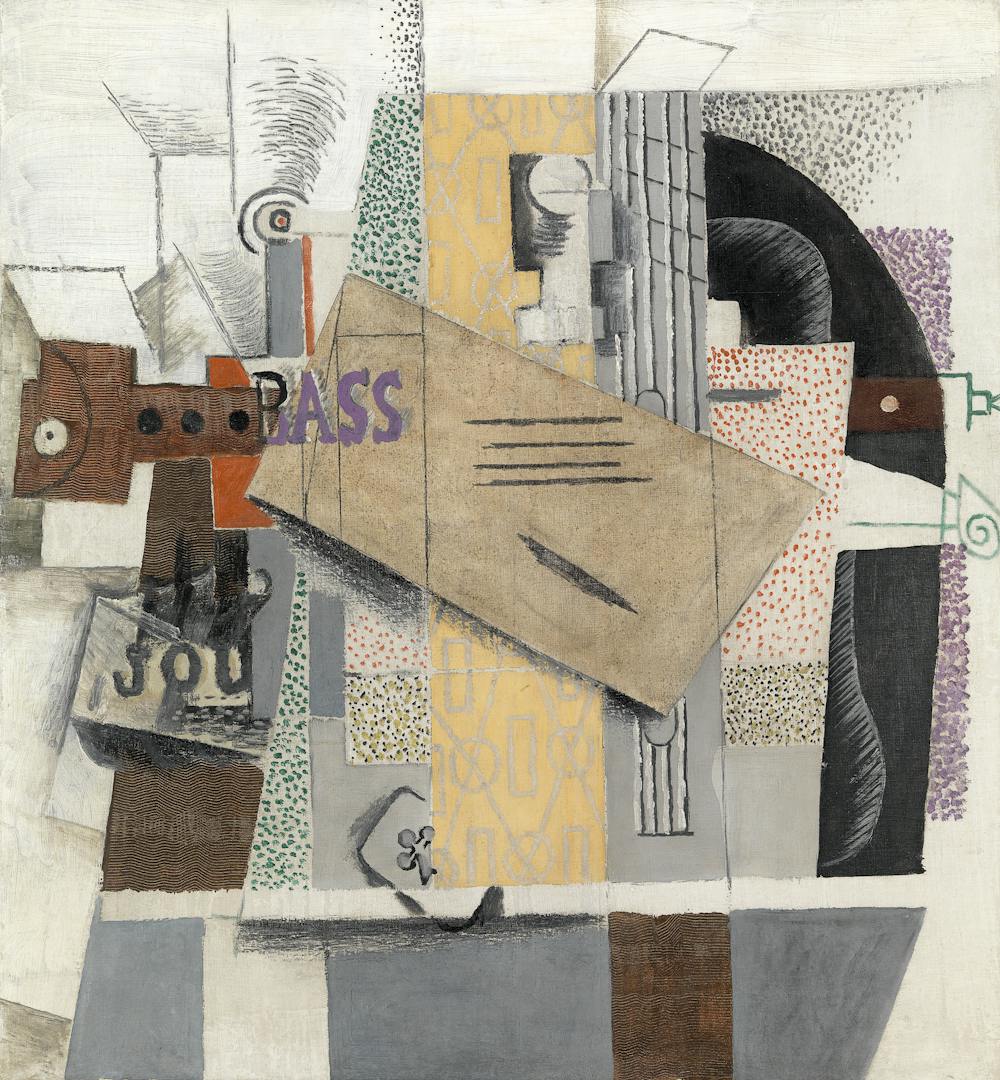 Pablo Picasso, Spanish 1881-1973. The violin (Le violon) 1914, oil on canvas 81.0 x 75.0 cm, 92.7 x 87.0 cm (framed). Centre Pompidou, Paris, Musée national.
d’art moderne-Centre de création industrielle Gift of M. Raoul La Roche, 1953
© Succession Picasso/Copyright Agency, 2022 Photo © Centre Pompidou, MNAM- CCI/Audrey Laurans/Dist. RMN-GP
This chronologically is followed by the artist’s return to order with neoclassicism with Picasso’s stunning portrait of his wife Olga (1918).
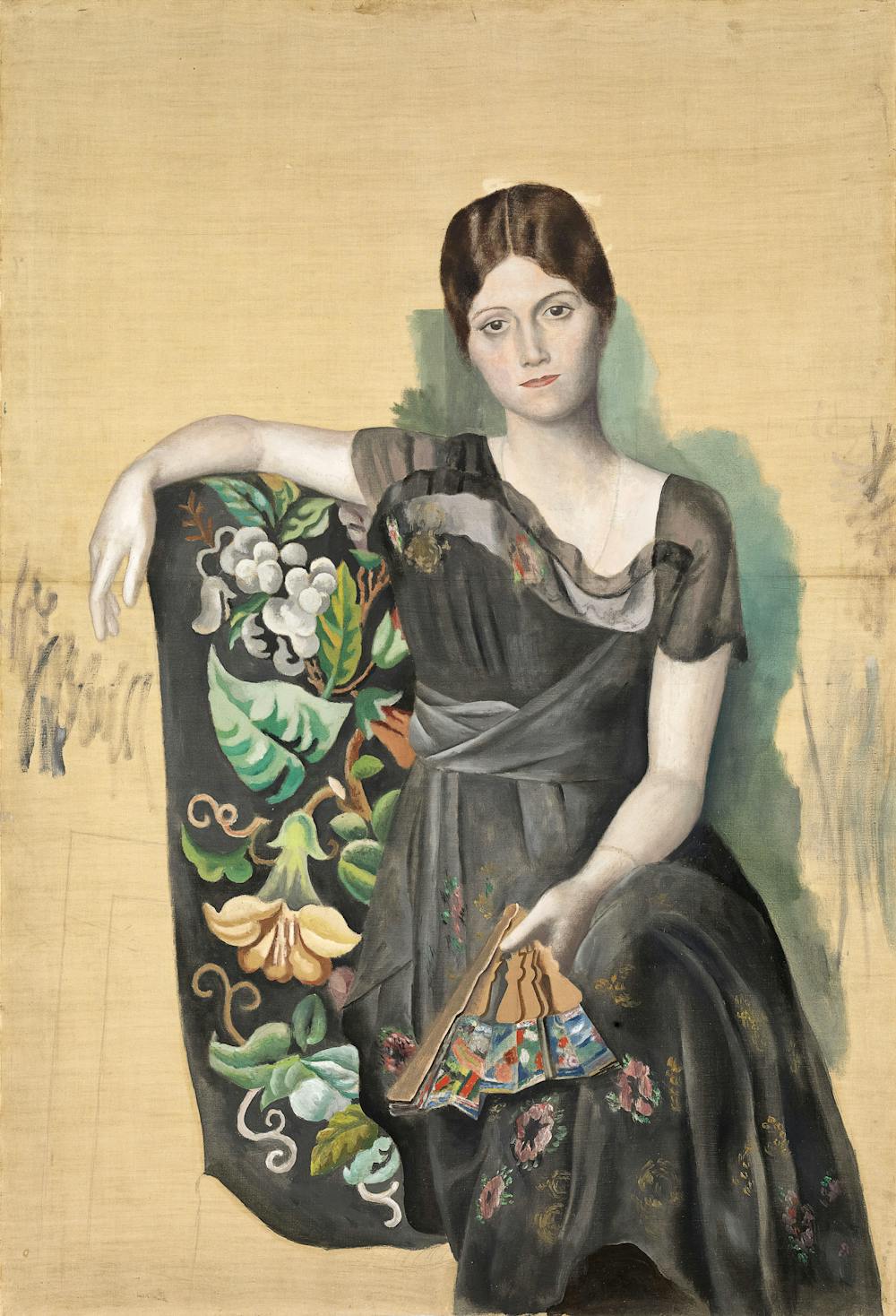 Pablo Picasso Spanish 1881-1973. Portrait of Olga in an armchair (Portrait d’Olga dans un fauteuil) spring 1918. Oil on canvas 130.0 x 88.8 cm. Musée national Picasso-Paris Donated in lieu of tax, 1979.
© Succession Picasso/Copyright Agency, 2022 Photo © RMN-Grand Palais (Musée national Picasso-Paris) / Mathieu Rabeau
Surrealism, at least in part a response to the violence of the 1930s, is particularly well represented in this exhibition with numerous examples from the artist and his contemporaries as well as a section on Picasso’s political engagement when, as a member of the communist party, he stood up to fascism and later to US imperialism in all of its guises.
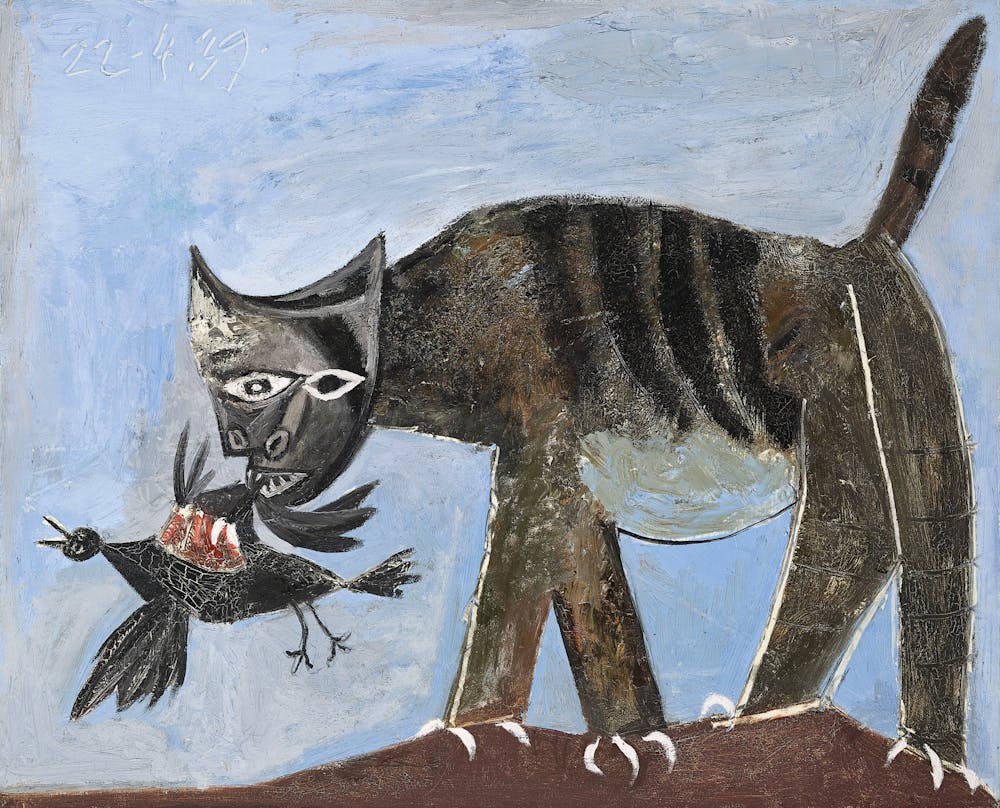 Pablo Picasso, Spanish 1881-1973. Cat seizing a bird (Chat saisissant un oiseau) 22 April 1939. Oil on canvas, 81.0 x 100.0 cm/ Musée national Picasso-Paris. Donated in lieu of tax, 1979.
© Succession Picasso/Copyright Agency, 2022 Photo © RMN-Grand Palais (Musée national Picasso-Paris) / Mathieu Rabeau
A remarkable exhibition
This is a huge exhibition of over 180 pieces that explores neat niches, such as Picasso’s engagement with sculpture in the context of González and Giacometti, or his excursion into ceramics, as well as his mainstream developments.
Whereas in many exhibitions one despairs over padding with inferior and irrelevant pieces, here the works have been carefully selected and are frequently of exceptional calibre. For example, the wondrous Pierre Bonnard Self-portrait in the bathroom mirror (1939-45), or the Francis Bacon Picasso inspired painted heads.
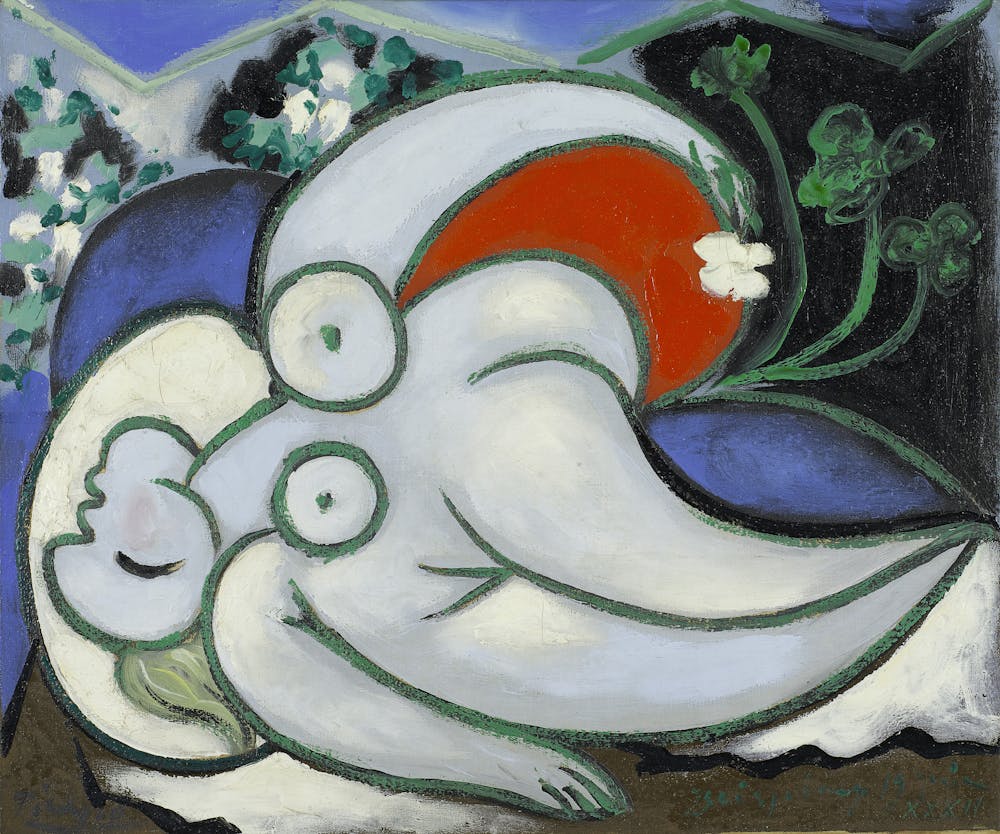 Pablo Picasso, Spanish 1881-1973. Reclining woman (Femme couchée) 19 June 1932, oil on canvas, 38.0 x 46.0 cm, 55.6 x 63.0 cm (framed) Centre Pompidou, Paris, Musée national d’art moderne-Centre de création industrielle Donated by Louise and Michel Leiris, 1984.
© Succession Picasso/Copyright Agency, 2022 Photo © Centre Pompidou, MNAM- CCI/Bertrand Prévost/Dist. RMN-GP
The exhibition was curated over about a decade by Didier Ottinger, deputy director of the Musée national d’art moderne, Centre Pompidou, Paris and is a triumph of visual intelligence.
No matter how well you think you know Picasso and the collections of the Centre Pompidou and the Musée national Picasso-Paris, in this exhibition you are guaranteed to be surprised, amazed and delighted.
The Picasso Century is a remarkable exhibition that may change the way you will view Picasso.
The Picasso Century is on at the NGV International until October 9.


