

My kids only want to eat processed foods. How can I get them eating a healthier and more varied diet?
- Written by The Conversation
If it feels like your child’s diet consists entirely of breakfast cereal, chicken nuggets and snacks that’d outlast the apocalypse, you’re not alone.
Processed foods are the go-to for many kids, and for some, they’re the only foods they’ll eat.
Here’s why – and what you can do about it.
Processed foods and their prevalence in kids’ diets
Processed foods are any foods altered from their natural state.
While some food processing is beneficial – such as pasteurising milk to kill bacteria – the ones that cause parents concern are ultra-processed foods, which use industrial methods to enhance flavour, texture and shelf life by adding sugars, salt, fats and artificial flavours, colours and preservatives.
Parents know some ultra-processed foods all too well – they’re the fast and junk foods kids love. But others hide in plain sight, disguised as “healthy” convenience foods such as flavoured yoghurts and muffins.
Ultra-processed foods offer low-to-no nutrition, which is why dietary guidelines recommend limiting them. But these “discretionary foods” make up one-third of Aussie kids’ daily energy intake.
Why do kids find processed foods so appealing?
Basic biology
Ultra-processed foods are engineered to be addictive, with their added sugar, salt and fat activating kids’ brains’ reward system, releasing feelgood chemicals.
Evolution has hardwired humans to seek natural sugar- and fat-rich foods – a physiological response our hunter-gatherer ancestors developed to avoid starvation.
Food fussiness
One in two kids will experience a fussy eating phase – another survival response inherited from our ancestors, who avoided toxins by developing an aversion to unfamiliar and bitter foods.
Fussy eaters also favour ultra-processed foods, such as chicken nuggets, chips and breakfast cereals, because they’re familiar and non-threatening, often beige like breastmilk and kids’ first solid foods. Plus their blander flavours don’t overwhelm developing tastebuds.
Pester power
From sneaky YouTube ads to eye-level supermarket displays, kids are incessantly exposed to marketing that makes them crave – and demand – ultra-processed foods.
How processed foods impact kids’ health
Ultra-processed foods can impact kids’ health in a range of ways, contributing to:
nutritional deficiencies. Kids filling up on ultra-processed foods are less likely to eat vegetables, fruits, whole grains and lean meats, producing a diet lacking in fibre and other key nutrients needed for growth and development
childhood obesity. Ultra-processed foods are high in calories, unhealthy sugars, salt and fat, and often lack portion control, promoting overeating
increased risk of diseases. Long-term overconsumption of ultra-processed foods is linked with a higher risk of developing a range of chronic diseases, including heart disease, type 2 diabetes and cancer.
Unhealthy eating habits can be hard to break, but positive diet and lifestyle changes – even later in childhood – can reverse these negative health effects.
Science-based tips for healthier eating habits
1. Eat together
Family mealtimes allow you to model healthy eating. Sit together around the table, share the same meal, and put devices away so everyone’s attention is on eating.
2. Introduce foods carefully
Research shows kids need eight to ten exposures before they willingly eat new foods. So offer them regularly, encourage tasting and don’t pressure them to eat.
While it’s tempting, avoid offering dessert as a reward for trying something healthy. Using treats as a reward increases kids’ preference for unhealthy foods.
Kids are also more likely to try new foods when they’re hungry, so avoid snacks one to preferably two hours before mealtimes.
3. Introduce variety to family favourites
Children are more open to trying new foods when there’s something familiar on their plate.
So, tweak family favourites by swapping ingredients, such as using lentils instead of beef in bolognese or roasting carrots to make “orange chippies”. Grating veggies into sauces also expands kids’ diets without overwhelming them.
4. Make food fun
Children respond positively when healthy foods are presented in fun ways, so include different colours, textures and shapes on their plate to hold their interest.
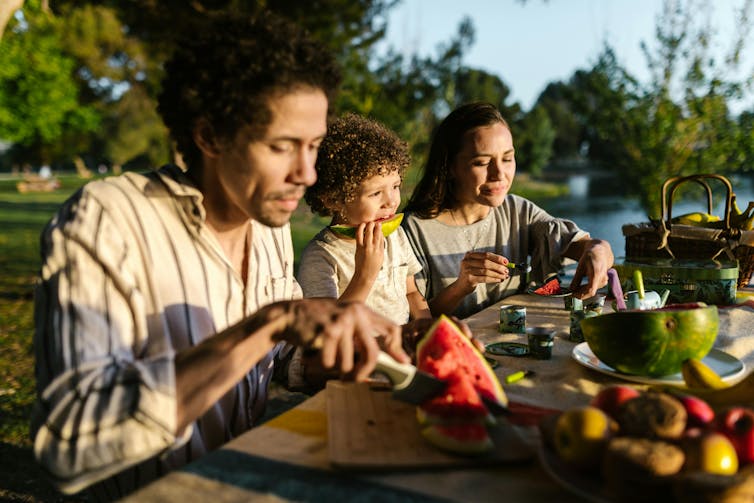
Changing meal locations – and enjoying an occasional outdoor picnic – is another simple way to make mealtimes feel special and fun.
5. Teach kids about the science of food
Teaching children in an age-appropriate way about the foods we eat promotes healthier eating, so:
encourage kids to grow herbs and veggies so they understand where healthy food comes from: toddlers can harvest produce; older kids can plant and prune
visit the greengrocer, fishmonger and butcher regularly so kids can see and explore the healthy foods on offer
talk to toddlers about food in energy terms: “eating wholegrain toast helps you play longer”
share fun facts with older kids: “fish has a special type of fat called omega-3 that makes us smarter”.
6. Involve kids in cooking
Spark kids’ interest in healthy meals by involving them in food preparation. Let them choose recipes and take on age-appropriate tasks such as mixing and chopping.
When kids help make a meal, they feel proud of their effort, and research shows they’re more likely to try what they’ve created.
It takes about two months to form a habit, so expect resistance along the way. But with perseverance, we can shift kids’ love of processed foods toward healthier choices, helping them establish healthy eating habits for life.
Nick Fuller is the author of Healthy Parents, Healthy Kids – Six Steps to Total Family Wellness.


