

Bats get fat to survive hard times. But climate change is threatening their survival strategy
- Written by The Conversation
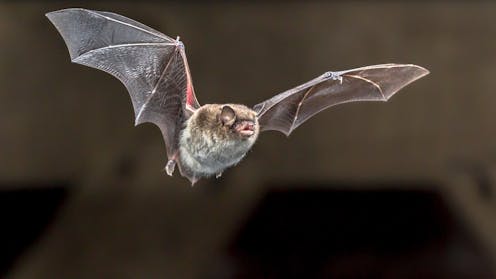
Bats are often cast as the unseen night-time stewards of nature, flitting through the dark to control pest insects, pollinate plants and disperse seeds. But behind their silent contributions lies a remarkable and underappreciated survival strategy: seasonal fattening.
Much like bears and squirrels, bats around the world bulk up to get through hard times – even in places where you might not expect it.
In a paper published today in Ecology Letters, we analysed data from bat studies around the world to understand how bats use body fat to survive seasonal challenges, whether it’s a freezing winter or a dry spell.
The surprising conclusion? Seasonal fattening is a global phenomenon in bats, not just limited to those in cold climates.
Even bats in the tropics, where it’s warm all year, store fat in anticipation of dry seasons when food becomes scarce. That’s a survival strategy that’s been largely overlooked. But it may be faltering as the climate changes, putting entire food webs at risk.
Climate shapes fattening strategies
We found bats in colder regions predictably gain more weight before winter.
But in warmer regions with highly seasonal rainfall, such as tropical savannas or monsoonal forests, bats also fatten up. In tropical areas, it’s not cold that’s the enemy, but the dry season, when flowers wither, insects vanish and energy is hard to come by.
The extent of fattening is impressive. Some species increased their body weight by more than 50%, which is a huge burden for flying animals that already use a lot of energy to move around. This highlights the delicate balancing act bats perform between storing energy and staying nimble in the air.
Sex matters, especially in the cold
The results also support the “thrifty females, frisky males” hypothesis.
In colder climates, female bats used their fat reserves more sparingly than males – a likely adaptation to ensure they have enough energy left to raise young when spring returns. Since females typically emerge from hibernation to raise their young, conserving fat through winter can directly benefit their reproductive success.
Interestingly, this sex-based difference vanished in warmer climates, where fat use by males and females was more similar, likely because more food is available in warmer climates. It’s another clue that climate patterns intricately shape behaviour and physiology.
Climate change is shifting the rules
Beyond the biology, our study points to a more sobering trend. Bats in warm regions appear to be increasing their fat stores over time. This could be an early warning sign of how climate change is affecting their survival.
Climate change isn’t just about rising temperatures. It’s also making seasons more unpredictable.
Bats may be storing more energy in advance of dry seasons that are becoming longer or harder to predict. That’s risky, because it means more foraging, more exposure to predators and potentially greater mortality.
The implications can ripple outward. Bats help regulate insect populations, fertilise crops and maintain healthy ecosystems. If their survival strategies falter, entire food webs could feel the effects.
Fat bats, fragile futures
Our study changes how we think about bats. They are not just passive victims of environmental change but active strategists, finely tuned to seasonal rhythms. Yet their ability to adapt has limits, and those limits are being tested by a rapidly changing world.
By understanding how bats respond to climate, we gain insights into broader ecosystem resilience. We also gain a deeper appreciation for one of nature’s quiet heroes – fattening up, flying through the night and holding ecosystems together, one wingbeat at a time.


