

‘Don’t tell me!’ Why some people love spoilers – and others will run a mile
- Written by The Conversation
This article contains spoilers!
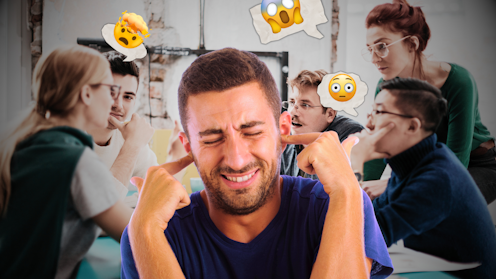
I once leapt out of a train carriage because two strangers were loudly discussing the ending of the last Harry Potter book. Okay – I didn’t leap, but I did plug my ears and flee to another carriage.
Recently, I found myself in a similar predicament, trapped on a bus, entirely at the mercy of two passengers dissecting the Severance season two finale.
But not everyone shares my spoiler anxiety. I have friends who flip to the last page of a book before they’ve read the first one, or who look up the ending before hitting play. According to them, they simply need to know.
So why do some of us crave surprise and suspense, while others find comfort in instant resolution?
What’s in a spoiler?
Spoilers have become a cultural flashpoint in the age of streaming, social media and shared fandoms.
Researchers define “spoiler” as undesired information about how a narrative’s arc will conclude. I often hear “spoilers!” interjected mid-sentence, a desperate protest to protect narrative ignorance.
Hitchcock’s twist-heavy Psycho elevated spoiler sensitivity. Its release came with an anti-spoilers policy including strict viewing times, lobby warnings recorded by the auteur himself, and even real policemen urging “total enjoyment”. A bold ad campaign implored audiences against “cheating yourselves”.
The twists were fiercely protected.
Even the Star Wars cast didn’t know Darth Vader’s paternity twist until premiere night. Avenger’s Endgame filmed multiple endings and used fake scripting to mislead its stars. And Andrew Garfield flat-out lied about his return to Spider-Man: No Way Home – a performance worthy of an Oscar – all for the sake of fan surprise and enjoyment.
But do spoilers actually ruin the fun, or just shift how we experience it?
The satisfaction of a good ending
In 2014, a Dutch study found that viewers of unspoiled stories experienced greater emotional arousal and enjoyment. Spoilers may complete our “mental models” of the plot, making us less driven to engage, process events, or savour the unfolding story.
But we are also likely to overestimate the negative effect of a spoiler on our enjoyment. In 2016, a series of studies involving short stories, mystery fiction and films found that spoiled participants still reported high levels of enjoyment – because once we’re immersed, emotional connection tends to eclipse what we already know.
But suspense and enjoyment are complex bedfellows.
American media psychology trailblazer Dolf Zillmann said that suspense builds tension and excitement, but we only enjoy that tension once the ending lands well.
The thrill isn’t fun while we’re hanging in uncertainty – it’s the satisfying resolution that retroactively makes it feel good.
That could be why we scramble for an “ending explained” when a film or show drops the ball on closure. We’re trying to resolve uncertainty and settle our emotions.
Spoilers can also take the pressure off. A 2009 study of Lost fans found those who looked up how an episode would end actually enjoyed it more. The researchers found it reduced cognitive pressure, and gave them more room to reflect and soak in the story.
Spoilers put the audience back in the driver’s seat – even if filmmakers would rather keep hold of the wheel. People may seek spoilers out of curiosity or impatience, but sometimes it’s a quiet rebellion: a way to push back against the control creators hold over when and how things unfold.
That’s why spoilers are fertile ground for power dynamics. Ethicists even liken being spoiled to kind of moral trespass: how dare someone else make that decision for me?!
But whether you avoid spoilers or seek them out, the motive is often the same: a need to feel in control.
Shaping your emotions
Spoiler avoiders crave affect: they want emotional transportation.
When suspense is part of the pleasure, control means choosing when and how that knowledge lands. There’s a mental challenge to be had in riding the story as it unfolds, and a joy in seeing it click into place.
That’s why people get protective, and even chatter about long-aired shows can spark outrage. It’s an attempt to police the commentary and preserve the experience for those still waiting to be transported.
Spoiler seekers want control too, just a different kind. They’re not avoiding emotion, they’re just managing it. A spoiler affords control over our negative emotions, but also softens the blow, and inoculates us against anxiety.
Psychologists dub this a “non-cognitive desensitisation strategy” to manage surprise, a kind of “emotional spoiler shield” to protect our attachments to shows and characters, and remind us that TV, film and book narratives are not real when storylines hit close to home.
Knowing what happens turns into a subtle form of self-regulation.
So, what did I do when Severance spoilers floated by? Did I get off the bus? Nope, I stayed put and faced the beast. As I tried to make sense of the unfamiliar plot points (The macrodata means what? Mark stays where?), I found the unexpected chance to dive deeper.
Maybe surprise is not the sum of what makes something entertaining and worth engaging with. Spoiler alert! It’s good to have an end to journey towards, but it’s the journey that matters, in the end.


