

Thousands of games have been censored from major platforms, with LGBTQIA+ creators caught in the crossfire
- Written by The Conversation
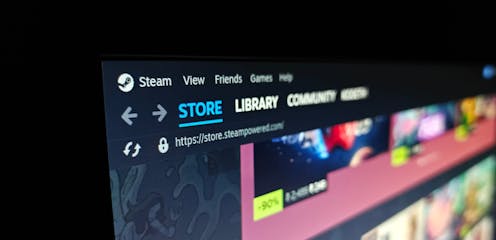
Online game marketplaces itch.io and Valve’s Steam have recently delisted or completely removed more than 20,000 titles from their storefronts, after not-for-profit group Collective Shout pressured payment processors to change their rules.
Although Collective Shout claims the move was about censoring games that depict rape and incest content, a number of LGBTQIA+ creators have been caught in the purge.
I am a queer, trans woman and game designer who studies inclusivity. LGBTQIA+ creators have long made games to express our stories. Such expression often necessarily engages with bodies and sexuality.
While content about us is seen by some as innately “harmful” and “sexual”, it is essential for wellbeing. Conservative groups have long aimed to censor our art, voices and games.
What makes the recent removals unusual is that they were not driven by government (which may be a separate problem in Australia and the United Kingdom).
Instead, they were driven by a supposed “anti-porn” group that frightened payment processors into undercutting online game storefronts’ own rules, resulting in itch.io reportedly delisting some 20,000 games, and Steam also removing hundreds.
How games are made and distributed
From AAA megastudios to small, independent teams, game developers produce thousands of games per year. The emergence of low-cost, accessible tools has removed barriers to making games.
For many LGBTQIA+ people, making and sharing games is a way to unpack trauma, discover oneself and share experiences.

Online game storefronts such as itch.io and Steam offer a streamlined way for creators to share games. Both game stores also double as social hubs where people can discuss games.
Itch.io is a thriving community that is free and simple to use. In its 12 years, it has earned the goodwill of the LGBTQIA+ community due to its openness and lack of restrictions.
Steam, meanwhile, has become one of the world’s foremost sources for games. Most major games are released on Steam.
Itch.io has substantially fewer resources, but hosts a similar amount of content to Steam.
While Valve reportedly earned a revenue of US$5 billion in 2024 (about A$7.7 billion), itch.io is run by a much smaller team of mostly volunteers.
A sudden mass censorship
Generally, online storefronts will censor media at the behest of governments. Censorship can be used to manipulate how people think and act. One could expect (or hope) it is done carefully and for the public good (such as to prevent violence).
Itch.io has maintained neutrality about what can be shared, relying on creators to tag their content – which they do. Steam, on the other hand, reviews adult content before adding it to its storefront, and imposes strict guidelines on content. However, these guidelines have recently become less clear.
In both cases, users decide what kind of content they want to be shown.
What we’re seeing now is not government censorship, but private payment processing companies deciding what content is available. And as these companies are global, their policy changes can impact people worldwide.
Australian non-profit Collective Shout spent years pressing Valve to remove games it found objectionable. When this proved ineffective, the group targeted payment processors including PayPal, Visa and Mastercard.
The group published an open letter on July 11 decrying online game storefronts, alongside a coordinated email campaign.
On July 16, Valve updated its policy to allow payment processors to set rules for allowed content. It then removed certain targeted games from its store.
Itch.io followed: on July 23, the store hid all “not safe for work” (NSFW) titles from search. With a small team and massive library, itch.io had to act fast. The broad-stroke move disproportionately impacted LGBTQIA+ creators.
LGBTQIA+ creators often develop games from lived experience, which often involves themes such as relationships, sex, and bodies (including genitals), all of which may be deemed NSFW. These creators did due diligence to mark their games as NSFW, to ensure that players are aware of potential triggers.
Itch.io is now working to minimise damages and relist content that takes no payment. It is also trying to find new payment processors.
A PayPal spokesperson told The Conversation:
PayPal is committed to maintaining a safe platform for its customers and will take appropriate action when we identify activity that violates the law, our policies, or the policies of our partner banks and card networks.
The dangers of LGBTQIA+ erasure
The social networks of online game storefronts offer community to LGBTQIA+ people. When these communities are taken away, we can experience a kind of “digital death”.
One itch.io game caught in the purge is SABBAT (2013). This game involves assembling a monstrous body, with themes including changing bodies (including genitals) and violence.
While these themes may not appeal to many, they would be relatable – and therefore meaningful – for many transgender players. SABBAT can still be directly accessed on itch.io, but it doesn’t show up in the search results.

Grunge, the 2019 Melbourne Queer Games Festival Silver Award winner, was also delisted. This game is about queer love and navigating a new school. While the author warns the content is mature, including some sexual content, the game does not involve rape or incest.
 Grunge, an award-winning game by CrossXGames, addresses queer love. It was delisted.
Author's screenshot.
What comes next?
Gamers are responding to Steam and itch.io’s actions. One online petition calling on payment processors to remove policies that lead to censorship has collected more than 200,000 signatures. We expect change.
LGBTQIA+ people deserve community, self-discovery and the ability to survive and thrive in society. Censorship decisions that affect us cannot be made unilaterally. They are not the remit of payment processors, and they should not be in the hands of a single group.
Moving forward, the gaming industry and player communities need more nuanced conversations about game (and media) access. And these conversations must include a diversity of people.
The LGBTQIA+ community has come a long way towards gaining representation and visibility in the gaming world, and this has helped many of us. We will continue to make our art seen, our voices heard, and our games played.
Valve, itch.io, Mastercard and Visa did not respond to The Conversation’s request for comment.
Read more: Video games can help trans players feel seen and safe. It all starts with design


