

Levelling up: why Netflix and TikTok are turning to gaming to secure their future
- Written by The Conversation
The streaming wars are heating up. In March, Disney delayed the release date of Obi-Wan Kenobi to May 27 to coincide with the launch of Netflix’s top show, Stranger Things. This on the back of Google’s announcement YouTube Shorts had matched TikTok’s 1.5 billion subscribers in the short-form video market.
Facing increased competition, falling subscriber numbers and loss of content, Netflix and TikTok are having to diversify. And for this they’re turning to games. With more than three billion players worldwide, and an estimated market share of US$200 billion, the gaming industry is both popular and lucrative.
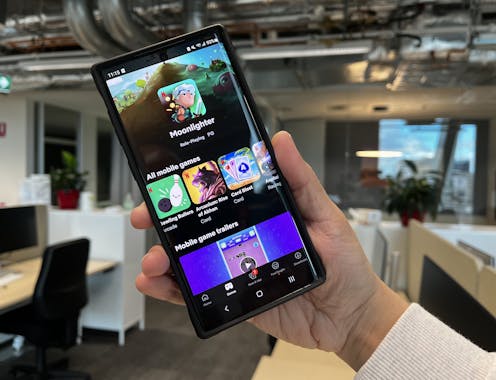
Netflix introduced mobile gaming last year for all its subscribers. This included two notable Stranger Things tie-ins. Meanwhile, TikTok has offered games to select users since 2019 and seems very likely to expand these offerings.
Retaining existing subscribers
Both Netflix and TikTok have transformed the entertainment business.
They appear diametrically opposed on the surface. The former gets revenue from subscriptions, and spends millions of dollars on licensing or creating content. The latter makes money by linking viewers to advertisers, with the help of streaming “influencers” who have mastered the art of short-form video.
However, the two platforms share some key characteristics. They both:
- deliver video content via the internet
- aim to constantly grow their user base
- benefit from unique and original content
- collect user data and use it to improve their services, and
- face considerable and rising competition from other companies and entertainment media.
Many well-loved films and television series are departing Netflix for competitor platforms. At the same time, TikTok is also losing short-form video influencers to other platforms. Both platforms are seeking new strategies for subscriber retention, growth, and original content.
This is where gaming comes in. According to one consumer insights report, 79% of the world’s online population engages with games in some form. And millennials rate gaming as either the most popular, or second-most popular entertainment activity – behind watching other people play games on video platforms.
Why is gaming an attractive space?
Games typically afford longer engagement periods than series or movies. This is due to the psychological principles of motivation that underpin most gameplay.
People invested in games will often seek out additional narrative (or “lore”) in the form of shows and movies. Alternatively, audiences invested in shows may also look to video games to provide alternative narratives and opportunities for world-building. So shows lead customers to games, and games keep them engaged between season releases.
This technique of telling a story across multiple platforms and formats is known as “transmedia storytelling” and has been used with great success by broadcast, social media and gaming companies. This is what platforms are banking on to keep audiences locked into their entertainment ecosystems.
Content creation has boomed since the pandemic, and younger audiences are spending more time than ever watching user-generated content online. They have been particularly tuned into games such as Crab Game (a fan-made version of the popular Netflix show Squid Game) – which also has millions of view hours on the streaming service Twitch.
The rise of Minecraft as a popular “modding” game (in which players can collectively transform the game space through their own modifications) has also helped video streaming and subscription services. Minecraft-related videos have been streamed more than one trillion times on YouTube.
Transmedia success provides additional avenues for companies looking to leverage their licensed or original copyrighted content.
 Minecraft videos have been viewed more than one trillion times on YouTube.
YouTube
Minecraft videos have been viewed more than one trillion times on YouTube.
YouTube
Intellectual property and data analytics
We know games promote attention, motivation, emotion and socialising among players.
Companies such as the game-hosting platform Steam have demonstrated user data can influence the creation of new content by game developers. In fact, this is a market advantage that Netflix and TikTok have over rivals.
For example, one could easily imagine that a character who is popular in a game, as revealed through gaming data, would also be more likely to feature in an upcoming show based on that game.
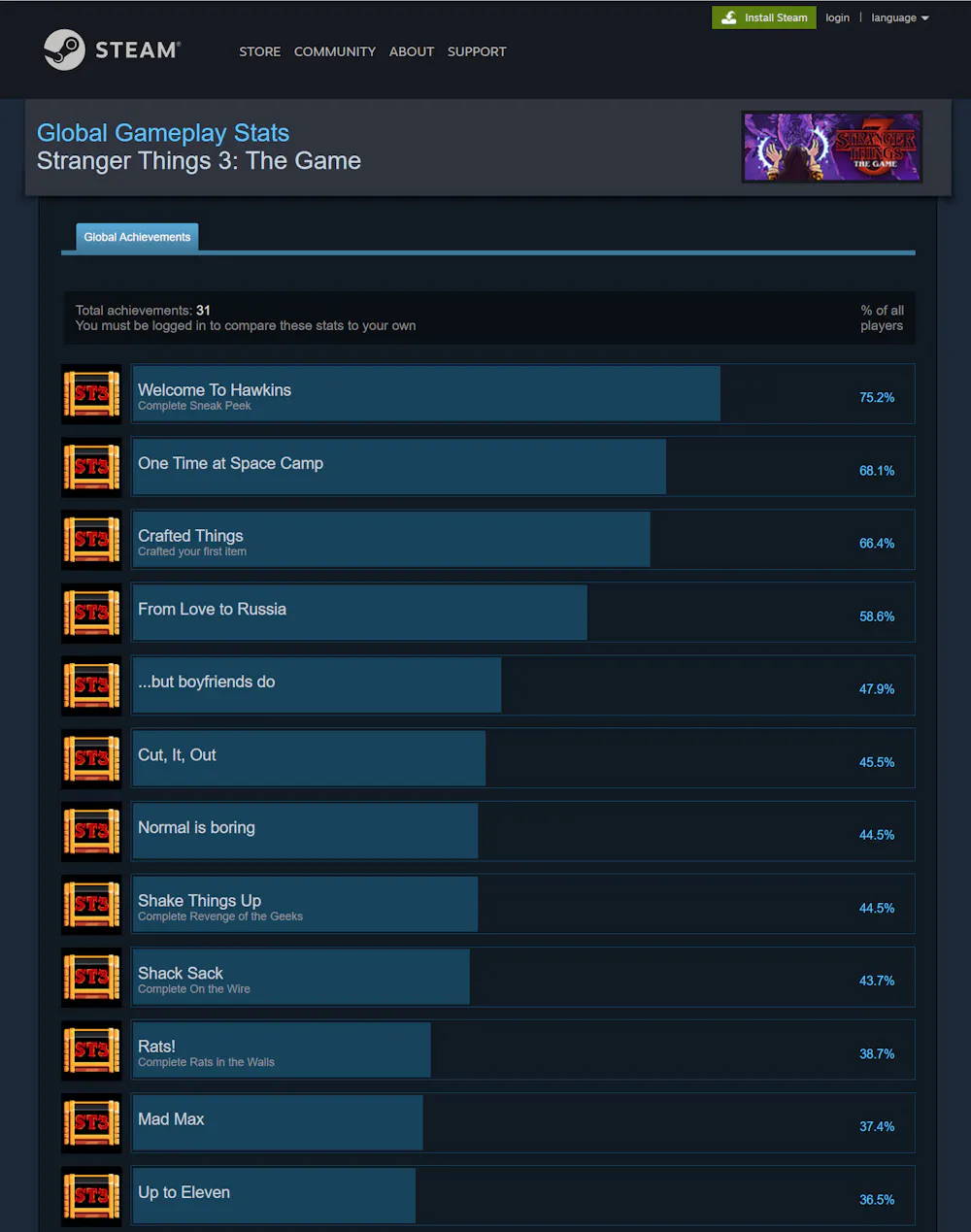 Gameplay stats can be used by companies to help design future producers, with a focus on what users engage with most.
STEAM
Gameplay stats can be used by companies to help design future producers, with a focus on what users engage with most.
STEAM
Netflix and TikTok can lose big
When we speak of the streaming wars and greater competition, it’s not a level playing field. There are crucial differences between Netflix and TikTok, and other players such as Disney+, Amazon Prime, Apple TV and YouTube.
Netflix is in the streaming business, and TikTok in the video-hosting industry. On the other hand, based on revenue Disney is in the theme park and toy business, Amazon the online sales industry, Apple the computing and phone industry, and Google in the search and advertising industry.
For these companies, streaming and video hosting is a small side business that provides useful data to feed a greater machine. So in the “streaming wars” they don’t have as much to lose, as they can run these side businesses at a loss.
Netflix and TikTok aren’t so lucky. By turning to games, they’re grabbing onto a lifeline they really need.
 Netflix’s list of competitors is growing, and there’s now a variety of streaming services including HBO, Amazon Prime Video and Hulu.
Shutterstock
Netflix’s list of competitors is growing, and there’s now a variety of streaming services including HBO, Amazon Prime Video and Hulu.
Shutterstock
Read more: How Netflix affects what we watch and who we are -- and it's not just the algorithm


