

The literary life of Frank Moorhouse, a giant of Australian letters
- Written by The Conversation
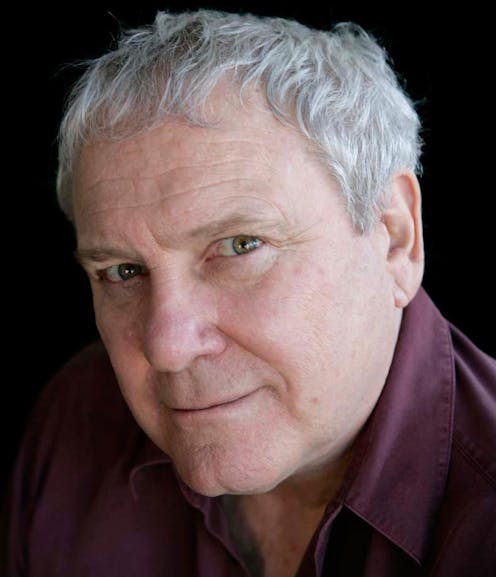
Frank Moorhouse, who died in Sydney on Sunday, made a significant and multi-faceted contribution to Australia’s literary life.
He was born in 1938 in Nowra, which he described as “a small Australian country town (two weekly newspapers but no public library)”. At the age of 17, he became a cadet journalist at the Sydney Morning Herald. His career as a fiction writer began – as do those of many writers today – by publishing short stories in literary journals: Southerly, Overland and Westerly.
In the 1970s, Moorhouse became known as one of Australia’s foremost experimentalists in fiction, working with discontinuous and fragmented narratives in his short-story collections Futility and Other Animals (1966), The Americans, Baby (1972), and The Electrical Experience (1974).
This was the period that saw Moorhouse join a flourishing community of writers living and working Sydney’s Balmain, including David Williamson, Murray Bail, Peter Carey, Vicki Viidikas, Bob Adamson, and others. Moorhouse claimed that Salman Rushdie was also temporarily part of the gang.
In 1972, with Carmel Kelly and Michael Wilding, Moorhouse co-founded the magazine Tabloid Story, “as a traveling exhibit for the short story”. Its mission was resist established modes of fictional realism, especially those that predominated in Australia.
This resistance included a willingness to write about sex. The Brisbane Vice Squad received complaints about one of the stories Moorhouse published in the first issue of the magazine and subsequently seized all copies from the University of Queensland campus.
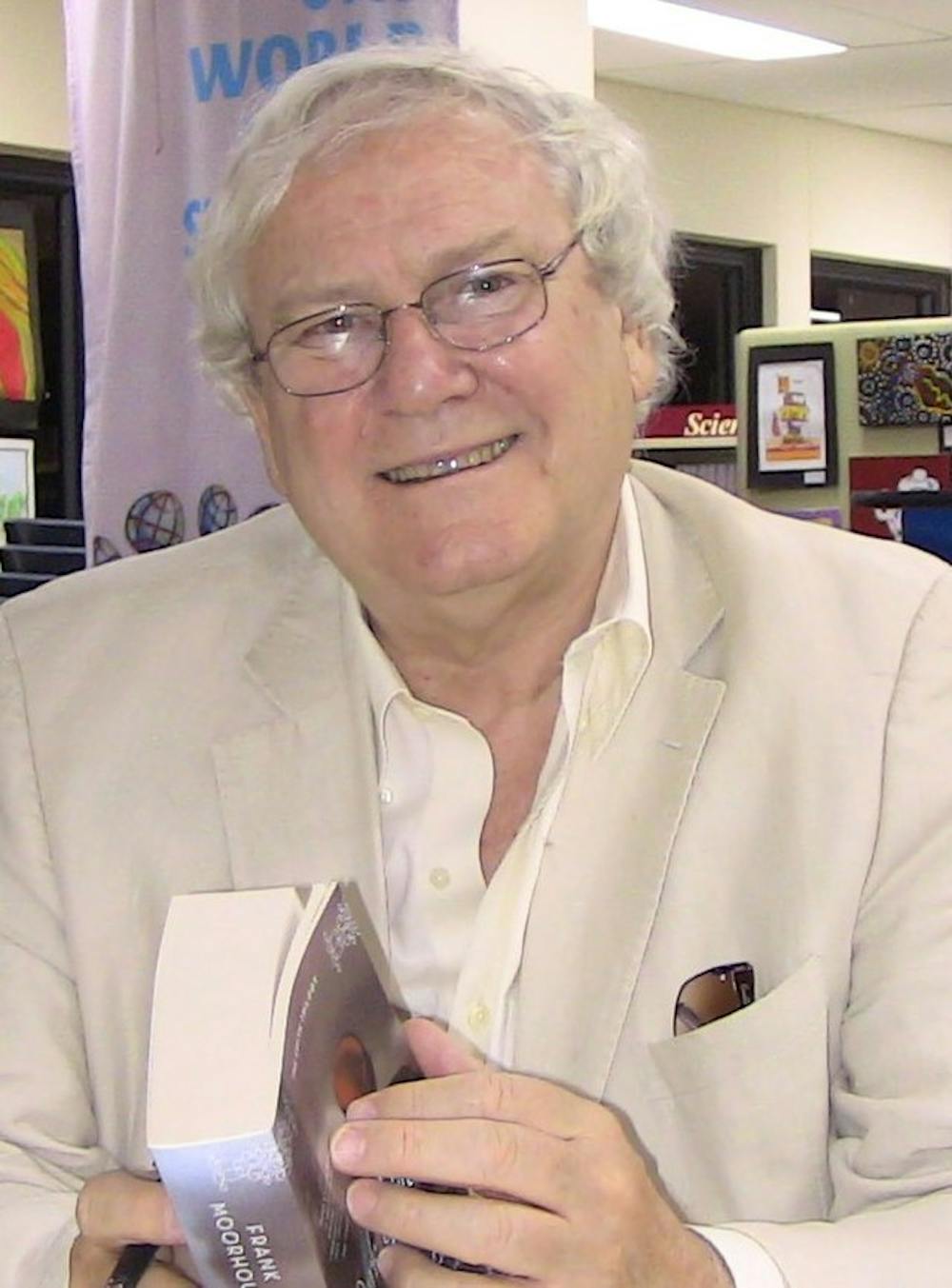
Throughout his career Moorhouse wrote explicitly and shamelessly about sex, especially in relation to fluid gender and sexual identities. He described himself as bisexual. He is one of the most high-profile queer Australian writers of his generation, unusual in that he has long written publicly about his sexuality.
Sexuality was one lens for Moorhouse’s longstanding and shifting relationship with Henry Lawson, and The Drover’s Wife in particular. The explicitly satirical take of his 1980 story was eventually replaced by the appreciative and autobiographical approach of The Drover’s Wife: A Celebration of a Great Australian Love Affair (2017). In this late work, Moorhouse speculates about Lawson’s sexuality as a prompt to think back on his own sexual history.
Although he steadfastly espoused the pleasures of the good life, Moorhouse worked to advance the interests of Australian writers. He held positions as union organiser for the Workers Education Association and the Australian Journalists Association. He was president of the Australian Society of Authors from 1981 to 1983.
Moorhouse was also actively involved in campaigns to protect the conditions under which authors worked in Australia. He was the plaintiff in a high-profile court case protecting authors’ copyright (University of NSW v Moorhouse, 1975). He spoke out about the parlous state of financial support for the literary arts in Australia, campaigned against censorship, and published a book-length account of ASIO’s surveillance of Australian citizens.
Read more: Bringing Edith home: Frank Moorhouse's Cold Light
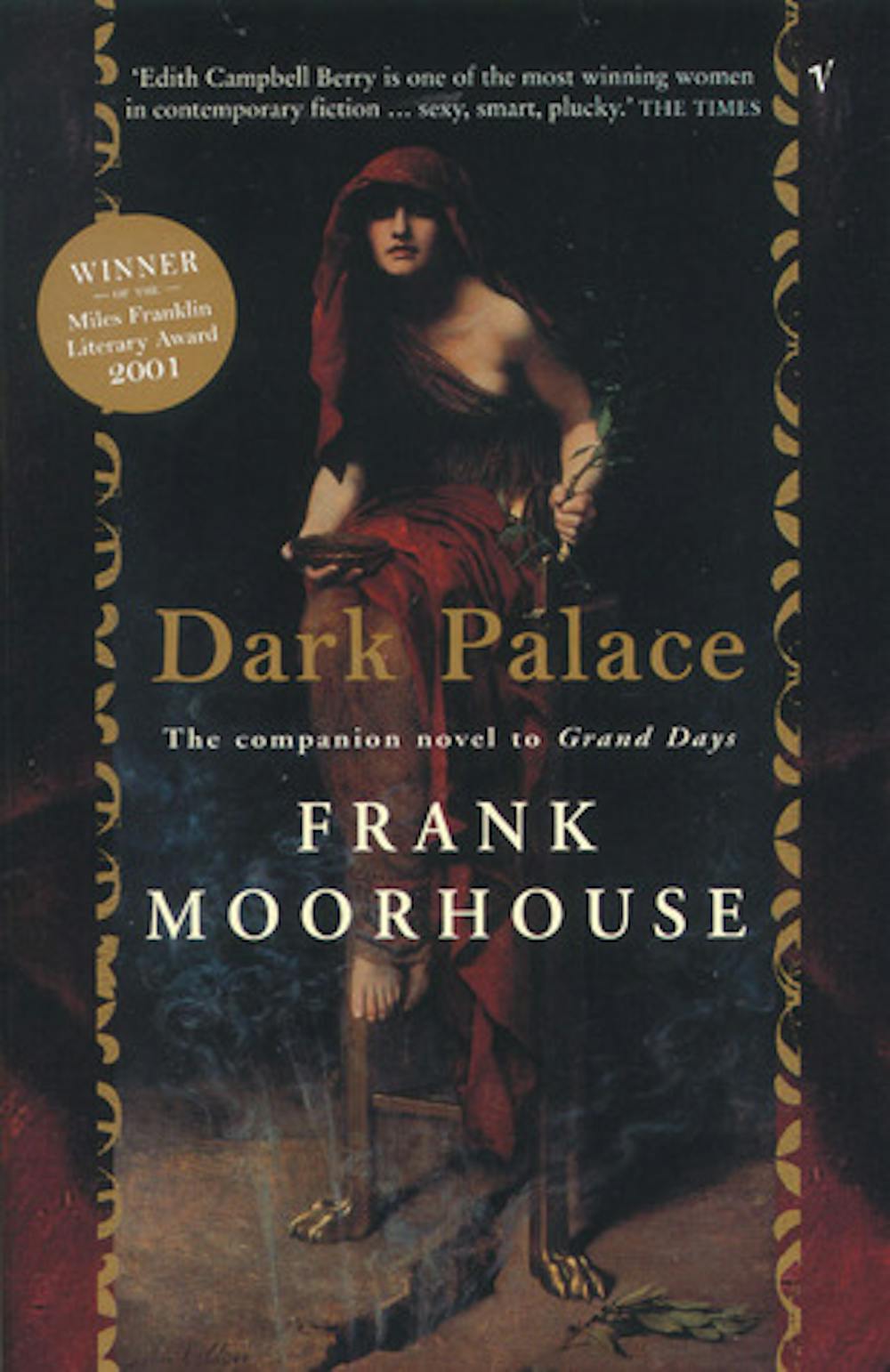 Moorhouse’s most significant achievement is the “Edith” triology: Grand Days (1993), Dark Palace (2000) and Cold Light (2011). These three novels are the most sustained and successful fictional engagement with the world of politics and international relations in Australian literary history.
“Politics is narrative, a fiction,” Moorhouse wrote in in 1981. The Edith novels dramatise the affective life of politics in heartbreaking detail. Edith Campbell Berry is a wonderfully engaging and flawed protagonist: a young Australian woman who sets her sights on the League of Nations and whose development as a person becomes inextricably bound up with the fortunes of that institution.
The novels trace Edith’s investment in the successes and failures of international cooperation – and her relationship with the gender-fluid diplomat Ambrose Westwood – in a way that enables the reader to understand something of how personal life and political commitment can be intertwined.
The career of Frank Moorhouse was marked by earnestness and experimentation, political commitment and irreverence. His old-school cosmopolitanism saw Grand Days controversially ruled ineligible for the Miles Franklin Award in 1994, on the grounds that it did not meet the criterion that it represented “Australian life”. Its sequel, Dark Palace, went on to win the award in 2000.
Moorhouse produced a huge body of work: autobiographical and journalistic pieces, short stories, collections, nonfiction books and novels. He was made a member of the Order of Australia in 1985 for his services to literature.
In an essay published in Meanjin in 2017, Moorhouse wondered
how a young man from an Australian country town could identify and aspire to belong to a way of life called “literary”?
Moorhouse set the example himself. Over the course of his long career, he changed the nature of Australian writing, worked to improve conditions for authors, and delighted his many readers: a life called “literary” indeed.
Moorhouse’s most significant achievement is the “Edith” triology: Grand Days (1993), Dark Palace (2000) and Cold Light (2011). These three novels are the most sustained and successful fictional engagement with the world of politics and international relations in Australian literary history.
“Politics is narrative, a fiction,” Moorhouse wrote in in 1981. The Edith novels dramatise the affective life of politics in heartbreaking detail. Edith Campbell Berry is a wonderfully engaging and flawed protagonist: a young Australian woman who sets her sights on the League of Nations and whose development as a person becomes inextricably bound up with the fortunes of that institution.
The novels trace Edith’s investment in the successes and failures of international cooperation – and her relationship with the gender-fluid diplomat Ambrose Westwood – in a way that enables the reader to understand something of how personal life and political commitment can be intertwined.
The career of Frank Moorhouse was marked by earnestness and experimentation, political commitment and irreverence. His old-school cosmopolitanism saw Grand Days controversially ruled ineligible for the Miles Franklin Award in 1994, on the grounds that it did not meet the criterion that it represented “Australian life”. Its sequel, Dark Palace, went on to win the award in 2000.
Moorhouse produced a huge body of work: autobiographical and journalistic pieces, short stories, collections, nonfiction books and novels. He was made a member of the Order of Australia in 1985 for his services to literature.
In an essay published in Meanjin in 2017, Moorhouse wondered
how a young man from an Australian country town could identify and aspire to belong to a way of life called “literary”?
Moorhouse set the example himself. Over the course of his long career, he changed the nature of Australian writing, worked to improve conditions for authors, and delighted his many readers: a life called “literary” indeed.


