

Research shows tropical cyclones have decreased alongside human-caused global warming – but don't celebrate yet
- Written by The Conversation
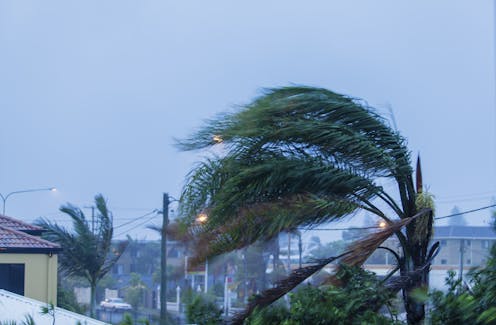
The annual number of tropical cyclones forming globally decreased by about 13% during the 20th century compared to the 19th, according to research published today in Nature Climate Change.
Tropical cyclones are massive low-pressure systems that form in tropical waters when the underlying environmental conditions are right. These conditions include (but aren’t limited to) sea surface temperature, and variables such as vertical wind shear, which refers to changes in wind speed and direction with altitude.
Tropical cyclones can cause a lot of damage. They often bring extreme rainfall, intense winds and coastal hazards including erosion, destructive waves, storm surges and estuary flooding.
The Intergovernmental Panel on Climate Change’s latest report detailed how human emissions have warmed tropical oceans above pre-industrial levels, with most warming happening since around the middle of the 20th century. Such changes in sea surface temperature are expected to intensify storms.
At the same time, global warming over the 20th century led to a weakening of the underlying atmospheric conditions that affect tropical cyclone formation. And our research now provides evidence for a decrease in the frequency of tropical cyclones coinciding with a rise in human-induced global warming.
Reckoning with a limited satellite record
To figure out whether cyclone frequency has increased or decreased over time, we need a reliable record of cyclones. But establishing this historical context is challenging.
Before the introduction of geostationary weather satellites in the 1960s (which stay stationary in respect to the rotating Earth), records were prone to discontinuity and sampling issues.
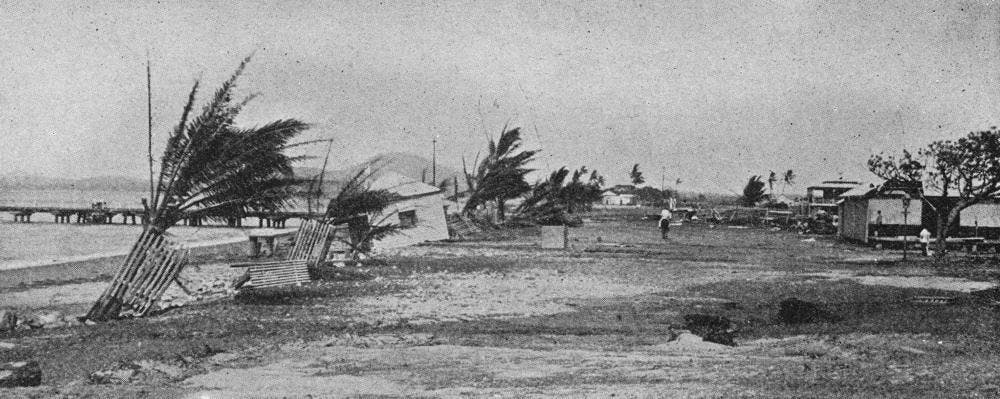
And although observations improved during the satellite era, changes in satellite technologies and monitoring throughout the first few decades imply global records only became consistently reliable around the 1990s.
So we have a relatively short post-satellite tropical cyclone record. And longer-term weather trends based on a short record can be obscured by natural climate variability. This has led to conflicting assessments of tropical cyclone trends.
Read more: Homes can be better prepared for cyclones. But first we must convince the owners
Declining global and regional trends
To work around the limits of the tropical cyclone record, our team used the Twentieth Century Reanalysis dataset to reconstruct cyclone numbers to as far back as 1850. This reanalysis project uses detailed metrics to paint a picture of global atmospheric weather conditions since before the use of satellites.
Drawing on a link to the observed weakening of two major atmospheric circulations in the tropics – the Walker and Hadley circulations – our reconstructed record reveals a decrease in the annual number of tropical cyclones since 1850, at both a global and regional scale.
Specifically, the number of storms each year went down by about 13% in the 20th century, compared to the period between 1850 and 1900.
For most tropical cyclone basins (regions where they occur more regularly), including Australia, the decline has accelerated since the 1950s. Importantly, this is when human-induced warming also accelerated.
The only exception to the trend is the North Atlantic basin, where the number of tropical cyclones has increased in recent decades. This may be because the basin is recovering from a decline in numbers during the late 20th century due to aerosol impacts.
But despite this, the annual number of tropical cyclones here is still lower than in pre-industrial times.
It’s a good thing, right?
While our research didn’t look at cyclone activity in the 21st century, our findings complement other studies, which have predicted tropical cyclone frequency will decrease due to global warming.
It may initially seem like good news fewer cyclones are forming now compared to the second half of the 19th century. But it should be noted frequency is only one aspect of risk associated with tropical cyclones.
The geographical distribution of tropical cyclones is shifting. And they’ve been getting more intense in recent decades. In some parts of the world they’re moving closer to coastal areas with growing populations and developments.
These changes – coupled with increasing rain associated with tropical cyclones, and a trend towards hurricanes lasting longer after making landfall – could point to a future where cyclones cause unprecedented damage in tropical regions.
Then again, these other factors weren’t assessed in our study. So we can’t currently make any certain statements regarding future risk.
Moving forward, we hope improvements in climate modelling and data will help us identify how human-induced climate change has affected other metrics, such as cyclone intensity and landfalling activity.
Read more: FactCheck: is global warming intensifying cyclones in the Pacific?


