News Daily


Men's Weekly

Australia

  • Written by The Conversation
Your body can be a portable gym: how to ditch membership fees and expensive equipment

You don’t need a gym membership, dumbbells, or expensive equipment to get stronger.

Since the beginning of time, we’ve had access to the one piece of equipment that is essential for strength training – our own bodies.

Strength training without the use of external forces and equipment is called “bodyweight training”.

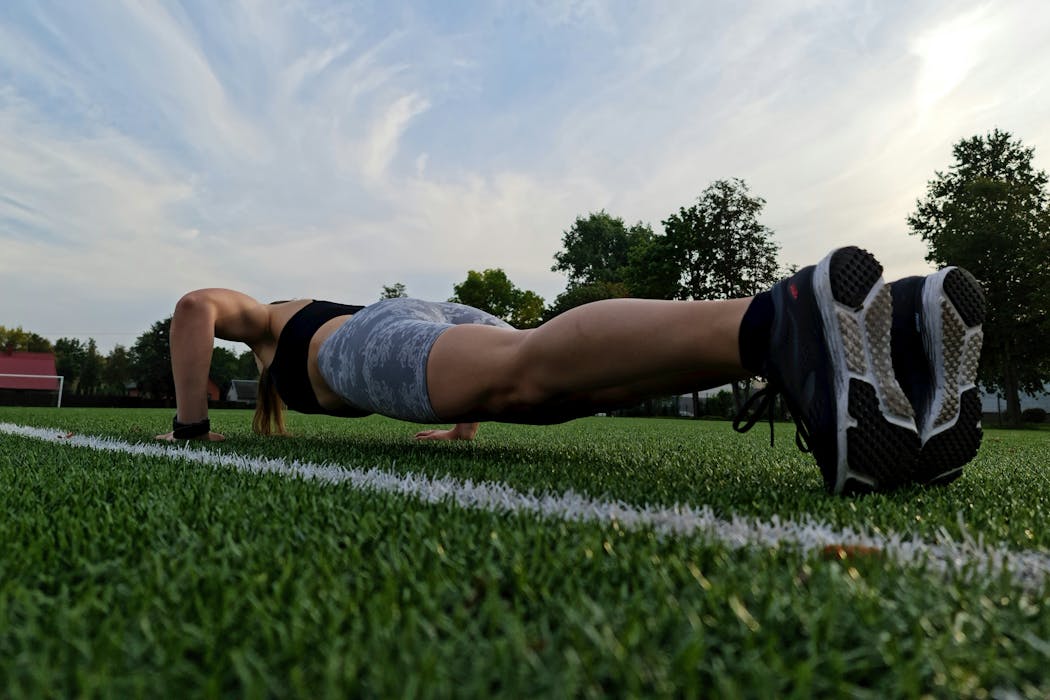
From push-ups and squats to planks and chin-ups, bodyweight training has become one of the most popular ways to exercise because it can be done anywhere – and it’s free.

So, what is it, why does it work and how do you get started?

A man attempts a chin-up on a metal bar in a park outside
Lawrence Crayton/Unsplash What is bodyweight training? Bodyweight training simply means you use your own body weight as resistance, instead of external weights such as barbells and dumbbells. Common exercises include push-ups, squats, lunges and sit-ups. But bodyweight training can also use static holds that challenge your body without moving, like planks or yoga poses. Bodyweight training can be used for any muscle group. Typically, we can break down the exercises by movement type and/or body region: upper body: push-ups, pull-ups, handstands lower body: squats, lunges, step-ups, glute bridges core: sit-ups, planks, mountain climbers whole body: burpees, bear crawls, jump squats. Bodyweight training can also be done with equipment: calisthenics is a style of bodyweight training that uses bars, rings and outdoor gyms. What are the main forms? Types of bodyweight training include: calisthenics: often circuit-based (one exercise after another with minimal rest), dynamic and whole-body focused. Calisthenics is safe and effective for improving functional strength, power and speed, especially for older adults yoga: more static or flowing poses with an emphasis on flexibility and balance. Yoga is typically safe and effective for managing and preventing musculoskeletal injuries and supporting mental health Tai Chi: slower, more controlled movements, often with an emphasis on balance, posture and mindful movement suspension training: using straps or rings so your body can be supported in different positions while using gravity and your own bodyweight for resistance. This type or training is suitable for older adults through to competitive athletes resistance bands: although not strictly bodyweight only, resistance bands are a portable, low-cost alternative to traditional weights. They are safe and effective for improving strength, balance, speed and physical function. What are the pros and cons? There are various pros and cons to bodyweight exercises. Pros: builds strength: a 2025 meta-analysis of 102 studies in 4,754 older adults (aged 70 on average) found bodyweight training led to substantial strength gains - which were no different from those with free weights or machines. These benefits aren’t just for older adults, though. Using resistance bands with your bodyweight workout can be as effective as traditional training methods across diverse populations boosts aerobic fitness: a 2021 study showed as little as 11 minutes of bodyweight exercises three times per week was effective for improving aerobic fitness accessible and free: bodyweight training avoids common barriers to exercise such as access to equipment and facilities, which means it can be done anywhere, without a gym membership promotes functional movement: exercises like squats and push-ups mimic everyday actions like rising from a chair or getting up from the floor. Cons: difficulty progressing over time: typically, we can add weight to an exercise to increase difficulty. For bodyweight training, you need to be creative, such as slowing your tempo or progressing to unilateral (one-sided or single-limb) movements plateau risk: heavy external loads are more effective than bodyweight training for increasing maximal strength. This means if you stick to bodyweight training alone, your strength gains are more likely to plateau than if you use machines or free weights. Tips for getting started (safely) As with any form of exercise, it’s always best to speak to a medical professional before starting. If you are ready to get going, here’s some tips: start small: pick simple moves to begin and progress them as you gain strength, confidence and experience focus on form: think quality over quantity. Completing movements with good control and body position is more important than how many you can do with poor control progress gradually: vary the number of sets or repetitions to make your exercise more challenging. You can progress the movements from easier (push-ups on your knees) to harder (decline push-ups) as you get stronger and need more of a challenge mix it up: use a variety of types of bodyweight training as well as targeting different muscle groups and movements seek guidance: reach out to your local exercise professionals or use apps like the Nike Training Club to help guide your planning and progress. Bodyweight training means you don’t need expensive equipment to improve your health. Whether it’s squats in the park, push-ups at your children’s football game, or yoga at home, your body is a portable gym. With consistency, creativity and time, bodyweight exercises can help you build strength and fitness.

Read more https://theconversation.com/your-body-can-be-a-portable-gym-how-to-ditch-membership-fees-and-expensive-equipment-264036

Steel Cutting Services: Precision That Shapes Modern Construction

In today’s construction, manufacturing, and fabrication environments, steel cutting services play a vital role in turning raw steel into practical, usable components. From large-scale infrastructure projects to bespoke architectural features, the accuracy and quality of steel cutting directly influence the... Read more

Lighting Stores Perth: Expert Guidance for Inspired and Functional Spaces

Choosing the right lighting can completely change how a space feels, functions, and flows. Trusted lighting stores Perth play a crucial role in helping homeowners and businesses make confident lighting decisions that go beyond appearance alone. Lighting influences mood, productivity, comfort... Read more

Why Retail Cleaning Plays a Key Role in Customer Experience

In retail environments, cleanliness directly shapes how customers perceive a brand. Retail cleaning is not just about appearance but about creating a space where shoppers feel comfortable, confident, and welcome. From small boutiques to large shopping centres, a clean retail environment... Read more

Cleaner Floors, Healthier Homes: Lefant M3L Arrives as Australians Prioritise Pet-Friendly Hygiene

As pet ownership continues to rise, Australians are placing greater emphasis on maintaining a hygienic indoor environment for both family members and their animals. Issues such as dander, loose fur, and tracked-in dirt require consistent cleaning to support better home... Read more

How Home Removalists Save Time, Money, and Energy During Your Move

Moving to a new home is an exciting chapter in life, but the process of getting there can be overwhelming. From packing and organizing to transportation and unpacking, relocation involves a long list of tasks that can consume both your... Read more

Fulfilment Australia: Streamlining ECommerce Operations for Business Growth

As eCommerce continues to thrive, efficient order fulfilment has become one of the most critical components of customer satisfaction and business success. Companies across the nation are turning to professional fulfilment Australia providers to manage inventory, packaging, and shipping operations... Read more