

Are berries safe to eat? How worried should I be about the pesticide dimethoate?
- Written by The Conversation
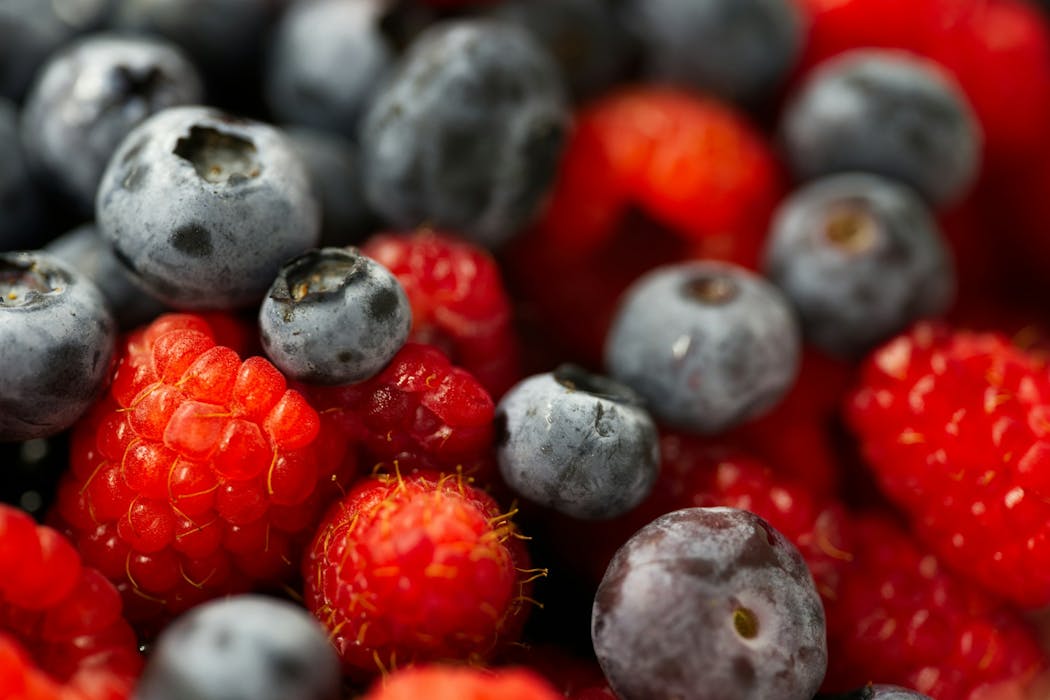
Australia’s regulator has suspended use of a common pesticide used on blueberries, raspberries and blackberries known as dimethoate.
But this year-long suspension isn’t due to any new information about the pesticide itself. Rather, the Australian Pesticides and Veterinary Medicines Authority (APVMA) says it’s because we’re eating more berries so our potential exposure has increased.
In particular, it says children aged two to six years may be at increased risk of exceeding maximum limits.
Here’s what we know about dimethoate and whether berries are still safe to eat.
What is dimethoate?
Dimethoate is a pesticide that has been used in Australia since 1956. It belongs to a class of pesticides that inhibits the enzyme acetylcholinesterase. This prevents the breakdown of a key neurotransmitter (chemical messenger) and so paralyses an insect’s nervous system, killing it.
Mammals, including humans, also have the enzyme acetylcholinesterase, and can be poisoned by this class of pesticide.
So careful regulation of both application of dimethoate and levels of dimethoate residues on food are required so we are not exposed to harmful levels.
The amount of maximum permissible residues depends, in turn, on how much someone is exposed to from their food.
To do this, you need to have estimates of how much residue is on food and how much food we eat.
How much is too much?
The APVMA has a maximum limit for how much dimethoate we should be exposed to from our food. This is known as the acute reference dose (or ARfD), which is 0.02 milligrams per kilogram of body weight.
This maximum dose includes a safety factor of ten. In other words, the maximum dose allowed is ten times lower than the lowest dose that has no effect.
This dose was set in 2017. But it is consistent with current World Health Organization limits and Canadian regulations. Australia’s maximum dose is lower than limits from the United States Environmental Protection Agency.
So, what’s changed?
But our dietary habits have changed. Australian consumption of blueberries, blackberries and raspberries has increased substantially since the APVMA last assessed dimethoate. Consumption is up 285–962% compared to levels considered for its 2017 assessment.
Eating more berries is a good thing. But this means that current trace levels of dimethoate on berries (0.0033 micrograms per kilogram of body weight per day for a toddler) might potentially exceed the maximum limit for children aged two to six years.
The APVMA states:
The level of residues detected are unlikely to pose a serious risk to human health, but has proposed suspension of these specific dimethoate products as a precautionary measure.
What can you do?
Don’t give up on berries. Eating berries is an important part of a balanced diet. And the APVMA is at pains to emphasise the risk of harm is low.
The simplest approach is to wash your berries. You should be washing fruit and vegetables anyway. Washing helps get rid of soil, and potentially harmful microorganisms.
Washing berries will not remove all dimethoate, but can substantially reduce the levels so you can continue to enjoy them and their benefits.


