

Giving men a common antidepressant could help tackle domestic violence: world-first study
- Written by The Conversation
In April 2024, Prime Minister Anthony Albanese declared domestic and family violence a “national crisis” calling for proactive responses that “focus on the perpetrators and focus on prevention”.
The issue hasn’t really improved since then.
But a world-first trial from the University of New South Wales and University of Newcastle, which tested whether medicine can reduce violence and domestic violence, may offer a new way forward.
A comprehensive approach to a complex problem
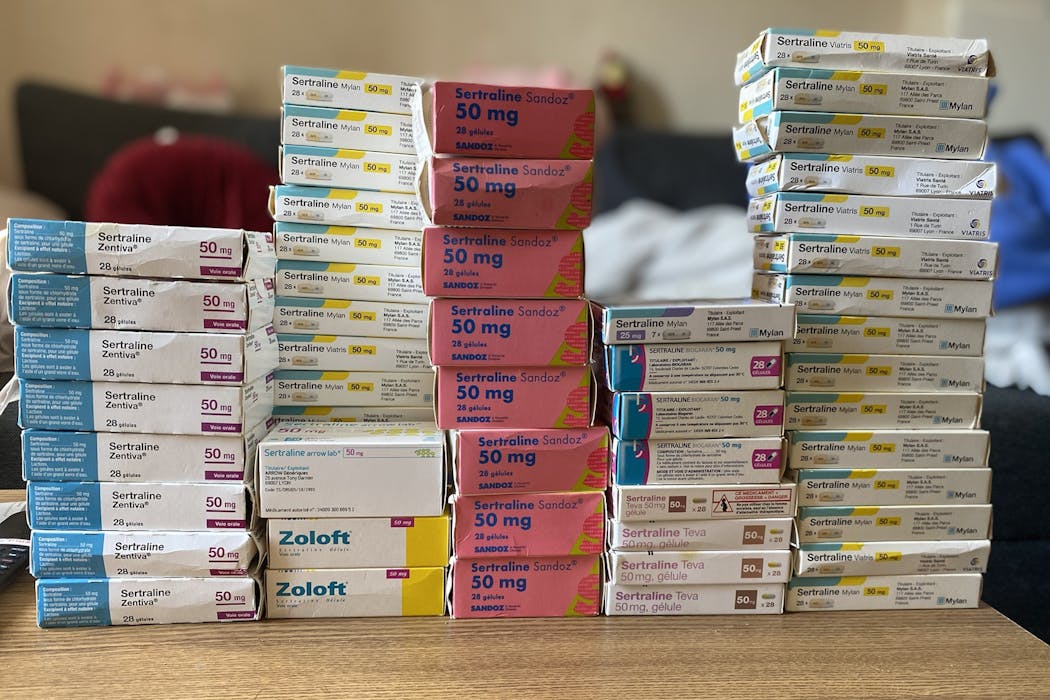
The trial tested whether sertraline – a commonly prescribed antidepressant – could reduce violent reoffending in impulsive men.
We screened 1,738 men in NSW between 2013 and 2021, ultimately randomising 630 participants to receive either sertraline or placebo in a “double-blind” trial. This means researchers, nurses, psychiatrists and participants didn’t know which men were on sertraline or placebo.
Most participants were recruited through community corrections offices and courts.
The results for the effect of sertraline for general violence were inconclusive.
However, those who took sertraline showed significant reductions in domestic violence reoffending:
- at 12 months, offending was lower in the sertraline group (19.1%) compared to placebo (24.8%)
- at 24 months, offending was lower in the sertraline group (28.2%) compared to the placebo group (35.7%).
For men who took their medication more consistently, the reduction in reoffending reached 30% at 24 months.
How does sertraline work?
The antidepressant sertraline works by enhancing serotonin functioning in the brain, which plays a crucial role in regulating impulse control and emotional responses.
For highly impulsive men, this directly addresses a key driver of violence – the inability to pause and regulate emotional reactions.
Domestic violence frequently involves emotionally charged, impulsive reactions in intimate relationships. The type of anger and aggression in these reactive contexts is theorised to be most responsive to regulating brain serotonin neurotransmission.
General violence is far more diverse, including premeditated acts that are typically less reactive.
During an initial four-week period before randomisation, all participants received sertraline and we observed a:
- 55% reduction in depression
- 44% in psychological distress
- 35% in anger
- 25% in irritability
- 20% in impulsivity.
These changes occurred before most of the trial’s psychosocial supports could take full effect, demonstrating the medication’s direct impact.
One participant with significant prison time told us:
I was in a road rage situation, a guy jumped out of his car, having a go at me, and any other time I would have smashed him. But I just said, ‘mate go away before the police are called’. I dead set believe it was due to the medication. I feel proud, it’s been a long time but hey, I’ve finally got control of myself.
The crucial role of comprehensive support
The medication’s effectiveness depended on participants actually taking it and staying engaged long enough for it to work. This is where the comprehensive support provided became essential.
Many participants had issues such as homelessness, untreated mental health disorders, substance use, relationship crises, disengagement from health services and conflicts with government institutions.
Many men had “fallen through the cracks”, because their cases are too complex for mental health services or standard corrections programs. This in turn means they were unable to access the support they needed.
We realised administering medication without addressing these broader psychosocial needs would be failing in our duty of care.
So our study evolved to include a comprehensive support model, combining pharmacotherapy with trauma-informed clinical counselling, proactively following up participants, 24-hour crisis support, helping the men navigate support services and partner safety planning.
This proved crucial for higher engagement, which led to better outcomes.
Perhaps most strikingly, sertraline reduced the rate of repeated domestic violence offending (more than one offence in 24 months) by 44% compared to placebo.
These findings reveal a key relationship: sertraline improves a range of behavioural measures and reduces impulsivity. Meanwhile comprehensive psychosocial support addresses the trauma, social disadvantage and unmet needs that maintain patterns of emotional reactivity and violence.
As one participant reflected:
I’ve evolved […] I was actually stepping back and listening to what other people had to say before I blew my top.
What about partners and family members?
Our research revealed 96% of partners reported maintained or increased safety, 85% observed positive behavioural changes (in the men) and 77% reported improved personal wellbeing.
One partner noted:
I used to sleep with a hammer under my bed. Since he started this medication, I can sleep more easily, and I don’t need to sleep with the hammer anymore.
Reframing domestic violence
When we help men address the psychological, relational and social factors that drive their domestic violence, we’ve shown we can prevent harm before it occurs.
The men in our trial had extensive trauma histories, with many having experienced childhood abuse, marginalisation and conflict with government institutions.
This perspective by no means diminishes the devastating harm and impact of domestic violence or the need for essential victim supports. Nor does it reduce the importance of addressing structural determinants of domestic violence such as gender inequality or outdated cultural norms.
But the current crisis demands evidence-based interventions that can reduce domestic violence now, while complementary efforts continue to support victims.
A way forward
Our trial demonstrated this approach is cost-effective: at about A$7,000 per participant annually versus $150,000 for incarceration.
The model’s independence from mainstream services proved crucial for engagement. Operating through a university research program rather than government systems helped build trust with men who had extensive negative experiences with institutions.
We do not claim our approach to be a silver bullet, but it deserves serious consideration as a proven intervention in the domestic violence prevention ecosystem, and could be implemented now.
The National Sexual Assault, Family and Domestic Violence Counselling Line, 1800 RESPECT (1800 737 732), is available 24 hours a day, seven days a week for any Australian who has experienced, or is at risk of, family and domestic violence and/or sexual assault. If you or someone you know is in immediate danger, contact 000. Men’s Referral Service (call 1300 766 491) offers advice and counselling to men looking to change their behaviour.


