

'Sometimes I don't have the words for things': how we are using art to research stigma and marginalisation
- Written by The Conversation
There’s growing recognition that creative pursuits like painting, singing or dancing can have a positive impact on physical and mental health, can lessen isolation, and can increase connection to community.
Creative activities can also be an effective and safe way to learn about people’s life experiences, especially those that are upsetting or hard to talk about.
Our team uses art as a research tool to help increase understanding about mental health and well-being, and to build better systems of care and support.
We are using art to learn about stigma and marginalisation as a result of mental distress, disability or a refugee background. We collaborated with 35 people who identify as women, who have told us that making art and being creative is a powerful tool for self-empowerment.
Read more: We still stigmatize mental illness, and that needs to stop
Giving voice to the unsaid
Women who experience mental illness, disability or who have a refugee background routinely experience stigma and discrimination.
This can have profound impacts, including reduced quality of life, barriers to accessing health care, reduced employment prospects, reduced access to affordable housing and diminished opportunity to experience motherhood.
The experience of stigma and discrimination often remains invisible. It can be upsetting to talk about and hard to describe. Creative activities, like making art, can help bring these experiences to light. Art can offer a way to express things that are tricky to say out loud.
As one participant in our study reflected:
Sometimes I don’t have the words for things … [art was] a really alternative way to express something without having to necessarily have the words for it.
Art can act like a mnemonic (prompting memories and recollections), can help people feel relaxed and safe when exploring upsetting experiences, can help people feel in control of their own stories, and enables them to share these stories in ways they feel comfortable with.
In our research we used a form of art creation called “body mapping”.
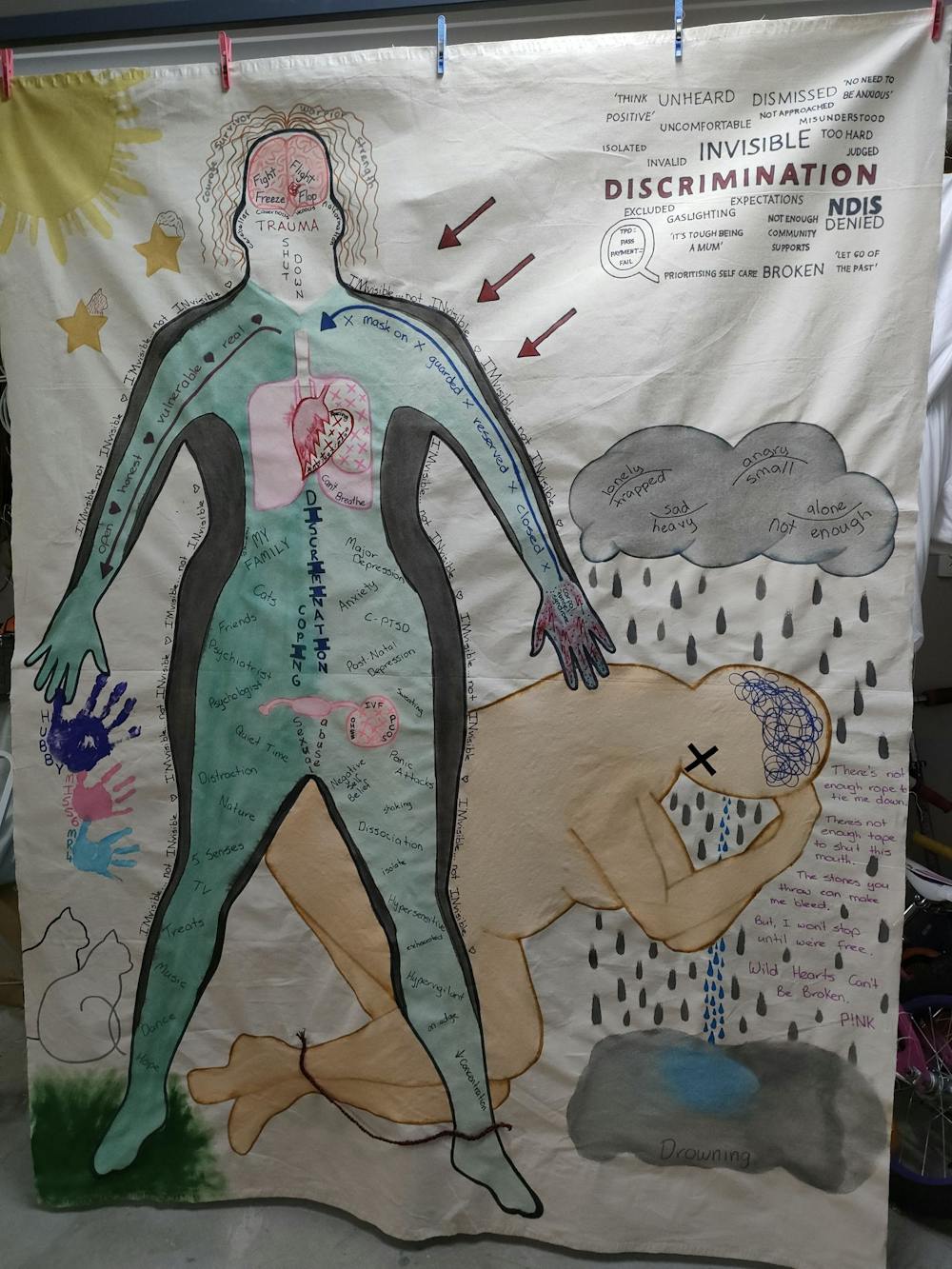
Body mapping involves tracing your body onto a large piece of paper or fabric and then decorating this outline by drawing, painting, sewing, collage and writing.
The body maps that participants created are visually striking, and each one tells a unique life story. These body maps were used as a jumping-off point to discuss the themes and experiences they encompass.
Mapping stigma
Participants explored the way stigma exists on a spectrum, ranging from subtle (indifference or ignorance) to overt (bullying, verbal and physical abuse). One participant wrote the words “now let’s add stigma” to her map to represent the way stigma had made it hard and scary to seek medical support.
When we spoke about her map, she told us:
I thought mental illness was like you’re locked away in a psych ward and left to die, that there is no help […] that’s what I got from social media and television.
Another participant represented her body as a multicoloured jigsaw puzzle to symbolise the “many fragments and pieces that makes you, you”. The jigsaw also represented her experience of healthcare, with doctors only seeing one piece of her and not acknowledging or offering support for other pieces.
As she reflected:
People with disabilities are people first and they too have mental health needs just like the rest of the world. And I think that for far too long this cohort of people have been overlooked and underrepresented.
Stigma was often identified as the reason participants felt the need to hide their feelings or pretend they were not struggling.
One participant drew two bodies on her map to represent this:
That is showing that you do work to the point of exhaustion everyday to make sure that you’re presenting in an appropriate way, but actually behind the scenes is what people don’t see.
Participants also used maps to celebrate their strength, resilience and the positive influences in their lives like friends, family, pets and nature. Making art was a common positive influence.
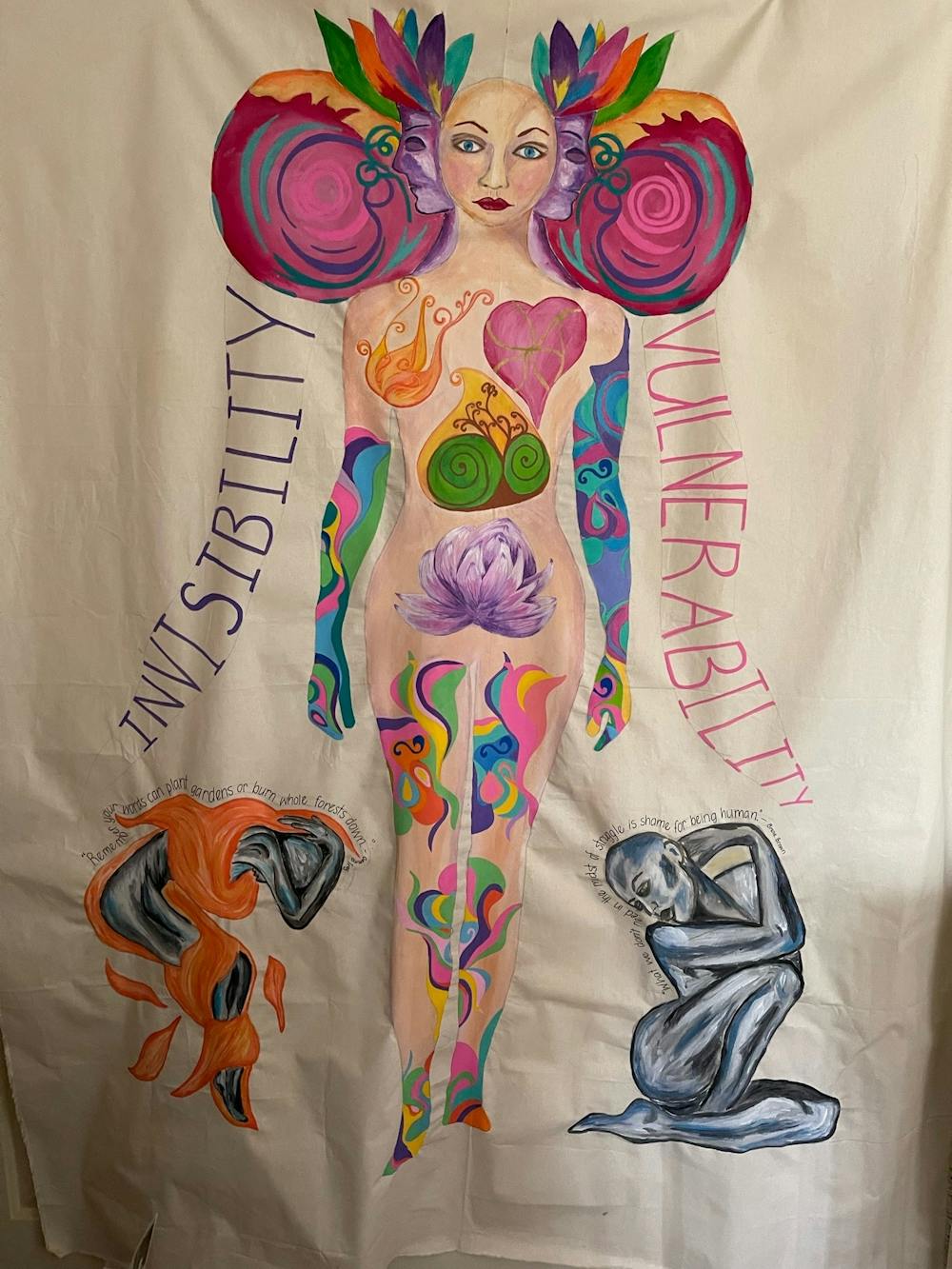 Participants were proud of the art they were able to make during the process. This piece is called Hidden Colours of the Invisible.
Author provided (no reuse)
Participants were proud of the art they were able to make during the process. This piece is called Hidden Colours of the Invisible.
Author provided (no reuse)
Participants saw art as an avenue for self-expression, meditation, relaxation and a way to process feelings. Participants also told us making art as part of the research project allowed them to take stock and reflect on their experiences.
They also used the research as an opportunity to reach new artistic heights. As one participant reflected:
My body map is by far the greatest piece of art I have created.
The power of art
An important takeaway from this work is the power and importance of art in well-being, health and social inclusion.
Participants remarked that they wished body mapping workshops, or other free creative activities, were regularly accessible.
Having a safe, supportive space to be creative and share their experiences with others was affirming and therapeutic. Art was a powerful way to share stories, shine a light on injustice, and encourage empathy and respect for difference.
A participant said it best when they remarked:
it’s empowering for everybody to have a voice [through art] and to be able to tell their story. That’s powerful.
Read more: 'It’s given me love': connecting women from refugee backgrounds with communities through art


