

Taxi Driver at 50: Martin Scorsese’s film remains a troubling reflection of our times
- Written by The Conversation
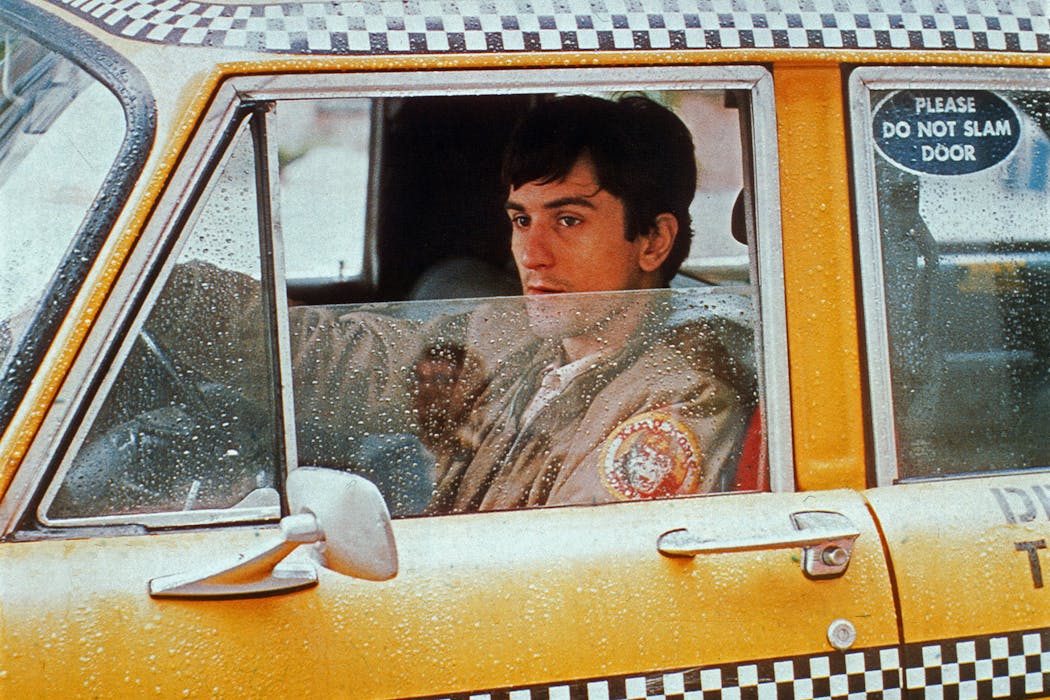
Martin Scorsese’s Taxi Driver turns 50 this month. Nominated for four Oscars and winner of the Palme d’Or at the 1976 Cannes Festival, Scorsese’s searing, hallucinatory portrait of urban alienation is widely regarded as one of the most important American films of all time.
It is also unquestionably one of the most troubling.
Taxi Driver channels the anger, paranoia and alienation of an American decade shaped by economic decline, imperialist violence and political scandal. Set in the dilapidated squalor of a rapidly deindustrialising New York, the film proffers a forlorn portrait of a society coming apart at the seams.
At its heart sits a deeply unsettling vision of masculinity, bound up in racism and misogyny.
The social and psychological forces Taxi Driver brought into focus have not disappeared. If anything, they have simply migrated – finding new expression in digital cultures shaped by the platforming of grievance, aesthetised resentment and the monetisation of male rage.
American existentialism
Travis Bickle (portrayed with unnerving intensity by Robert De Niro) was the creation of screenwriter Paul Schrader, who drew heavily on his own experiences of isolation and emotional crisis. Schrader also looked to literature for inspiration, citing Fyodor Dostoevsky’s misanthropic Underground Man as a formative influence.
In placing the European existential hero in an American context, said Schrader:
you find that he becomes more ignorant, ignorant of the nature of his problem. Travis’ problem is the same as the existential hero’s, that is, should I exist? But Travis doesn’t understand that this is his problem, so he focuses it elsewhere: and I think that is a mark of the immaturity and the youngness of our country.
Schrader also drew on contemporary events, including the attempted assassination of right-wing politician George Wallace by Arthur Bremer. The result was a character who crystallised the violent confusions of the era.
Like Bremer, Travis keeps a diary. We see him writing in it at various points in the film and we hear excerpts from it in voiceover:
All the animals come out at night. Whores, skunk pussies, buggers, queens, fairies, dopers, junkies, sick, venal. Someday a real rain’ll come and wash all this scum off the streets.
Travis, a decidedly unreliable narrator who claims to have served in Vietnam, takes a job as a taxi driver because he has trouble sleeping. Working almost exclusively at night and wound impossibly tight, he rides through the city in a state of heightened unease.
One morning, after clocking off from a long shift, he notices a young woman through the window of a midtown Manhattan office. This is Betsy (Cybill Shepherd), an ambitious campaign worker employed by a presidential hopeful Charles Palentine (Leonard Harris).
Betsy quickly becomes the object of Travis’s fixation. He begins loitering in his cab outside her workplace, watching her from a distance. Eventually, he somehow persuades her to go on a date with him. It does not go well.
Socially inept, Travis’ idea of a good time is a trip to a Times Square porno theatre. He appears genuinely baffled when Betsy decides she has had enough and storms out, cutting off all contact with him. This only deepens Travis’ indignation and culminates in an angry confrontation at Betsy’s office, where he berates her in front of her coworkers.
Travis starts to spiral, confessing to a fellow cabbie that he’s got “some bad ideas” in his head. He settles on a plan of action. His diary entries become even more ominous.
He starts working out obsessively, loads up on guns and plots the public assassination of Betsy’s boss. Political violence becomes a way of giving shape to his discontent, transforming indignation into a pipe dream of historical consequence. He practices shooting in front of the mirror in his dingy apartment.
De Niro’s improvised line, “You talkin’ to me”, became (to borrow from film scholar Amy Taubin) “arguably the most quoted scene in movie history”.
When his plan to murder Palantine collapses, Travis redirects his attention to Iris, a 12-year-old sex worker played by Jodie Foster. He decides he must “help” her get away from her pimp, believing himself morally just. Carnage ensues – so ferocious that it initially led to the film being refused a commercial rating.
It ends on a bleakly ironic, ambiguous note.
A dark afterlife
Taxi Driver divided critics but proved an immediate hit with viewers.
Its disquieting power did not diminish with time; if anything, the film’s afterlife has been almost as troublesome as the work itself.
In 1981, John Hinckley Jr. – who had become obsessed with the film – attempted to assassinate Ronald Reagan in an effort to impress Jodie Foster. This incident shook Scorsese, who briefly considered giving up filmmaking altogether.
Travis Bickle has been repeatedly elevated to the status of anti-hero. The character has cast a long cultural shadow, most obviously in Todd Phillips’s Joker (2019).
A 2025 documentary series reflecting on Scorsese’s career returns to this question of legacy. Director Rebecca Williams puts it to Schrader that she gets the impression that “there are a lot of Travis Bickles, especially right now.” Schrader’s reply is blunt:
They’re all talking to each other on the internet. When I first wrote about him, he was talking to nobody. He really was, at that point, the Underground Man. Now he’s the Internet Man.
It is a sobering thought.


