

Bunnings’ backyard pods won’t fix the housing crisis, but they signal a shift
- Written by The Conversation
Australia is in a deep housing crisis.
The latest National Housing Supply and Affordability Council analysis shows the country is likely to fall more than a quarter-of-a-million homes short of the federal government’s target to build 1.2 million homes by 2029. Its data shows only around 938,000 dwellings are expected to be built in the five-year period, leaving a shortfall of about 262,000.
Another economic estimate suggests demand exceeds supply by 200,000 to 300,000 homes, pushing prices and rents higher as Australians compete for a limited stock of houses.
This gap between demand and supply is why many voices in policy and industry argue traditional ways of building houses are too slow and too expensive.
As Bunnings, Australia’s biggest hardware retailer starts selling tiny homes, it feels like a turning point.
But are backyard pods the answer to a national housing crisis?
Prefab and modular homes in Australia
In response to slow and costly traditional building, many in industry and government have pointed to modern solutions such as modular, prefab or even 3D-printed homes as a key part of the solution.
The idea is to make components or whole sections of homes in dedicated facilities and then assemble them quickly on site.
Recent government analysis shows some of these factory-based homes can be built up to 50% faster than conventional construction, helping speed housing delivery.
The market for prefab and modular buildings is growing in Australia and globally.
The Australian prefab construction sector is valued at A$12.91 billion and is forecast to grow by about 7.88% a year.
However, these methods account for less than 8% of the construction sector.
This is far below countries such as Sweden, where prefab makes up a majority of detached housing.
Read more: A prefab building revolution can help resolve both the climate and housing crises
Bunnings’ pods: novel but not the solution
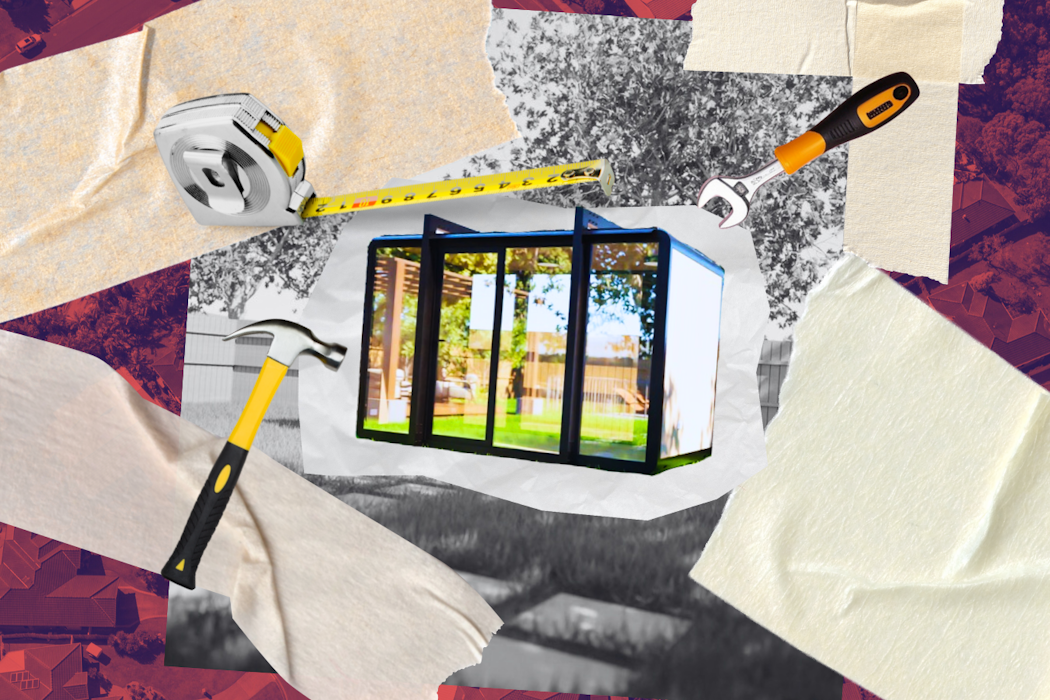
Bunnings has recently started selling flat-pack backyard pods that have captured attention.
The pods, small modular units costing from about $26,000, can be assembled in days.
At first glance, this looks like an affordable housing innovation. But the reality is more nuanced.
These pods are fundamentally temporary. Their size, layout and fit-out reflect short-term or secondary use rather than long-term residential living.
Beside this, many pods avoid full planning or building approval in some locations, which is a strong signal they are being treated, legally, as ancillary structures.
They are most useful as offices, studios, guest rooms or extra space but unlikely to be suitable as permanent homes for families.
While the price is eye-catching, it does not include site preparation, ground works, connections for power and water, or any compliance costs, all of which can add substantially to the final price.
Buyers would also need somewhere to put the pod – either owning land, or being able to use someone else’s.
Permits and approvals may be required depending on the location and intended use, further complicating the picture.
Bunnings has not said it is entering the housing market to help solve the national crisis. But its decision to partner with prefab manufacturers comes as major lenders and builders are embracing factory-built housing as part of broader affordability responses, and as analysts note growing consumer interest in faster, lower-cost housing options amid soaring property prices.
Why scale matters
The key to reducing housing costs through industrialised construction is scale.
When production levels are small, factories cannot spread fixed costs over many units.
This results in high prices, even if units can be completed quickly.
In countries where factory-built housing works at scale, companies build the same homes repeatedly. That allows workers to get faster and factories to spread the cost of specialised equipment across many homes. They also have strong supply chains for components and labour.
By comparison, Australia’s sector is still small and most manufacturers produce only a handful of units each year.
Without big volumes and steady demand, off-site building can’t unlock real cost reductions.
That said, Bunnings’ entry is noteworthy.
It shows mainstream retail channels see a business opportunity in modular building products. It may help raise public awareness of alternative construction methods in everyday Australian life.
What are the long-term fixes?
The housing challenge will not be solved by pods.
What is needed is much larger investment into these alternative methods of construction, from both state and federal governments, aligned with international partnerships that bring technology, expertise and industrial scale.
Countries that have succeeded in using factory-built homes at scale have done so through coordinated policy support, strong industrial strategies, workforce training and investment in manufacturing facilities.
Some also combine this with land reform, faster approvals and direct procurement of homes for public needs.
A way forward
Bunnings’ backyard pods may be an interesting new product line.
They can provide extra space and appeal to certain buyers but they are not a long-term housing solution for most Australians.
Bunnings is riding the shift toward factory-built housing but the real shift is bigger: Australia needs to build high-quality homes at scale, not just sell small pods.
Australia needs a dramatic expansion of factory-based building capacity, supported by policy, investment and a clear pathway from small prototypes to large-volume, high-quality homes for communities in need.


