

Importing gas locks NZ into fossil fuels for longer – just as clean energy surges
- Written by The Conversation
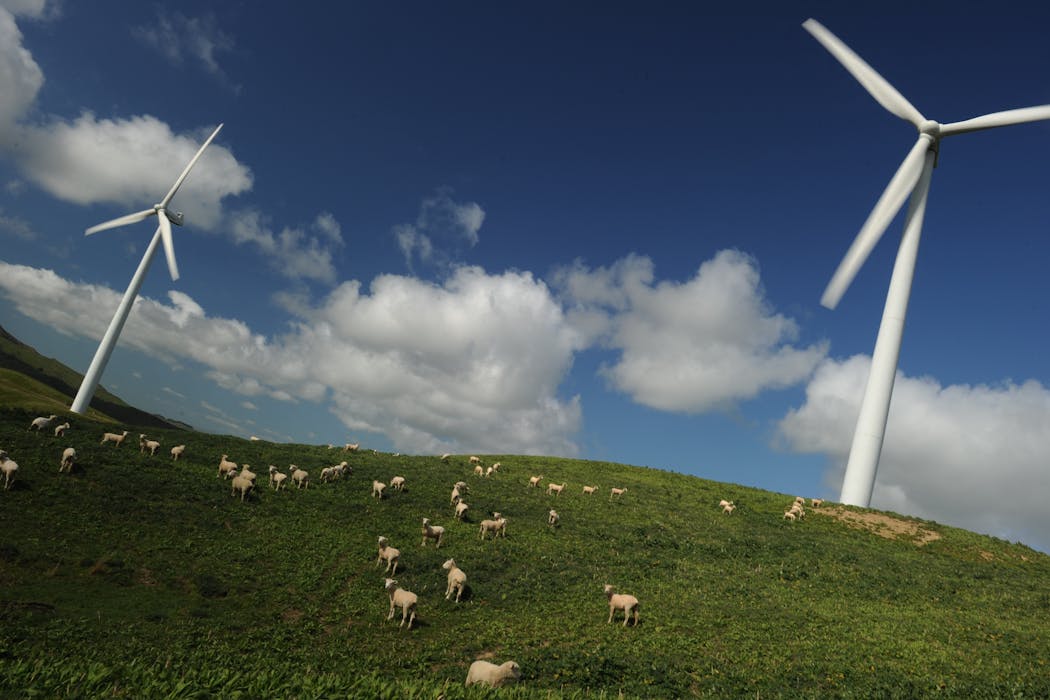
The government’s announcement this week that it would move ahead with plans for a new facility to import liquefied natural gas (LNG), potentially as early as next year, was framed as a way to shore up energy security.
But the decision instead marks another major step backwards for domestic efforts to decarbonise.
Notably, it comes as communities across the North Island – including Mount Maunganui – are recovering from just the kind of extreme weather events climate change is projected to intensify.
With the United States now withdrawing from the Paris climate agreement, and New Zealand simultaneously weakening its own climate settings, it is easy to feel a sense of drift.
Despite 89% of people globally wanting stronger climate action, the erosion of the international rules-based order risks pulling more countries away from cooperative solutions.
But the energy transition now has real momentum. So how much difference does the US withdrawal from Paris – and New Zealand’s turn back towards fossil fuels – actually make?
A setback, not a stop
Before the US withdrew, 93% of global emissions came from countries with net-zero policies in place; that figure has now fallen to 83%. The drop would have been larger if not for pledges by 24 US states, along with many cities and corporations, to stick to Paris Agreement targets.
So, while the US exit might be a massive blow, it is far from the end of global climate action. Current Paris Agreement pledges and targets would see global emissions peak in the next few years, if countries follow through.
Many states – including the US, United Kingdom, China, Australia and Canada – are already recording declines. New Zealand’s emissions have flatlined since 2008 but it is still doing less than its fair share on a per-capita basis.
Globally, the race is now on between avoiding dangerous climate tipping points and fostering self-reinforcing momentum in clean energy, which is already at an all-time high.
This is important, as around 70% of the emissions cuts the world needs to make will likely come from the energy transition. Despite more than half of New Zealand’s emissions coming from agriculture, energy remains a strong focus of the government’s emissions reduction plan.
All the while, solutions to renewable intermittency – the problem of wind and solar not always generating power when it is needed – are expanding.
Read more: NZ’s rejection of emission targets fuels risk of international law breach
In hydro-heavy systems like New Zealand’s, dry periods can be covered by pumped hydro, biomass, battery storage and overbuilding cheap wind and solar. Importing LNG to “firm” electricity instead undermines these options and puts the brakes on clean investment.
Worldwide, solar and wind capacity has doubled every three years for the past two decades, with each doubling of solar cutting prices by about 25%.
China installed half of all new solar last year and its emissions have now peaked. The European Union now generates more power from renewables than fossil fuels, and Pakistan has imported solar panels equivalent to 40% of its total demand.
Electric vehicles have reached price parity with internal combustion engines. Globally, 25% of new car sales were electric last year, rising to 96% in Norway and 59% in China, with 39 countries now above a 10% sales share. In China’s heavy truck fleet, around half of new sales are electric.
Fossil fuel use is already declining in the developed world: oil use in the OECD peaked in 2005, and coal in 2008. While consumption is still rising in poorer countries, many projections see global oil demand peaking in the next few years. And there is broad agreement coal use will begin to fall before 2030.
As fossil fuel use declines, shipping emissions will fall too. And using existing technology to stop methane leaks from oil and gas wells – which is profitable – would cut emissions by more than all global air travel.
Geopolitics is accelerating the energy transition
Geopolitical tensions are driving a push for energy independence, accelerating the growth of renewables. As Canada’s prime minister Mark Carney recently noted, as the international rules-based order and multilateralism fray, countries are realising they must build greater strategic autonomy, including in energy.
When Russia invaded Ukraine in 2022, disrupted gas supplies drove prices higher, leaving Europe paying about €650 billion more for fossil fuels than it otherwise would have – around 40% of the cost of building a 95% renewable power system for the continent.
In 2022–23, the EU built 37% more new renewable capacity than the year before, stepped up energy efficiency and electrification, and set out a strategy to cut reliance on Russian gas.
There is strong global momentum for emissions cuts, and renewable energy is now cheaper than fossil fuels while offering energy security. New Zealand should also be strengthening its own energy independence, while moving quickly away from importing fossil fuels.
As the US steps back from multilateral climate action, New Zealand must work with other countries to keep momentum growing: holding to existing treaties, and joining new agreements such as the “roadmap” away from fossil fuels put forward at COP30 in Brazil last year.
At the very least, New Zealand should shoulder its fair share of per-capita emissions reductions if it wants to leave a liveable world for future generations.


