

After ‘code brown’, how long before the pool is safe again? Water quality experts explain
- Written by The Conversation
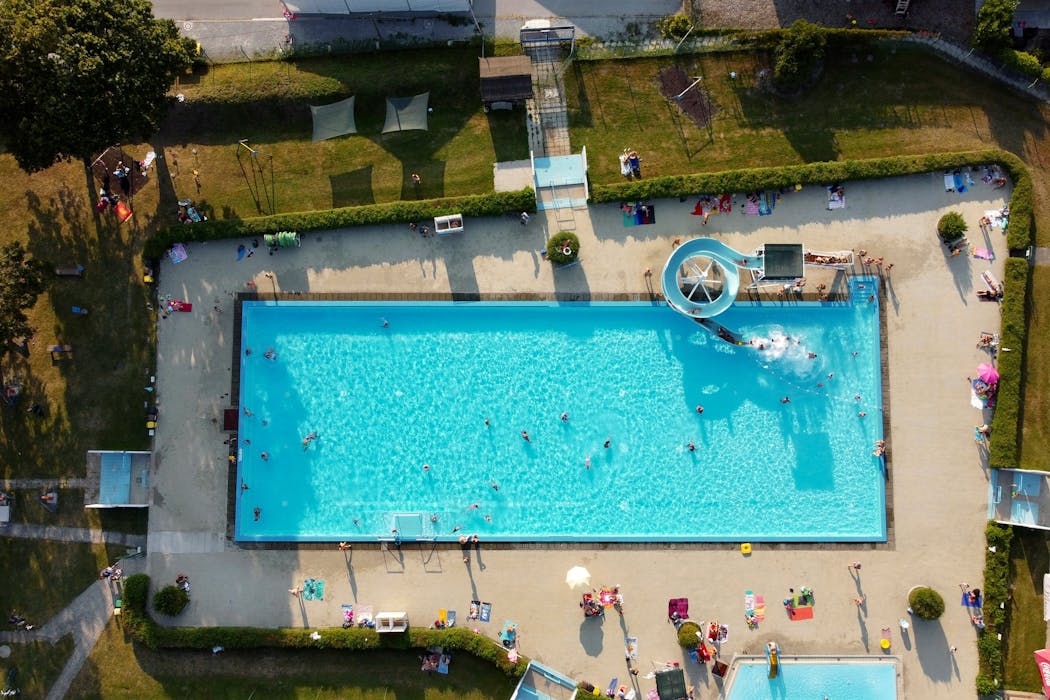
There’s little worse as a pool lifeguard than hearing the words “code brown” come through your radio. For swimmers on a hot day, there’s also little worse than being told to immediately get out of the water because there’s poo floating in the pool.
During hot summers, public pools in Australia are often crowded with families and children. The risk of “code brown” incidents at your local pool is probably substantial.
So how is a public pool cleaned after poo or vomit accidentally ends up in the water – and how long before it’s safe to get back in?
The short answer is: it depends. Let’s dive in.
The dangers of poo in the pool
Contaminated swimming pools are hazardous for swimmers. They have been linked to outbreaks of “crypto”, short for cryptosporidiosis. It’s a highly contagious gastric illness and has unpleasant symptoms including diarrhoea, stomach cramps, fever, nausea and vomiting.
New crypto cases are monitored as it’s a notifiable disease in Australia. If multiple cases are traced to a swimming pool, the pool will be closed for extra cleaning and chlorine treatment.
There are other pathogens, such as viruses, that can infect swimmers using pools exposed to poo or vomit incidents. For example, one study in the United States found rapid onset vomiting and diarrhoea (acute gastroenteritis) affect 28% of swimmers who’d used a norovirus-contaminated swimming pool.
Dealing with an ‘aquatic incident’
Responses for a code brown or vomit follow the official health guidelines for public swimming pools under state or territory public health laws.
However, the specific protocol for the staff will also differ depending on the age of the pool, the type of filtration system, chemicals used for disinfecting the water, and … the type of the poo.
Broadly speaking, if a solid stool or vomit is found, the pool is closed and the poo or vomit must be scooped out using a pool scoop or bucket. Then, it should be discarded down the sewer.
When all the particulates have been removed, a pool vacuum is placed in the water for additional cleaning, and the chlorine concentration is raised for an extended period to disinfect the entire pool.
A pool can be reopened once all of the water has been through the pool’s filtration system. This is known as pool “turnover”. How long this takes depends on the age of the pool and its filtration system. Older pools may take eight hours or longer, but newer pools can be as quick as 25 minutes.
Generally, when staff have followed all the proper guidelines, you can assume the water is safe to swim again when the pool is reopened.
Sometimes, you need superchlorination
The protocol changes for loose stool or diarrhoea. The pool is still closed to the public and the particles are scooped out as best as possible.
Then, the chlorine levels are raised and kept at a higher-than-normal level for a bit over a day. This is called shock superchlorination. After this the chlorine levels fall back to safe swimming levels, the other pool chemicals are rebalanced, and the pool reopened.
Chlorine is one of the most common types of disinfectants used in public swimming pools. You might hear lifeguards talk about free chlorine and total chlorine when referring to pool water quality.
Free chlorine is the “active” part of chlorine. Once it makes contact and kills potentially harmful germs (such as bacteria, protozoa or virus), the chlorine is “inactivated” upon reacting with various compounds, and turns into combined chlorine.
In fact, that strong chlorine smell around swimming pools comes from combined chlorine products called chloramines. These are produced when free chlorine reacts with substances such as urine or perspiration in the water.
Lifeguards also monitor pool water quality throughout the day, performing manual checks and keeping an eye on automatic measurements.
On busy days chlorine might be checked every three hours to ensure levels are maintained within specific ranges to maintain optimal pool water quality. This is known as “balancing the water”.
Don’t go to the pool when sick
It’s important to take precautions when visiting a pool to ensure that you and everyone around you stays healthy during and after your visit.
The best way to do this is to not visit the pool if you’re feeling unwell or have had diarrhoea in the past two weeks, or if you have been diagnosed with cryptosporidiosis or infections such as E. coli, shigella or viruses.
Swimming can be fun and exciting for kids who might forget about a bathroom break. Parents should take their babies and toddlers to the toilet every 20–30 minutes to prevent accidents from occurring.
For babies and toddlers, swim nappies are encouraged to prevent accidental code browns. However, the disposable option are usually not effective at containing urine or poo. Reusable swim nappies are a far better option, designed to provide a snug fit.
If you see a poo or vomit at the pool, get out of the water and tell a lifeguard or staff member immediately. Then, follow all directions given by staff members and seek medical attention if you feel unwell in the days following the incident.


