

The US-Israel attack on Iran paints NZ foreign policy into a corner
- Written by The Conversation
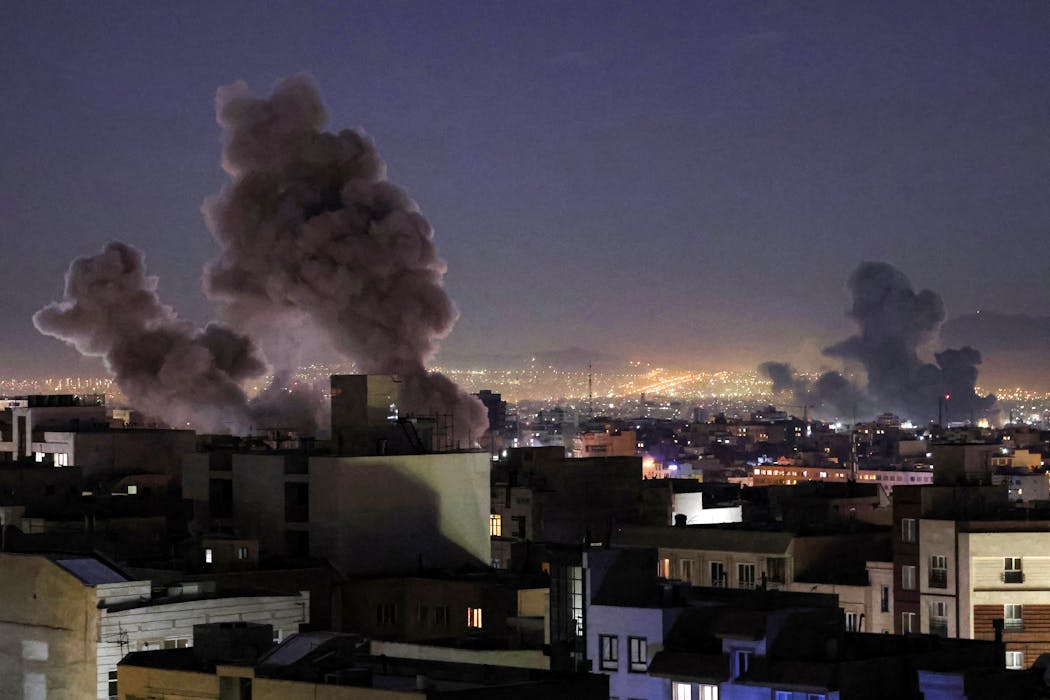
The National-led coalition government missed a clear opportunity to defend the international rules-based order in its response to the joint US-Israeli strikes on Iran.
It was a glaring omission, given New Zealand and most countries rely heavily on that system to rein in the worst excesses of power.
Under article 51 of the UN Charter, states have the legal right to use force in self-defence in response to an armed attack.
But neither the US nor Israel was being attacked when they launched widespread air strikes on Iran’s missile infrastructure, military sites and senior leadership on February 28.
Indeed, just two days earlier in Geneva, the US had concluded a round of negotiations with Iran on its nuclear programme. The talks were reportedly positive, with both sides agreeing to meet again.
An exception to international restrictions on the use of force does allow a state to respond to an “imminent threat”.
However, while the Trump administration and the Israeli government have claimed their attacks were preemptive, there is little or no evidence to indicate Iran was on the verge of threatening either country.
Indeed, after a 12-day war with Iran last year, Israel claimed to have destroyed half of Iran’s missile stockpiles. The US – which briefly entered the war on Israel’s side – claimed it had “obliterated” Iran’s nuclear programme.
Confusing cause and effect
Given all this, the ongoing attacks by the US and Israel – which have also killed Iran’s head of state, Ayatollah Ali Khamenei – have to be viewed as illegal, premeditated and a further erosion of an international rules-based order.
But New Zealand’s measured diplomatic response has largely failed to recognise that reality.
The recent government statement released by Prime Minister Christopher Luxon and Foreign Minister Winston Peters assigned responsibility for the escalating crisis largely to Iran.
The statement had nothing to say about whether the actions taken by the US and Israel were illegal. It maintained the attacks “were designed to prevent Iran from continuing to threaten international peace and security”.
In contrast, the government condemned “in the strongest terms Iran’s indiscriminate retaliatory attacks on Qatar, the United Arab Emirates, Saudi Arabia, Kuwait, Bahrain and Jordan”.
Not only did this appear to confuse cause and effect, it also seemed contradictory. While the statement implied the US-Israeli attacks were justified, it still called for “a resumption of negotiations” and “adherence to international law”.
The confusion was amplified by Luxon when he said, “we understand fully why the Americans and Israelis have undertaken the independent action” – but that it was up to the US and Israel to explain the legal basis for the attack.
Middle-power impotence
New Zealand’s tentative response has overlapped considerably with its allies, but there have also been differences.
Australia, Canada and the UK have similarly declined to question the legality of the attacks, and have largely blamed the repressive clerical regime in Iran for creating a climate that led to the current crisis.
Official statements from those countries have condemned the Iranian regime for killing thousands of innocent protesters, attempting to destabilise the region, launching indiscriminate retaliatory strikes and pursuing the development of nuclear weapons.
Britain refrained from explicitly backing the US-Israeli action, but has subsequently agreed to a US request to use British military bases for “defensive” strikes on Iranian missile sites.
Unlike New Zealand and the UK, Australia and Canada have publicly expressed “support” for the US – but not Israeli – efforts “to prevent Iran continuing to threaten international peace and security”.
Despite Canadian Prime Minister Mark Carney’s recent speech at the World Economic Forum where he argued middle and small powers were not “powerless” in the current global context, his stance on Iran belies such rhetoric.
Carney now finds himself in the curious position of aligning Canada with Donald Trump’s war against Iran while his own country is periodically threatened with invasion by the US.
Not in NZ’s interests
On balance, the New Zealand government has failed to demonstrate the moral and legal clarity that the escalating crisis in the Middle East now requires.
If it is consoling itself that US-Israeli aggression is somehow acceptable when applied to the repressive and cruel regime in Teheran, it should be wary of accepting the aggressors’ words at face value.
Rather than having intervened militarily to improve human rights or enforce international law, it seems likelier the quest for regime change is motivated more by a desire to back Israeli Prime Minister Benjamin Netanyahu’s plans for a recast Middle East.
That ambition involves Israel’s regional dominance, expansion into the Occupied Territories, and excludes a Palestinian state – none of which New Zealand’s official foreign policy supports.


