When can I get my next COVID booster or fourth dose? What if I've recently had COVID? Can I get my flu shot at the same time?
- Written by The Conversation

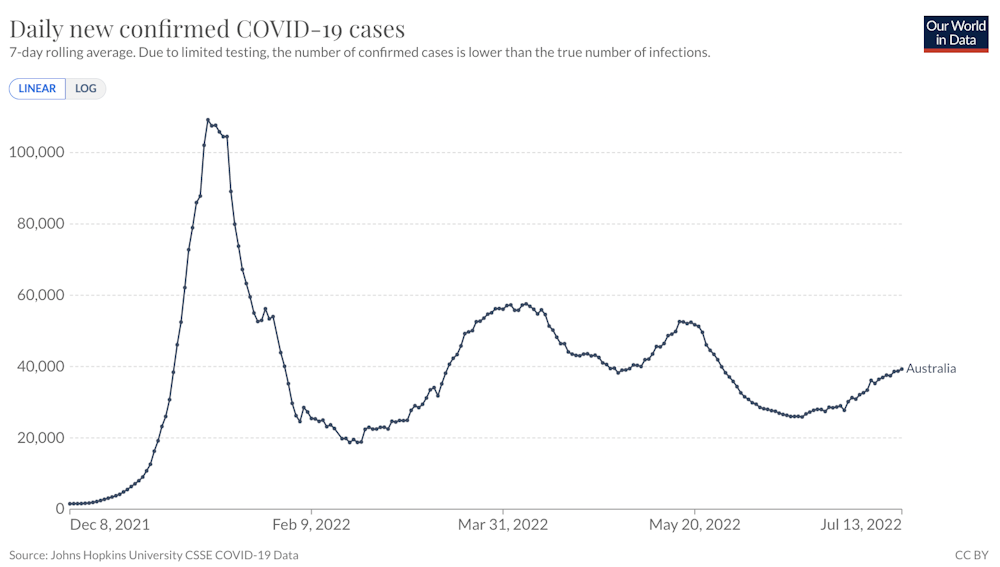
COVID cases are surging across Australia. The rise of the BA.4 and BA.5 sub-variants of Omicron, and the rapid increase in COVID hospitalisations, has prompted policymakers to expand fourth dose vaccine eligibility.
If you’re aged 30 or over, you can now receive an additional COVID booster (a fourth dose), three months after your first booster (third dose). And you can get it at the same time as your flu shot.
If you’ve recently had COVID, you’ll need to wait three months before getting boosted.
If you’re aged under 30, you’re not yet eligible.
Read more: Access to a second COVID booster vaccine has been expanded to people 30 years and over
New variants present new challenges
The current COVID vaccines are based on the original strain of SARS-CoV-2, the virus that causes COVID. The more mutations the variants amass, the less the antibodies produced by vaccination can target it.
In the context of the BA.4 and BA.5 variants, this is exacerbated further, as even immunity from previous Omicron infection is less effective at protecting against future infections. This makes it possible for people with so called “hybrid” immunity – from vaccines and infection – to be re-infected.
This has driven the government to revise the timeframes around post-infectious immunity, as we are likely to see significant numbers of people reinfected after only a short period of time.
Immunity wanes after your third dose
Immunity provided by COVID vaccines diminishes over time. A third dose of vaccine provides good initial protection against Omicron. But immunity wanes after three to six months, meaning it’s less able to prevent infection.
Protection against severe disease remains stronger but still reduces slowly over time.
Waning immunity from vaccination is a particular concern for those aged over 55, as immunity in older age groups decreases faster and further.
Protection from a fourth dose
Given neither three doses nor infection appears to offer significant protection against BA.4 and BA.5, a fourth dose is the best way to prevent infection and severe disease, as well as helping to manage health system demand.
Initial data from Israel, which has been very aggressive in its roll out of additional doses, shows rates of Omicron infection and severe disease are lower after a fourth dose, compared with after three doses.
The protection against infection decreased rapidly, however. After six weeks, it had diminished, but still offered some protection. Importantly, protection against severe disease did not decrease over the six-week study period.
As yet, there is no evidence available on the direct effects of a fourth vaccine dose on BA.4 and BA.5, (as the Isaeli study covered the original Omicron variant). A first booster (third dose) has been shown in preliminary data to generate immunity against the new variants, but it waned rapidly.
Based on this data, and the ongoing excellent safety profile of the vaccines, Australia’s immunisation advisory group, ATAGI, recommends Australians aged over 50 receive a fourth dose over winter. They join the existing eligible groups: immunocompromised adults, those living in care facilities, and adults with chronic or complex health conditions.
ATAGI has also authorised the vaccine to be given to those from 30-49, as it is safe and likely to be effective. However, it notes the benefits in this cohort, on a population level, are less certain. People in this age bracket are advised to consider personal circumstances when deciding whether to get a second booster – such as vulnerable people around them and occupations where they are at high risk of contracting or transmitting disease, such as aged care or hospitality.
Read more: Here's why you might need a 4th COVID vaccine dose this winter
When should I get it?
The best time to get your fourth dose is as soon as you’re eligible and able to, as COVID case numbers are currently rising across Australia.