

The fix is in: how to restore public faith in government appointments
- Written by The Conversation

The question of how to restore integrity to public institutions is on the minds of many government officials right now, both on the local and international stage.
Handpicked political appointments to public institutions in Australia, such as the Administrative Appeals Tribunal (AAT), the Australian Human Rights Commission (AHRC), and most recently the selection of John Barilaro for the NSW government’s New York-based trade commissioner, have come under fire. Critics say theses appointments compromise the perception of the bodies’ independence and reduce public confidence in the ability of the appointees to perform their roles.
Read more: View from The Hill: The challenge of 'grey' corruption and creating a culture of integrity
‘Jobs to mates’
Giving “jobs to mates” is an age-old political concept, if one that rarely benefits an institution or those under its protection. A recent report from the Grattan Institute highlighted the often poor performance of political appointees, noting that almost a quarter of the political appointees at the AAT failed to meet their performance targets.
This might sound like a procedural issue, but the AAT is a public institution that conducts reviews of Commonwealth law and makes decisions that affect our daily lives. Don’t we want experts making these decisions rather than someone who has made a huge donation or is politically connected to the government that appointed them?
Read more: Here’s a simple way to stop governments giving jobs to mates
Politicising public appointments promotes distrust, can compromise performance, and encourages a corrupt culture that prioritises mateship over merit.
Global relevance
On the global stage, the same concerns arise. Respected institutions such as the Office of the United Nations High Commissioner for Human Rights (OHCHR) are coming under pressure from NGOs and human rights practitioners to appoint experts, not political mates, to restore credibility to the world’s most prominent human rights organisation.
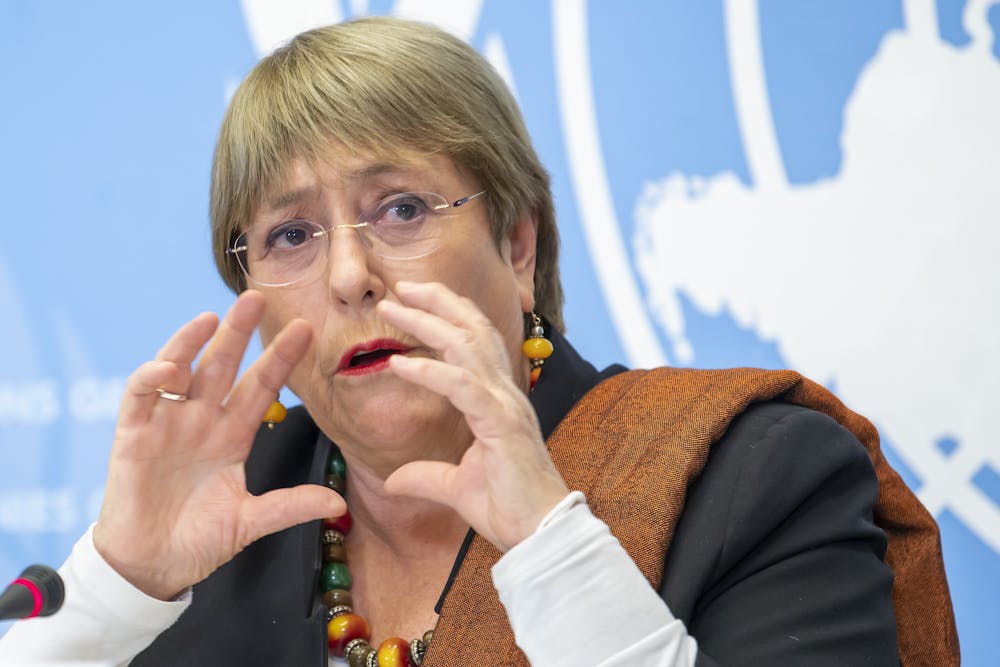
At the UN, the process has recently begun to appoint the next United Nations Human Rights Commissioner – the world’s most senior human rights figure. The vacancy was caused by the unexpected resignation of current commissioner, Michelle Bachelet following her controversial May 2022 visit to China.
On that trip, she was accused of being a pawn in the Chinese government’s efforts to downplay the human rights crisis in Xinjiang and their persecution of the Uyghur population. Her visit was widely critiqued as severely damaging to the credibility of the UN human rights office.
Too often the human rights commissioner role is filled by political appointees, rewarding diplomats or government staff. The recent pressure by human rights organisations calls for the post to be filled by “someone of high moral standing and personal integrity, and who is independent and impartial and possesses competency and expertise in the field of human rights”.
In other words, these groups want a commissioner who is able to improve the UN’s human rights arm’s credibility.
The way forward
Last week, Attorney-General Mark Dreyfus introduced a bill in parliament that would require senior leadership appointments at the AHRC to be publicly advertised, merit-based, and limited to a maximum of seven years. One may have assumed such efforts at transparency were already in place, but no.
Many recent appointments have been made without an open, merit-based process. These include the 2021 selection of Lorraine Finlay by the Morrison government as Human Rights Commissioner, the 2019 selection of Ben Gauntlett as the Disability Discrimination Commissioner, and the 2013 appointment of Tim Wilson as Human Rights Commissioner.
This bill is a welcome and essential step towards restoring the AHRC’s credibility and that of other public institutions. However, an open process that promotes transparent, merit-based selection across all political institutions is also necessary to improve public faith.
As the Albanese government considers creating a national integrity commission, it should also establish a transparent, standardised process for overseeing public appointments, including establishing a national public appointments commissioner.
One of the greatest challenges for governments and the public institutions they create is often not the process of lawmaking but implementation of those laws. This makes integrity and transparency in public appointments vital. Without them, these bodies operate much less independently and are less likely to put the interests of the public first.


