

Better Call Saul's final episode is the end of the golden age of TV as we know it
- Written by The Conversation
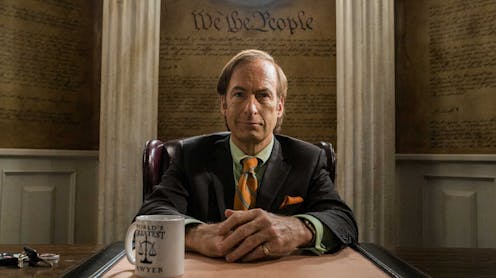
When it was announced that the creators of Breaking Bad would be filming a prequel spin-off to their iconic series, few could have imagined the critical acclaim it would receive in its own right.
As Better Call Saul prepares to air its final episode, many have taken to calling it the greatest television show of all time.
It joins a list of other prestige TV shows that have come and gone in recent years: Game of Thrones, The Wire, The Sopranos, Mad Men, Dexter, and of course Breaking Bad.
Better Call Saul is often considered part of the new golden age of television, stretching roughly from 2000 to the present, characterised by high-quality, original shows with prolonged, complex story arcs, compelling visual aesthetics and morally ambiguous characters.
Thanks in part to cable networks like HBO, AMC and Showtime, television was elevated to high art, leading to HBO’s famous slogan: “It’s not TV, it’s HBO.”
Today, however, decade-defining shows are scarce. The streaming wars have inundated audiences with content, leaving them overwhelmed. Judy Berman, writing in Time, calls this “peak redundancy”:
We may still be deluged with viewing options, many of exceptional quality. But we also have too many shows that feel interchangeable.
Better Call Saul remains the last of those defining, golden age shows, and will leave a poignant mark on the television landscape.
Law and chaos
As a prequel spin-off, Better Call Saul was always going to be compared to its beloved predecessor. But thanks to intelligent dialogue, skilful shifts in tone, and multifaceted characters, the show has established its own unique legacy under the guardianship of creators Vince Gilligan and Peter Gould.
Breaking Bad was notorious for fulminated-mercury explosions and gruesome deaths (271 deaths compared to 65 in Better Call Saul, as of the penultimate episode). Better Call Saul, by contrast, is renowned for its unhurried momentum and painstaking focus on the minutiae of the legal world.
As David Segal of The New York Times put it:
For decades, law firms have been portrayed on television as realms of glamour and intrigue. The reality can be pretty awful.
While Breaking Bad felt slick and gritty, Better Call Saul feels painfully real. Jimmy is not the romanticised anti-hero Walter White is. He is not a Dexter Morgan or a Tony Soprano. If anything, Jimmy is one of life’s losers, struggling to hold onto his individuality in a corporate system that thrives on conformity.
We like Jimmy because he is kind, irreverent, resourceful and idealistic. His girlfriend-turned-wife, Kim Wexler (Rhea Seehorn) remains the primary voice of reason until the end of season five, when she succumbs to the lure of Jimmy’s scheming ways.
Like Jimmy, Kim is torn between the stability of corporate life and her passion for public defender cases. She, too, realises that law and justice are not always the same thing.

Better Call Saul resonates because it’s filled with characters who feel smothered by dead-end compromises, like Ignacio “Nacho” Varga (Michael Mando) and Mike Ehrmantraut (Jonathan Banks), both of whom are caught in the orbit of the drug cartel. Like Jimmy, their tragic arcs are amplified by the choices they feel they are forced to make.
We pity Jimmy in particular as he tries in vain to be accepted by the corporate mainstream. But his past as a small-time conman makes this transition impossible. No matter how much Jimmy tries to appease the establishment, and his brother, Chuck (a formidable Michael McKean), he can never quite shake his reputation as “Slippin’ Jimmy”.
For Berman, this is where Better Call Saul excels, in showing us the hypocrisy of the American judicial system, where “even the attorneys who uphold this system don’t really believe in second chances.”
Jimmy and his clients, she says, are
shut out of institutions they’ve earned the right to re-enter — and so they do whatever it takes to survive outside of those institutions.
Read more: Mad Men, Buffy the Vampire Slayer, and the 'Golden Age' of television
Faced with these untenable conditions, Jimmy descends further into the world of the con, gradually forsaking his idealism and fulfilling a destiny that others – institutions, colleagues, his brother – have written for him.
This is what makes Jimmy’s slow transformation into Saul Goodman so despairing, and yet so relatable. Unable to be himself, and yet unable to affect real change by the book, the corporate world eats away at his resolve until there’s nothing left but the thrill of the scam.
I think one of the themes of Better Call Saul is that real, fundamental change of a person is driven by some pretty hard and powerful forces. You have to really crunch the psyche of a person to get them to change fundamentally.“
Read more: Three reasons Better Call Saul works: a scriptwriter's perspective
End of an era
Like its predecessors, Better Call Saul combines strong, cinematic visuals with methodical storytelling to give audiences a complex portrait of the land of opportunity’s shadow-world.
As it comes to an end, so does the golden age of TV. In the streaming era, we seem to be losing the patience for such storytelling, with shows constantly one-upping each other for shock value, from The Witcher to rise-and-fall dramas Super Pumped and WeCrashed.
As Taylor Antrim of Vogue explains: "Saul looks like nothing else on TV.”
He writes that
its meticulous shabbiness inspires nostalgia for a slightly less overheated TV era, when shows didn’t have to jostle and compete and shout ‘look at me!’ for attention.
The universe that Gilligan and Gould created is not one we are likely to forget, its departure signalling the end of a truly great era of television.


