

Even a 'limited' nuclear war would starve millions of people, new study reveals
- Written by The Conversation
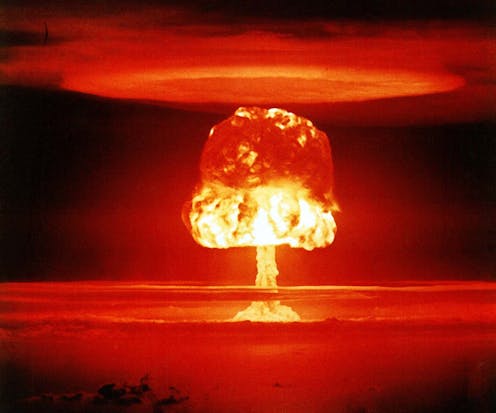
Even a relatively small nuclear war would create a worldwide food crisis lasting at least a decade in which hundreds of millions would starve, according to our new modelling published in Nature Food.
In a nuclear war, bombs dropped on cities and industrial areas would start firestorms, injecting large amounts of soot into the upper atmosphere. This soot would spread globally and rapidly cool the planet.
Although the war might only last days or weeks, the impacts on Earth’s climate could persist for more than ten years. We used advanced climate and food production models to explore what this would mean for the world’s food supply.
Read more: As Putin puts nuclear forces on high alert, here are 5 genuine nuclear dangers for us all
Catastrophic scenarios
Conflicts between nuclear-armed powers are an ongoing concern in multiple parts of the world. If one of these conflicts escalated to nuclear war, how would it affect the world’s food supply? And how would the impacts on global food production and trade scale with the size of such a war?
To try to answer these questions, we used simulations of the global climate coupled with models of major crops, fisheries and livestock production. These simulations let us assess the impacts of nuclear war on global food supply for 15 years after the conflict.
We simulated six different war scenarios, because the amount of soot injected into the upper atmosphere would depend on the number of weapons used.
The smallest war in our scenarios was a “limited” conflict between India and Pakistan, involving 100 Hiroshima-sized weapons (less than 3% of the global nuclear arsenal). The largest was a global nuclear holocaust, in which Russia and the United States detonate 90% of the world’s nuclear weapons.
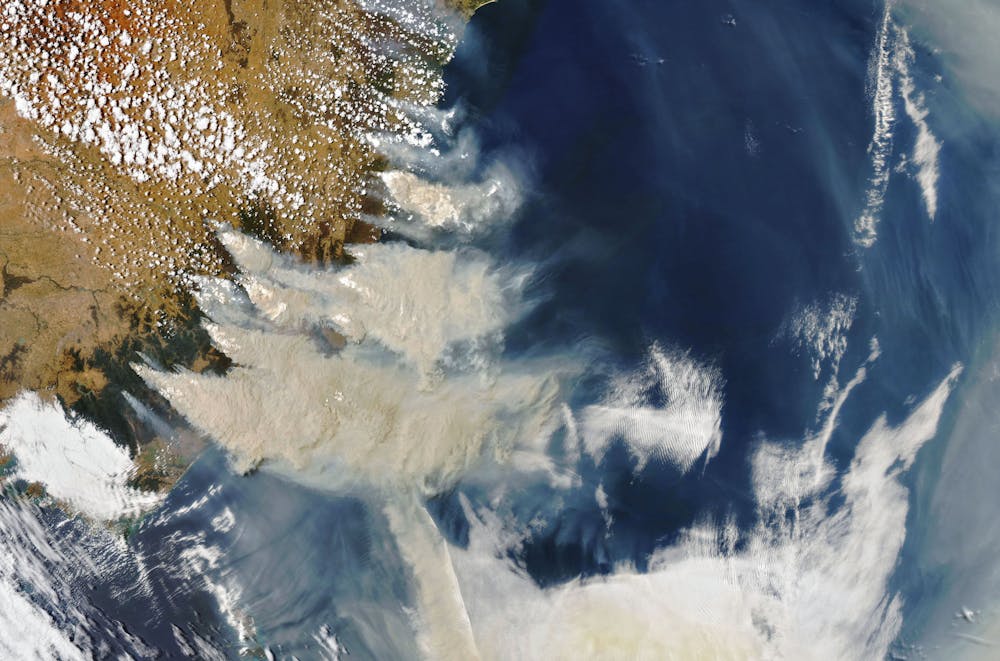
The six scenarios injected between 5 million and 150 million tonnes of soot into the upper atmosphere. For context, the Australian summer bushfires of 2019–20, which burned an area greater than the United Kingdom, injected about one million tonnes of smoke into the stratosphere.
Although we focused on India and Pakistan for our regional-scale war scenarios, nuclear conflict involving other nations could result in similar amounts of smoke and thus similar climate impacts.
Widespread starvation
Across all scenarios, impacts on the world’s climate would be significant for about a decade after a nuclear war. As a consequence, global food production would decline.
Even under the smallest war scenario we considered, sunlight over global crop regions would initially fall by about 10%, and global average temperatures would drop by up to 1-2℃. For a decade or so, this would cancel out all human-induced warming since the Industrial Revolution.
Read more: What countries have nuclear weapons, and where are they?
In response, global food production would decrease by 7% in the first five years after a small-scale regional nuclear war. Although this sounds minor, a 7% fall is almost double the largest recorded drop in food production since records began in 1961. As a result, more than 250 million people would be without food two years after the war.
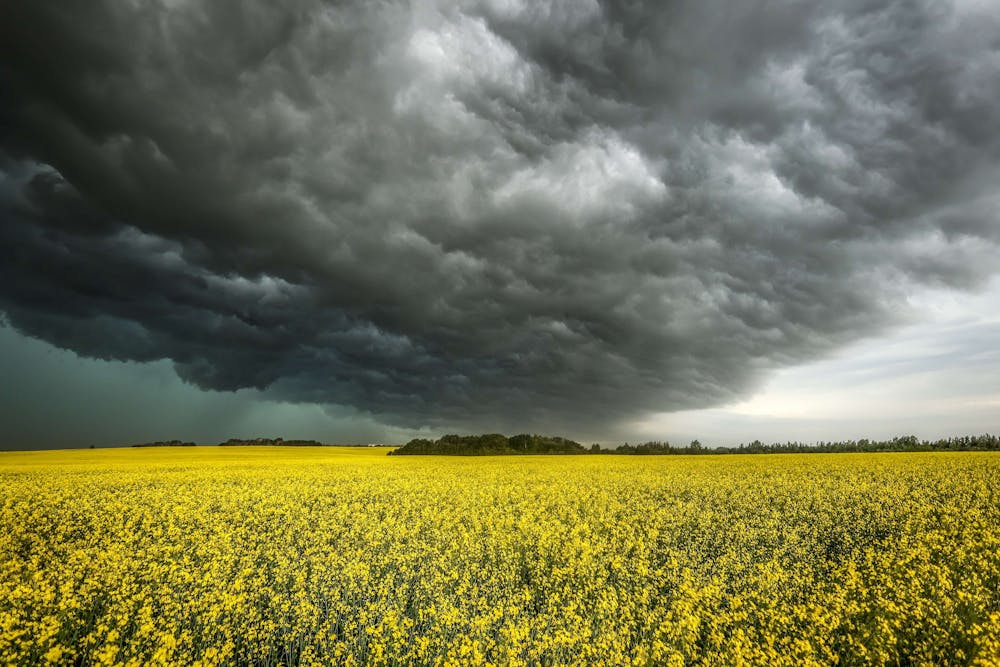 A 7% drop in global food production could mean starvation for 250 million people.
Jeff McIntosh / AP
A 7% drop in global food production could mean starvation for 250 million people.
Jeff McIntosh / AP
Unsurprisingly, a global nuclear war would be a civilisation-level threat, leaving over five billion people starving.
In this scenario, average global temperatures would fall by 10-15℃ for the first five years after the war, while sunlight would crash by between 50–80% and rainfall over crop regions would drop by over 50%. As a result, global food production from land and sea would fall to less than 20% of pre-war levels and take over a decade to recover.
No such thing as a limited nuclear war
Behavioural change could avert some starvation after a relatively small nuclear war, but only regionally. We found that reducing household food waste and diverting feed from livestock to humans would lessen a regional nuclear war’s effect on food supply, but only in major food-exporting countries such as Russia, the United States and Australia.
Although great improvements have been made in recent decades, global food distribution remains a major challenge. Despite present-day food production being more than sufficient to nourish the world’s population, over 700 million people suffered from undernutrition worldwide in 2020.
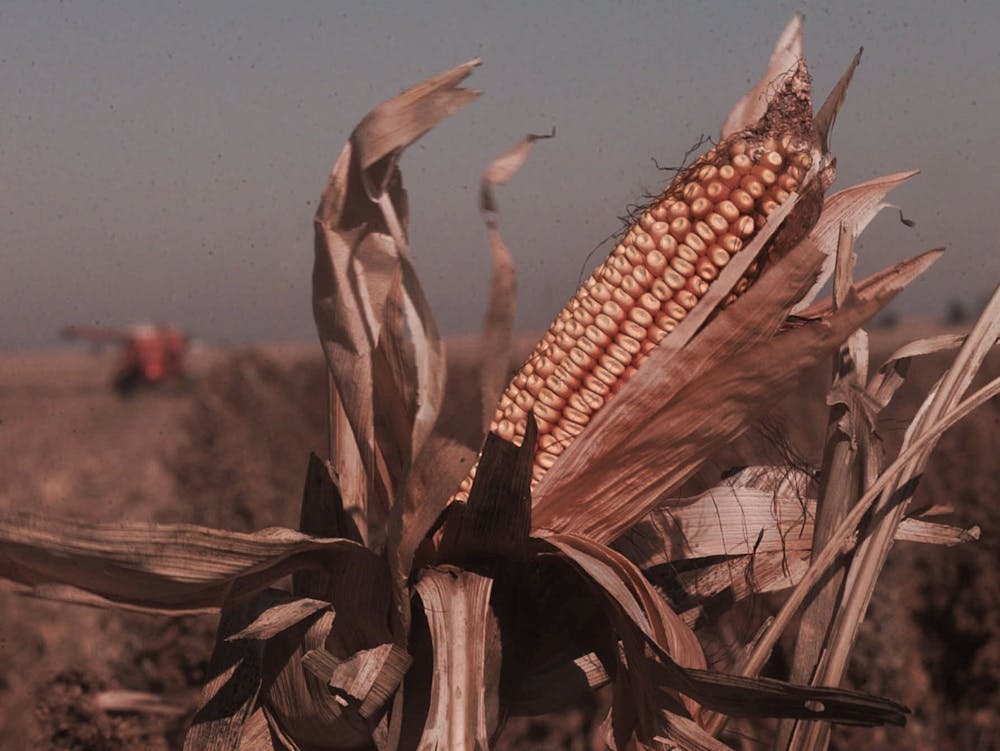 After a nuclear war, global food distribution networks would slow or shut down completely.
John Gaps III / AP
After a nuclear war, global food distribution networks would slow or shut down completely.
John Gaps III / AP
In a post-nuclear-war world, we expect global food distribution would cease entirely for several years, as exporting countries suspend trade and focus on feeding their own populations. This would make war-induced shortages even worse in food-importing countries, especially in Asia, Europe and the Middle East.
Our results point to a stark and clear conclusion: there is no such thing as a limited nuclear war, where impacts are confined to warring countries.
Our findings provide further support for the 1985 statement by US President Ronald Reagan and Soviet General Secretary Mikhail Gorbachev, reaffirmed by the current leaders of China, France, the UK, Russia and the US this year:
A nuclear war cannot be won and must never be fought.


