

We need to change how antibiotics target bugs if we want them to keep working
- Written by The Conversation

While much of our attention during the past few years has been focused on COVID, a more insidious and more dangerous pandemic has been spreading unabated. This pandemic concerns antimicrobial resistance, which is when bacteria evade the antibiotics we use to treat them. You’ve probably heard these bacteria called “superbugs” in the mainstream press.
A recently published study found that in 2019 around 5 million deaths were associated with antibiotic resistance, more than twice those due to COVID in 2020.
Read more: We know _why_ bacteria become resistant to antibiotics, but _how_ does this actually happen?
The two main contributors to the emergence and persistence of antibiotic resistance are the ways antibiotics work and the ability of bacteria to combat them.
Bacteria are highly evolved lifeforms that have significant evolutionary advantages over us. One of these is their doubling time, which, for many of the common varieties of bacteria that infect us, is only 15 to 40 minutes.
In addition, bacteria grow exponentially, which means the time for one bacterium to become two, is the same as that for 100 million to become 200 million.
One consequence of this is if we kill 99.99% of bacteria, they can restore their numbers within a few hours. Importantly, some or all these bacteria may be resistant to the agent that originally killed most of their ancestors.
This process of bacterial survival is driven by evolution and the Darwinian principle of natural selection (survival of the fittest), which applies as much to microorganisms as it does to animals and plants.
How does antibiotic resistance come about?
Almost all current antibiotics work by killing microbes or inhibiting their replication. Bacteria acquire resistance to these antibiotics in two ways: mutation and horizontal gene transfer.
Mutations occur when cells replicate. Some random errors in the replication process may make bacteria better able to evade our treatments.

Horizontal gene transfer is the transfer of genes between bacteria. Most organisms only pass on genes vertically – that is from parent to offspring. But bacteria can exchange genes among themselves, including genes that enable them to resist antibiotics.
Another worrisome feature of current antibiotics is the fact they are indiscriminate. If you consume an antibiotic for an infection in your foot, it does not magically go to your foot alone, but is distributed throughout the body, affecting some of the “good” bacteria that live on and in us.
For this reason, many of the 100 trillion bacteria that live in each of us have become resistant to commonly used antibiotics. These “good” bacteria can then transfer resistance to their disease-causing companions.
Read more: Five of the scariest antibiotic-resistant bacteria in the past five years
We need to change how antimicrobials work
In order to control antibiotic resistance we need to think about antimicrobial therapy in new ways. One of these ways is to tackle disease-causing bacteria selectively, without killing them.
This can work because most bacteria don’t need to cause disease in order to survive, and if our treatments aren’t designed to kill them, the selection for resistant mutants will be weak, and they can go on living, while causing us no harm.
This may sound fanciful, but it is already proving effective. For example, there are drugs for urinary tract infections, that do not kill the bacteria, but instead target the molecules the bacteria need to stick to the bladder wall. This means the bacteria can’t colonise our bladders and make us sick. But as we are not trying to kill them, they have no need to learn to evade our treatments.
Another approach is to target the genes bacteria require to cause disease, making them harmless without killing them.
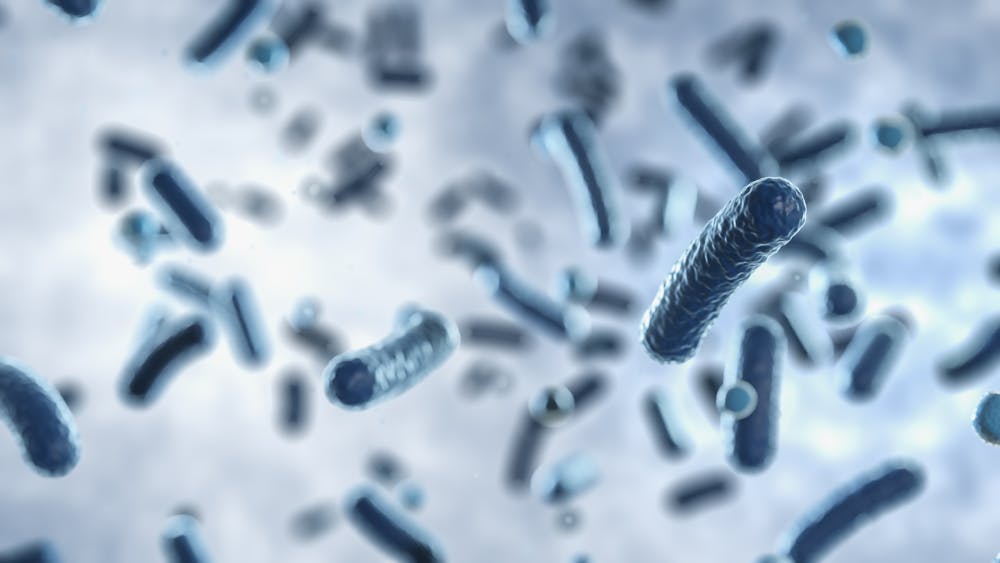 Rather than killing bacteria, we can target their disease-causing properties.
Shutterstock
Rather than killing bacteria, we can target their disease-causing properties.
Shutterstock
An advantage of antimicrobials which target pathogens specifically is that they won’t affect the “good” bacteria some of which contribute to our resistance to infection.
One limitation of these types of treatment is they will need to be specific for each type of bacterium. This means it will take significant time and effort to develop treatments for the many different types of bacteria that infect us. However we know this can be done, since we already do it for viruses (anti-virals).
What has to happen now?
Until recently, major pharmaceutical companies responded to antibiotic resistance by developing new drugs to which bacteria were susceptible. Now, however, few such companies are showing interest in new agents. This is because it isn’t cost-effective to develop traditional, resistance-inducing antibiotics, which will become obsolete within a few years.
Read more: Use them and lose them: finding alternatives to antibiotics to preserve their usefulness
As with climate change and other existential threats, antibiotic resistance will need to be tackled by governments in collaboration with scientists and industry.
There are other ways to combat bacterial resistance, including vaccines and ensuring antibiotics are used appropriately. But a coordinated effort comprising these strategies together with specially targeted anti-bacterial drugs, similar to those currently being used to treat viral infections, offers our best hope.
If we don’t act, we face an era resembling that before the advent of penicillin when a minor scratch could result in a fatal infection.


