

Scientists release world-first DNA map of an endangered Australian mouse, and it will help to save it
- Written by The Conversation
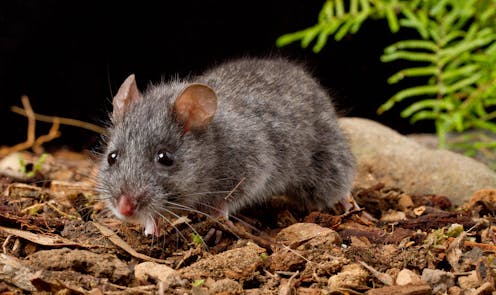
The native Australian rodent Pseudomys fumeus, named smoky mouse for its colour, was already fighting off extinction when the 2019–20 bushfire season hit.
The Black Summer bushfires, which torched more than 24 million hectares, may have killed an estimated 1 billion animals and put more than 100 threatened species at risk. The fires also destroyed more than 90% of the smoky mouse’s habitat, with nine mice even dying at a captive breeding facility near Canberra from bushfire smoke inhalation.
But all is not lost – a newly sequenced reference genome will now help the ongoing conservation efforts of this native Australian species.
Precious pockets of mice
We haven’t seen wild smoky mice in the Australian Capital Territory since 1987. In Victoria, the species is only around in the Grampians, Central Highlands and alpine regions, and in New South Wales in the alpine regions of Kosciuszko National Park and southeastern forests near Nullica.
An active recovery plan was established for the mouse in 2006. As part of this, conservationists started two captive populations, with releases taking place into southeastern forests near Nullica, and a predator-proof reserve in the ACT.
These little native mice are beyond cute, roughly double the size of the introduced house mouse (Mus musculus). Their charcoal fur is soft and silky, and they smell really nice, too. Males especially smell kind of like smoky burnt vanilla; these animals have lovely, calm temperaments.
In the past 12 months, a Museums Victoria Research Institute team has been undertaking surveys to search for surviving pockets of the endangered mouse’s population with an eye towards future reintroduction efforts of captive bred mice.
To support these ongoing conservation efforts, DNA Zoo at The University of Western Australia teamed up with Museums Victoria Senior Curator of Mammals Kevin Rowe to sequence a world-first full chromosome-length reference genome for the animal.
Protecting what we have
We can now use this reference genome to inform conservation strategy. Researchers will map 70 individual smoky mouse DNA sequences from across the animal’s habitat range – in the Grampians in western Victoria to southeastern New South Whales.
Increasing our understanding of living wildlife and responsibly stewarding available resources are among the most crucial scientific and social challenges we face today.
Despite great technological advances, there’s much we don’t know about Australia’s native biodiversity. At the same time, it’s increasingly threatened by wildfires, climate change, habitat destruction, species exploitation and other human-related activities.
Thankfully, we can use genomics to help formulate an informed conservation strategy. That’s because sampling genomic diversity can give us a baseline understanding of how well the species is faring (what biologists call “population fitness”). With that knowledge in hand, we can better design conservation programs.
For example, in endangered species with severely reduced populations, we can avoid inbreeding if we use genomic data to help design breeding programs. That way, the animals will have fewer genes that lead to premature death, and have increased disease resistance.
Read more: We've decoded the numbat genome – and it could bring the thylacine's resurrection a step closer
Consulting the genetic blueprints
Obtaining the genetic blueprints for Australian wildlife will create a powerful source of discovery for improving and increasing ecosystem services. A well-designed monitoring framework is crucial to the on-ground success of conservation programs.
As part of the recovery plan for the smoky mouse, we have DNA sequences from individuals in the Grampians, as well as historical samples dating back to 1934 from extinct populations in the Otways and Far East Gippsland.
The Grampians samples are of particular interest. That’s because this population is the most isolated, removed by about 350 kilometres from the nearest known population in the Yarra Ranges of the Central Highlands.
Since 2012, Museums Victoria and partners have trapped, marked and collected samples – ear biopsies and poo pellets, neither of which are harmful to the animals – from more than 200 smoky mice in the Grampians. Thanks to this work, we now have the most numerous and continuous record of the species in Victoria.
In addition, trapping and wildlife camera surveys at more than 100 sites have revealed smoky mouse populations localised to two areas less than 10km from the Victoria Range and Mt William Range, respectively.
Researchers will now be looking for genetic clues on how these animals persisted despite drought, invasive predators and significant fire.
What’s encouraging is how powerful technology – such as genome sequencing, bioinformatics, and more combined together – is now helping us to understand and preserve biodiversity. For the first time in history, we can fast-track and efficiently sequence the genomes of our unique native Australian species.


