

Many parents use melatonin gummies to help children sleep. So how do they work and what are the risks?
- Written by The Conversation
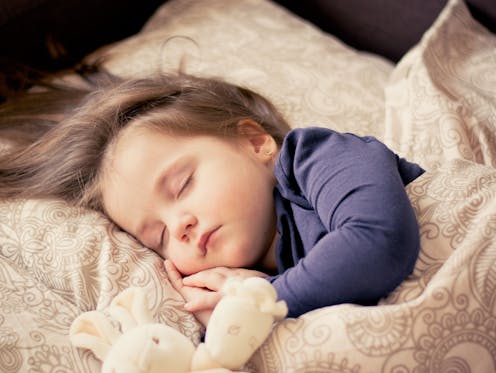
Sleep is important for psychological and physiological health, but many children have trouble getting to sleep, or getting back to sleep when they wake in the night.
This can be exhausting for both children and parents, and some parents have turned to giving their kids lollies containing melatonin. These gummies, purchased overseas or online, are used to improve their children’s sleep.
I have spent the last 15 years researching diagnosing and treating children sleep problems and difficulties, and I’m also on the International Pediatric Sleep Association’s taskforce for melatonin use in children.
Here’s what the science says about the benefits and risks of melatonin gummies for children.
Read more: LED face masks are popular on social media for glowing skin – but they could disrupt your sleep
What is melatonin?
Melatonin is a naturally occurring hormone secreted in our brains. It is related to the timing and quality of our sleep and wake rhythms and determined by our internal body clock.
Melatonin makes us sleepy at certain times of the day. It starts to secrete when our bodies are getting ready to go to sleep and usually takes about 30 to 45 minutes to take full effect.
Melatonin secretion is at its highest in the middle of the night and gradually starts to decrease until we are ready to wake up and start our day.
A lack of long-term research
For children who have a diagnosis of autism spectrum disorder or Smith Magenis Syndrome, the Therapeutic Goods Administration (TGA) in Australia recommends melatonin – but that this should be prescribed by a health professional only, and should only be used when sleep hygiene measures have been insufficient.
It has been shown to be very helpful, effective and with minimum side effects (mainly headaches, drowsiness and sometimes irritability).
But the TGA does not recommend melatonin for children who do not have autism spectrum disorder or Smith Magenis Syndrome.
This is mainly because there is a lack of long-term research, and because most child sleep problems can typically be managed with behavioural and psychological sleep techniques, instead of drugs.
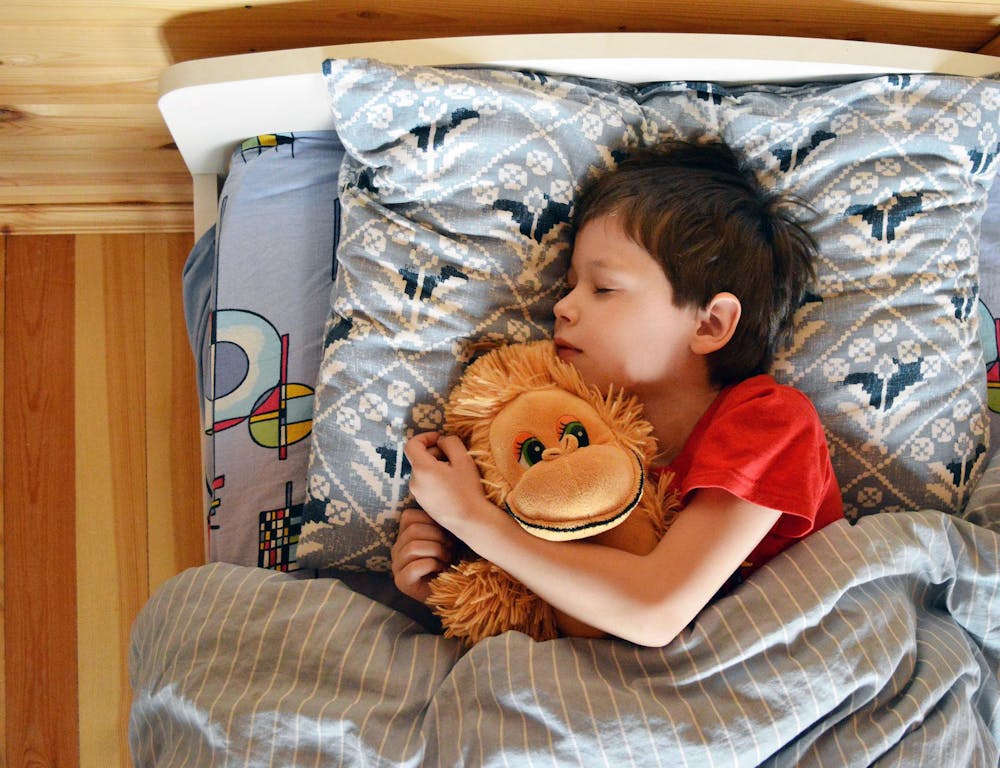
 Most child sleep problems can typically be managed with behavioural and psychological sleep techniques, instead of drugs.
Photo by zhenzhong liu on Unsplash, CC BY
Most child sleep problems can typically be managed with behavioural and psychological sleep techniques, instead of drugs.
Photo by zhenzhong liu on Unsplash, CC BY
Melatonin sales are increasing rapidly across the US and Canada (where it is available without a prescription) and across Europe.
In Australia, prescription melatonin has historically been given to adults to treat sleep disorders, but is now available over-the-counter for adults aged 55 and above. It’s efficacy and safety has been established in adults.
This is not the case for melatonin use in all children.
Despite this, melatonin use in children without autism spectrum disorder or Smith Magenis Syndrome still occurs.
One recent yet-to-be-published study on this topic (which is yet to be peer-reviewed by other experts in the field) was by CQU researcher Alison Glass, with myself as supervisor. This study involved surveying 255 Australian parents (recruited from online groups and networks) of sleep-disordered children. Of these, about 70% used melatonin to help their children sleep.
Of those who used melatonin for their children, about 25% had children with a diagnosis of autism spectrum disorder or Smith Magenis Syndrome. But almost 75% used melatonin for their children even though there was no autism spectrum disorder or Smith Magenis Syndrome diagnosis.
Is melatonin safe for otherwise healthy children?
There are very few long-term research studies on this question and even less on the question of quality and safety of melatonin bought online.
One Canadian study investigated 31 brands of melatonin supplements. The researchers found huge inconsistencies in the labelled amount of active melatonin and a contaminant (in this case, serotonin) in 26% of the supplements.
In other words, the exact quality or quantity of melatonin present in gummies may be unknown. That raises the question of whether giving these relatively unresearched drugs to children is warranted.
The TGA’s Advisory Committee on Medicines Scheduling said in 2017 that
Methods of deterring the increasing volume of personal imports, which are often inappropriate unregistered medicines, should be considered.
 What can sleep-deprived parents do? Talk to healthcare professionals.
Photo by Brett Durfee on Unsplash, CC BY
What can sleep-deprived parents do? Talk to healthcare professionals.
Photo by Brett Durfee on Unsplash, CC BY
Talk to health-care professionals
Parental sleep deprivation can be debilitating and dangerous. It is understandable parents of sleep-disturbed children will seek out the fastest way to get children to sleep. But there is a dearth of long-term research about use of melatonin by children.
So what can sleep-deprived parents do?
Talk to health-care professionals. This is crucial when considering any medication for children; continual follow up to monitor side effects and progress is important.
Before considering melatonin or any other sedative, ask your health-care provider about behavioural techniques you can use to promote healthy sleep habits.
Behavioural techniques are well documented, successful and effective in children from infancy to adolescence.
Well trained paediatric sleep psychologists and clinicians are available for referrals from health professionals. The Australasian Sleep Association lists specialist health professionals across Australia.
Sleep deprivation is exhausting and parents are understandably desperate.
However, I advise caution in buying melatonin online or without the guidance of a qualified health professional.
Read more: What is brown noise? Can this latest TikTok trend really help you sleep?


