

COVID or COVID vaccination can cause dermal fillers to swell up
- Written by The Conversation
The growing list of COVID complications is long and surprising – from brain changes and heart disease to skin rashes and COVID toes.
Those who get dermal fillers injected into their face have the possibility of an additional complication: swelling and discomfort if they get COVID or a dose of a COVID vaccine. So should they take extra precautions, or time their treatments?
What are dermal fillers?
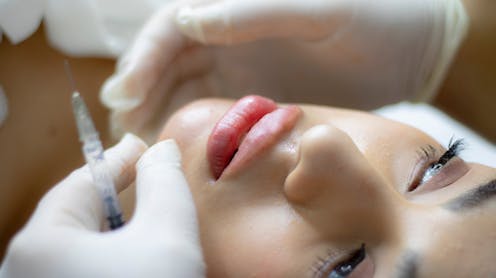
Fillers are now one of the most common non-surgical cosmetic procedures. Adding fillers to the face can address facial drooping; injections into the high cheekbone area lift the face.
Today’s patients might receive soft fillers in the lips and mouth areas, combined with botulinum toxins (botox) in overactive facial muscles, and lasers and light sources on the skin.
Dermal fillers are used to address facial asymmetry, which can cause functional, psychological/social, and reduced quality-of-life issues. Cosmetically, dermal fillers may give an immediate confidence boost.
Soft tissue fillers are usually hyaluronic acid products. Some other formulations that stimulate tissues are also used.
Fillers can only be prescribed by a registered medical practitioner.Although soft tissue fillers are considered safe, several studies have shown complications occur with all filler types. Delayed inflammatory reactions – such as red and/or firm lumps possibly with swelling – are among the most common. The cause of these reactions is unknown, so treatments will vary.
Read more: 8 ways the coronavirus can affect your skin, from COVID toes, to rashes and hair loss
Puffy reactions
From 2020 to August 2021 there were around 19 reports in the medical literature of late inflammatory reactions in people who had previously had COVID or a COVID vaccine occurring between weeks and years after filler treatment. The general incidence of such complications after the injection of soft tissue fillers sits between 0.01% to 4.25% of procedures. Not all cases are reported.
The reason for such reactions is not fully understood. There are many theories on how they can occur including immune reactions to filler triggered by infection, trauma or vaccination.
So it makes sense that late inflammatory reactions have been reported after infection with SARS-CoV-2 (the virus that causes COVID) and vaccination to protect against it.
The first US Food and Drug Administration (FDA) reports on the Moderna vaccine showed adverse events in three patients with soft tissue fillers. These complications can occur between 15 days and six months after filler injections. And they can occur three to four weeks after COVID infection. Filler complications can begin quickly after receiving a mRNA COVID vaccination, between 13 hours and three weeks post-injection.
Clinical symptoms are redness, swelling, formation of lumps and discomfort in the filled areas. Some of the patients with reported complications have had a history of spontaneous facial swelling after a filler injection, previous vaccinations, or after other medical treatments.
It is not the first time adverse events after filler treatment have been reported after a viral infection, for example after an influenza-like illnesses.
The condition generally has a good response to oral corticosteroids, while some patients need hyaluronidase injections to dissolve the filler.
It has been suggested treatment with an angiotensin-converting enzyme inhibitor (ACE-1, usually prescribed to manage blood pressure), which plays a crucial role in SARS-CoV-2 binding properties, can reduce swelling in late inflammatory reactions.
Genetic factors are likely to play a role in who gets complications after dermal filler injections generally, with studies pinpointing the genes responsible in those who experience reactions. These individuals might have a lower threshold to infections, vaccines, or other factors that trigger an immune response.
What patients can do
Although small in number, the cases so far show adverse reactions with soft tissue filler occur after COVID infection and vaccination. The relationship between these factors seems likely, as they occur within a few hours or up to several weeks afterwards.
To prevent possible complications, the following recommendations have been suggested for those wishing to proceed with a filler:
ideally, allow a two- to four-week window between filler injections and vaccination in general, and two months longer for immunocompromised patients (those taking immunosuppressive medications, having chemotherapy, or with immune disorders) or after COVID infection
proceed with caution if there is a history of allergies, filler-related adverse events or problems after other types of implants
because vaccination protects against severe COVID, long COVID and death, delay the filler rather than the vaccination
if a reaction does occur, then your doctor can consider starting treatment with oral steroids, provided there is no infection.
Read more: Friday essay: toxic beauty, then and now
Correction: this article has been updated to show the quoted percentage of late inflammatory reactions is a general one, rather than referring to the percentage of people who had reactions post COVID or post COVID vaccine.
Read more https://theconversation.com/covid-or-covid-vaccination-can-cause-dermal-fillers-to-swell-up-192159


