

Don't just bet on the metrics – personal connection is the real key to managing remote workers well
- Written by The Conversation
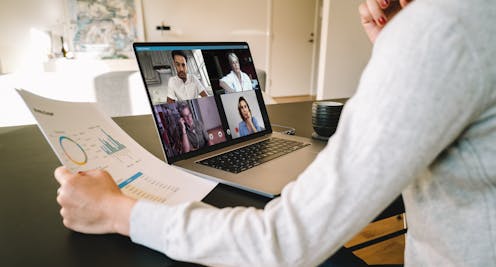
Remote working has become much more common since the pandemic sent people home from their offices and into the Zoom universe. This has put the onus on managers to find new and better ways to engage with and motivate staff, and we’re still learning how best to do this.
Perhaps the commonest advice given to managers is to provide remote staff with clear, measurable goals. Set targets, monitor progress, measure results.
And at first glance, this makes perfect sense. After all, when staff aren’t in the office you can’t keep an eye on them. Better to define outcomes and let them get on with it. You can then measure achievement without micromanaging the process.
But our research suggests this advice, however well-intentioned, might not be entirely correct. Indeed, if you follow it to the letter, it seems unlikely you’ll get the results you’re expecting.
Some work is harder to measure
We began researching remote work before the pandemic by asking experienced managers what they did differently with remote staff and what factors they felt were most important.
Earlier studies suggested managers would set clear goals and then monitor progress, otherwise leaving staff to get on with it. Instead, the managers in our study told us they tended to treat remote workers holistically – as people, not just staff. They focused on social connections instead of just objective performance.
We believe these managers have learned to discount conventional advice and develop practices that are more effective with remote staff. As such, their experience contains valuable lessons for today’s managers.
Read more: 5 ways to create a compassionate workplace culture and help workers recover from burnout
One described spending one-on-one calls “just connection and socialising … [It] builds the rapport and the connection [because] you lose opportunities for that being remote.”
One of the main reasons why these managers didn’t rely on metrics and measurable goals with their remote staff is that a great deal of remote work is “knowledge work”. It’s often difficult to quantify this kind of work – to know in advance what will be required or how long it will take.
And because people often work in teams, it can be hard to untangle individual contributions. At best, managers may have rough estimates of individual productivity. But if someone doesn’t meet those estimates, they need more context to understand why – and that relies on talking to people.
Hoping to only measure progress in unpredictable knowledge work the way we measure progress with more predictable work is unlikely to succeed.
Nurturing relationships
The other reason these managers needed more than goals and metrics was the lack of interpersonal contact. They could not unobtrusively observe how remote staff were coping. As one manager put it, “You don’t have that visual of, oh, this person walked in today and looks happy or they look sad.”
Another manager pointed out that with in-person interaction, “You can see people being playful, hear the grunts or the moans or the sighs or whatever when they’re under pressure. And likewise, you can see when they’re visibly, you know, feeling successful.” With remote staff, “you just never get a sense of that”.
This day-to-day observation was important enough that the managers we spoke to devoted considerable time and energy compensating. They increased communication with remote staff and nurtured relationships.
Advising managers to “focus on clear objectives” with remote workers overlooks the importance of relationships as the basis for understanding performance.
Furthermore, when people are stressed, disengaged or unsure they’re doing a good job, their first instinct is not always to share that with their manager. Instead, they might try to mask those feelings and keep up a good appearance – what one manager called “sticking on a plastic smile for ten minutes”.
Read more: Got Zoom fatigue? Out-of-sync brainwaves could be another reason videoconferencing is such a drag
Intervention to avoid escalation
In a shared workspace it’s easier to pick up body language, changes in behaviour or working relationships that might hint at deeper problems. That’s much harder when we communicate primarily by email, text or short video calls.
And these cues can be very important. If someone misses a delivery deadline or is less productive, for example, their manager is only likely to find out after it happens. Whereas noticing a change in behaviour earlier might give the manager the chance to intervene and address the problem before it escalates.
Overall, we recommend embracing interpersonal connections rather than relying on measurable goals for what might be unmeasurable work. The fewer the opportunities for in-person observation, the more important establishing good one-on-one relationships becomes.
It will take more time, and maybe more emotional energy, but there’s no shortcut to managing well.


