

BlueWalker 3, an enormous and bright communications satellite, is genuinely alarming astronomers
- Written by The Conversation
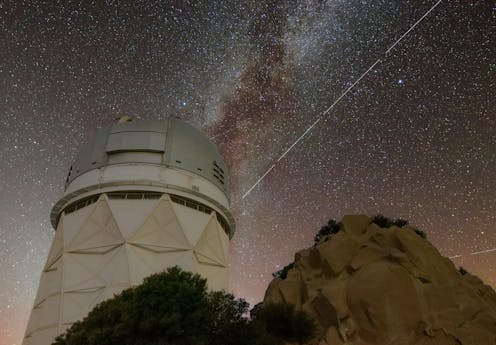
The night sky is a shared wilderness. On a dark night, away from the city lights, you can see the stars in the same way as your ancestors did centuries ago. You can see the Milky Way and the constellations associated with stories of mythical hunters, sisters and journeys.
But like any wilderness, the night sky can be polluted. Since Sputnik 1 in 1957, thousands of satellites and pieces of space junk have been launched into orbit.
For now, satellites crossing the night sky are largely a curiosity. But with the advent of satellite constellations – containing hundreds or thousands of satellites – this could change.
The recent launch of BlueWalker 3, a prototype for a satellite constellation, raises the prospect of bright satellites contaminating our night skies. At 64 square metres, it’s the largest commercial communications satellite in low Earth orbit – and very bright.
Pollution of the night sky
While spotting satellites in the night sky has been a curiosity, the accelerating number of satellites in orbit means pollution of the night sky could become a serious problem.
On a clear night, particularly near twilight, you can see satellites travelling across the night sky. These satellites are in low Earth orbit, just a few hundred kilometres above Earth and travelling almost 8 kilometres every second.
Apps and websites allow you to identify or predict the arrival of particular satellites overhead. And it is genuinely fun to see the International Space Station travelling by, realising that on that speck of light there’s a crew of astronauts.
But in the past few years, the pace of satellite launches has accelerated. SpaceX has made satellite launches cheaper, and it has been launching thousands of Starlink satellites that provide internet services.
Roughly 50 Starlink satellites are launched into orbit by each Falcon 9 rocket, and initially produce a bright train of satellites. These initially produced UFO reports, but are now sufficiently common to not be particularly newsworthy.
Once the Starlink satellites disperse and move to their operational orbits, they are near the limit of what can be seen with the unaided eye.
Read more: Lights in the sky from Elon Musk's new satellite network have stargazers worried
However, such satellites are bright enough to produce trails in images taken with telescopes. These trails overwrite the stars and galaxies underneath them, which can only be remedied by taking additional images. Short transient phenomena, such as a brief flash from a gamma ray burst, could potentially be lost.
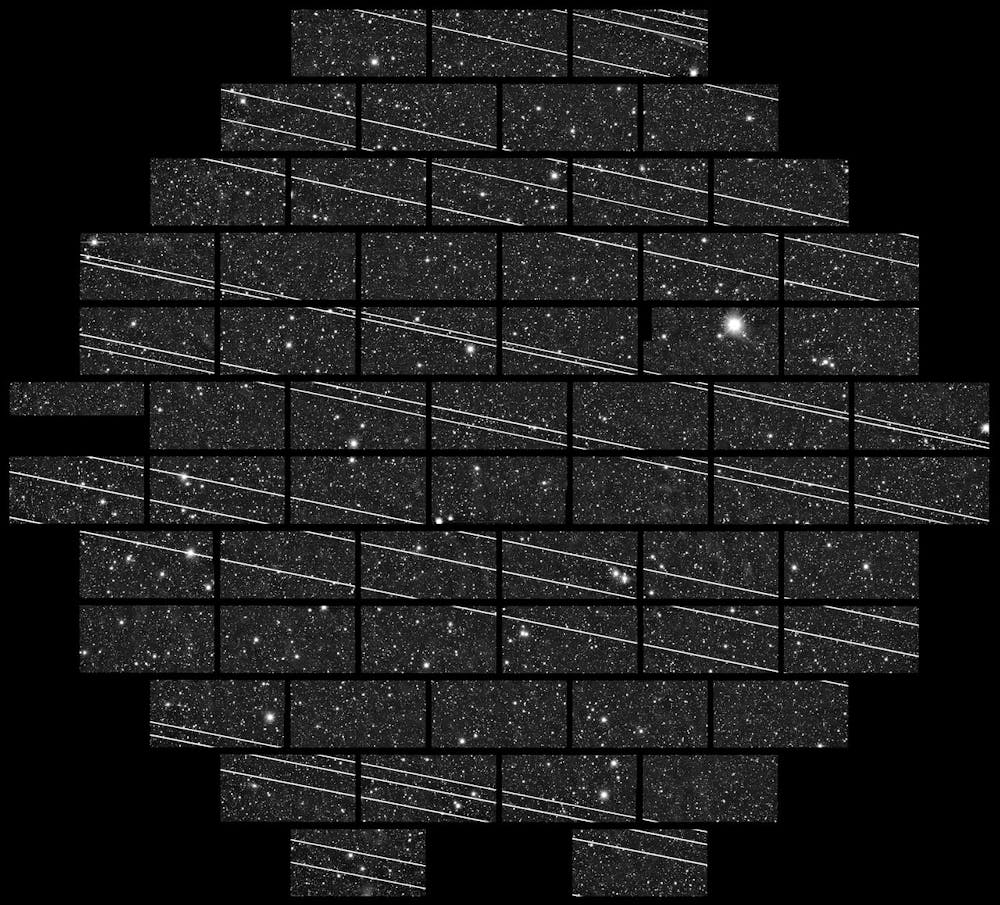
BlueWalker 3
While Starlink is the largest satellite constellation in service, with thousands of satellites in orbit, others are planned.
Amazon’s Blue Origin plans to launch more than 3,200 Project Kuiper satellites, and AST SpaceMobile plans to launch 100 BlueBird satellites (and perhaps more).
The recently launched BlueBird prototype, BlueWalker 3, has produced genuine alarm among astronomers.
While BlueWalker 3 was initially quite faint, it unfolded a 64 square metre communications array – roughly the size of a squash court. This vast surface is very good at reflecting sunlight, and BlueWalker 3 is now as bright as some of the brightest stars in the night sky.
It’s possible the operational BlueBird satellites could be even bigger and brighter.
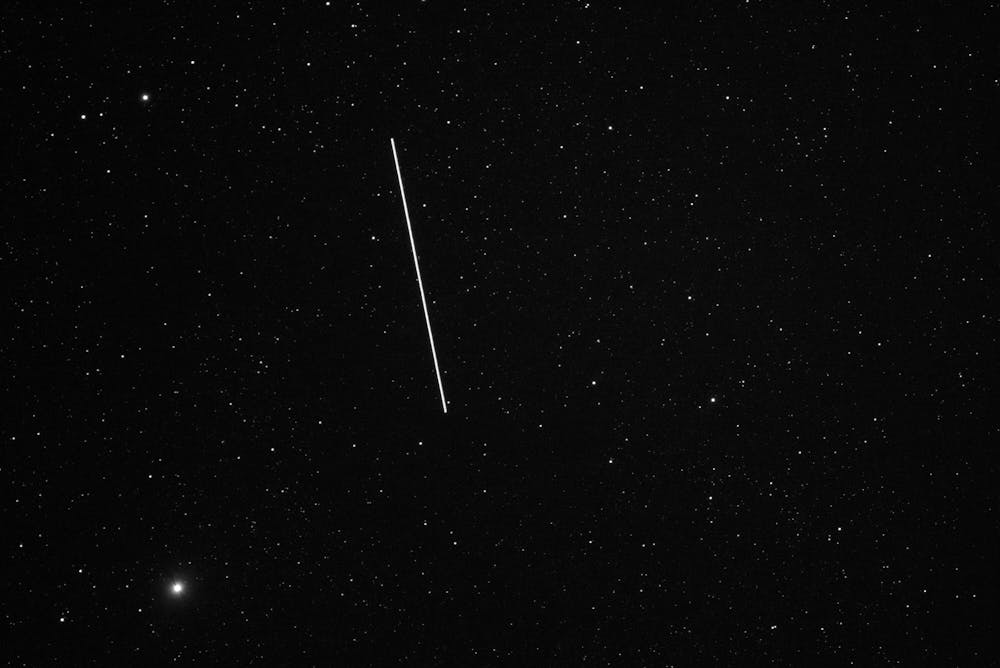 BlueWalker 3 passing over Oukaimeden Observatory on November 16 2022. At its brightest, BlueWalker 3 is brighter than all but a few stars in the night sky.
CLEOsat/Oukaimeden Observatory/IAU CPS/A.E. Kaeouach
BlueWalker 3 passing over Oukaimeden Observatory on November 16 2022. At its brightest, BlueWalker 3 is brighter than all but a few stars in the night sky.
CLEOsat/Oukaimeden Observatory/IAU CPS/A.E. Kaeouach
Large numbers of satellites this bright could be bad – very bad. If there were thousands of satellites this bright, sometimes you would be unable to look at the night sky without seeing bright satellites.
We would lose that sense of wilderness, with an almost constant reminder of technology in our sky.
There could be a big impact on professional astronomy. Brighter satellites do more damage to astronomical images than faint satellites.
Furthermore, many of these satellites broadcast at radio frequencies that could interfere with radio astronomy, transmitting radio waves above remote sites where radio observatories observe the heavens.
A precipice?
What happens next is uncertain. The International Astronomical Union has communicated its alarm about satellite constellations, and BlueWalker 3 in particular.
However, the approval of satellite constellations by the US Federal Communications Commission has had relatively little consideration of environmental impacts.
This has recently been flagged as a major problem by the US Government Accountability Office, but whether this leads to concrete change is unclear.
We may be on the edge of a precipice. Will the night sky be cluttered with bright artificial satellites for the sake of internet or 5G? Or will we pull back and preserve the night sky as a globally shared wilderness?
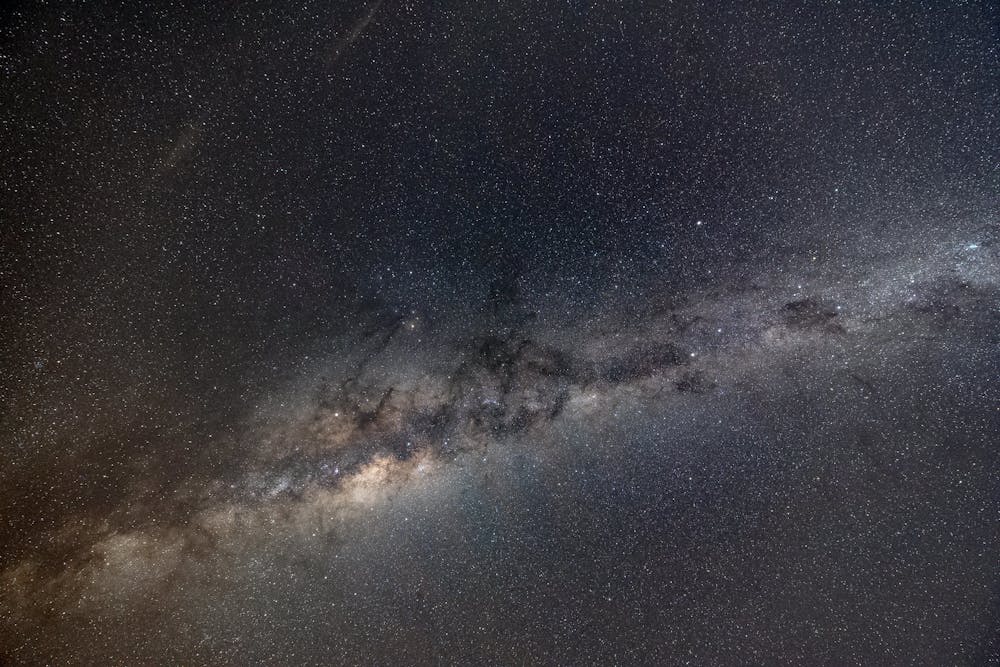 For now, under dark skies, we can see the Milky Way and Dark Emu as people have seen them for millennia.
cafuego/Flickr, CC BY-SA
For now, under dark skies, we can see the Milky Way and Dark Emu as people have seen them for millennia.
cafuego/Flickr, CC BY-SA


