

Resistance to mega-tourism is rising in the South Pacific – but will governments put words into action?
- Written by The Conversation
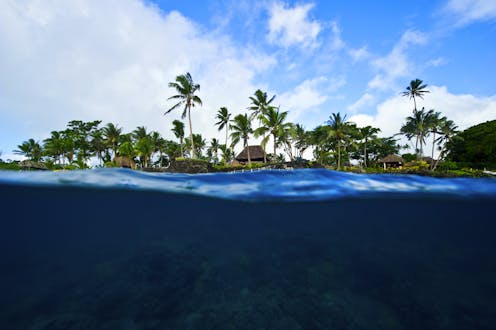
With COVID-19 travel restrictions largely a thing of the past for Australian and New Zealand tourists, Pacific destinations are enjoying the return of visitors – albeit at a slower pace than in other parts of the world.
Tourism in Fiji, Samoa, Vanuatu and the Cook Islands was hit hard by the pandemic, but patience and resilience are starting to pay off. Foreign dollars are once again circulating in those small economies. Recently, Kiribati welcomed its first international cruise ship since 2020.
But this isn’t a simple case of returning to normal. The past three years have allowed time for reflection, leading to a rising awareness of possible alternatives to pre-pandemic tourism models.
From senior levels within governments to grassroots tourism operators and citizens, there has been serious discussion about the resumption of business as usual, including several regional symposiums hosted by the South Pacific Tourism Organisation.
Issues of sovereignty and future resilience have been very much to the fore – quite untypical in a global tourism industry largely focused on boosting numbers as soon as possible. Questions remain, however, about the gap between rhetoric and reality.
Flipping the narrative
The Pacific Sustainable Tourism Leaders Summit in November 2022 brought together tourism ministers and industry stakeholders to discuss the future of regional tourism. This led to a regional commitment signed by 11 countries focused on promoting sustainable tourism.
Essentially, the aim is to flip the narrative: rather than Pacific nations being seen as dependent on tourism, regional tourism itself depends on the Pacific and its people surviving and thriving. Accordingly, Pacific countries are calling for fairer and more meaningful relationships with tourism partners.
Read more: Traditional skills help people on the tourism-deprived Pacific Islands survive the pandemic
Cook Islands’ associate minister of foreign affairs and immigration, Tingika Elikana, urged other Pacific leaders at the summit to rebuild tourism in a way that was equitable and inclusive:
[It] is crucial that lessons are learned from recent crises and that steps are taken to embed long-term inclusivity, sustainability, and resilience into our tourism offering as it faces evolving challenges and risks.
Vanuatu has been heading in this direction since early in the pandemic, when it made “destination wellbeing” central to its tourism recovery. The aim of “moving beyond solely measuring visitor arrivals and contribution to GDP” then fed into the country’s Sustainable Tourism Strategy, launched at the height of the pandemic.
Push-back on resorts and cruise ships
This reappraisal of scale and priorities has perhaps been most evident in Fiji where there has been strong opposition to a US$300 million mega-project proposed by Chinese developers.
The hotel, apartment and marina complex would be built in an area containing one of the last remaining remnants of mangrove forest near the capital, Suva. Conservationists and local residents have been critical of the environmental and infrastructural impact of the proposed development, as well as the authenticity of its design.
Read more: The travel industry has sparked a backlash against tourists by stressing quantity over quality
There is now doubt about whether the government will renew the developer’s lease, due to expire in June. The minister for lands and mineral resources has said “there’s been a lack of transparency” from the developers, and that he “will continue to monitor the remaining conditions of the development lease”.
A leading opponent of the project, Reverend James Bhagwan, told Radio New Zealand:
We’re not anti-development, but what we’re saying is we need to look at development from a perspective that places the environment at the centre, not at the periphery.
There is a precedent here: approval for a multi-million-dollar resort and casino development on Malolo island was revoked in 2019 after another Chinese developer, Freesoul Investments, destroyed part of a reef, dumped waste and disrupted traditional fisheries. In 2022, the High Court fined the company FJD$1 million. It was the first time a developer had been punished for an “environmental crime”.
Environmental concerns are also causing other Pacific countries to resist a return to mass tourism. In Rarotonga, Cook Islands, annual visitor numbers before the pandemic were ten times the island’s local population. The ability to cope with that level of tourism has since been seriously questioned.
And in French Polynesia, the government has banned port calls for cruise ships with a capacity greater than 3,500 passengers. The decision was based on concerns about air pollution, stress on the marine environment and social impacts. Daily cruise arrivals to Bora Bora are now restricted to 1,200 passengers, much to the relief of locals.
A new kind of tourism?
In the face of uncertainties due to climate change and geopolitical tensions in the region, it’s encouraging to hear local voices being heard in debates about the future of Pacific tourism – and political leaders appearing to respond.
The Pacific Island Forum leaders’ retreat in Fiji late last month discussed the tourism industry. The forum’s signature Blue Pacific Strategy for regional co-operation recognises tourism is an important component of national development, and the need to balance economic pressures with environmental and cultural protection.
Read more: As borders reopen, can New Zealand reset from high volume to ‘high values’ tourism?
But despite the apparent political will and regional focus on building resilience, tourism development will undoubtedly continue to challenge the desires and initiatives of Pacific peoples seeking more sustainable futures.
While the policy rhetoric sounds good, it remains to be seen whether Pacific governments will remain steadfast and united under mounting pressures from major cruise operators, Chinese commercial interests and large hotels looking to maximise occupancy rates.
Many Pacific people reported the natural environment – along with social, spiritual, physical and mental wellbeing – improved during the pandemic pause in tourism. But the reality of putting local wellbeing ahead of profits and increased tax revenue is yet to be fully tested as tourism bounces back.


