

'Who the hell is Edgar?' – a viral Eurovision song about Edgar Allan Poe evokes a strange history of mediums and creative possession
- Written by The Conversation

“Who the hell is Edgar?” ask Teya and Salena, two young women fronting Austria’s entry to this year’s Eurovision Song Contest.
Replete with dance routine, fake moustaches and a catchy chorus, their viral video and song attributes their success as songwriters to possession by the 19th-century author, poet and gothic celebrity Edgar Allan Poe (1809-1849):
There’s a ghost in my body and he is a lyricistIt is Edgar Allan Poe, and I think he can’t resistYeah, his brain is in my hand, and it’s moving really fastDon’t know how he possessed me, but I’m happy that he did
Channelling spirits
Teya and Salena are not the first young women to be possessed by Poe. Their hit song evokes a curious history of alleged posthumous collaborations. In the 1850s and 1860s, a group of young female spiritualists wrote and published poetry from the “spirit of Edgar A. Poe”.
These mediums claimed they could channel the spirits of loved ones through possessed speech, musical instruments and automatic writing. They also maintained they could channel the spirits of celebrity ghosts, including recently deceased presidents, global historical figures and well-known writers.
At séances, mediums would surrender their bodily autonomy to allow the deceased to enter and control them. As one member of a Philadelphia spiritualist circle wrote in 1851, “the person to be prepared must give up all self-control, all resistance, and resign himself to the entire direction and control of the spirits”.
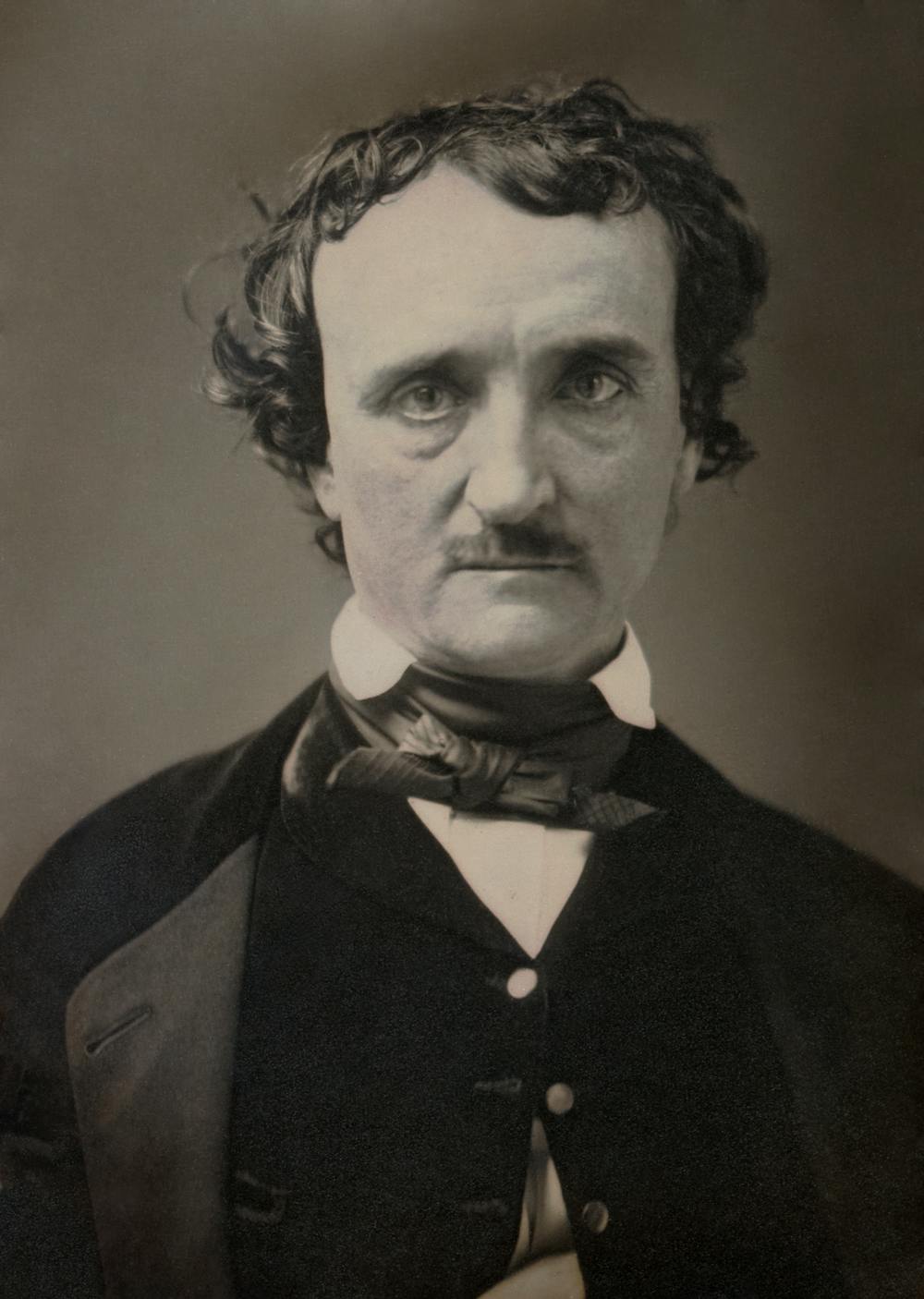
These spirit poets really did believe they had Poe’s “brain in their hands”. Lizzie Doten, a Massachusetts spiritualist lecturer, performed and published six “Poe” poems under the title Poems from the Inner Life (1864). In her introduction, Doten describes the “mental intoxication” she experienced in encountering the turbulent spirit of Poe.
Among the six texts is Resurrexi, a sequel to Poe’s famous 1845 poem The Raven. Borrowing well-known lines and phrases from The Raven, Doten makes use of the hypnotic repetitive sounds and rhymes common to Poe’s poetry. Critics commented that, if mediumship is real, the Resurrexi “is unquestionably the most astonishing thing that Spiritualism has produced”, due to its accurate representation of Poe’s style.
The fever for spirit writing covered several well-known deceased writers and historical figures. Magazines and collections produced “original” posthumous texts on a monthly basis. Spiritualists produced these celebrity ghost writings to demonstrate the authenticity of their practice and the radical possibility of the living and the dead merging consciousnesses.
Read more: Depression and language: analysing Edgar Allan Poe's writings to solve the mystery of his death
The living and the dead
The posthumous “Poe” poems are not very good, but they attempt to capture the content or style of Poe’s living poems: dramatic and dark lyrics about the loss of loved ones and the crossover between the living and spirit worlds.
They are influenced by the image of Poe as a melancholic loner, tormented by bereavement and alcoholism, and fascinated with the otherworldly. His friend and first biographer Rufus W. Griswold established this image in his 1849 obituary, in which he reflected that Poe was “a dreamer – dwelling in ideal realms – in heaven or hell”. Poe, wrote Griswold, had a “morbid sensitiveness of feeling, a shadowy and gloomy imagination”.
In his work, Poe continually blurs the boundary between life and death. He asks his readers to consider at what point death truly occurs if the dead can still speak or inhabit the bodies of the living. In Some Words with a Mummy (1845), a group of Egyptologists reanimate a mummy, who speaks to them with an unexpected eloquence. In A Predicament (1839), aspiring author Zenobia narrates her own beheading.
Poe returned to the figure of the dead or dying beautiful woman throughout his career. His poetic and fictional personas yearn to be reunited with departed wives and lovers. The Raven, Ligeia (1838), Lenore (1843), Ulalume (1847), and Annabel Lee (1849) are all explorations of this theme.
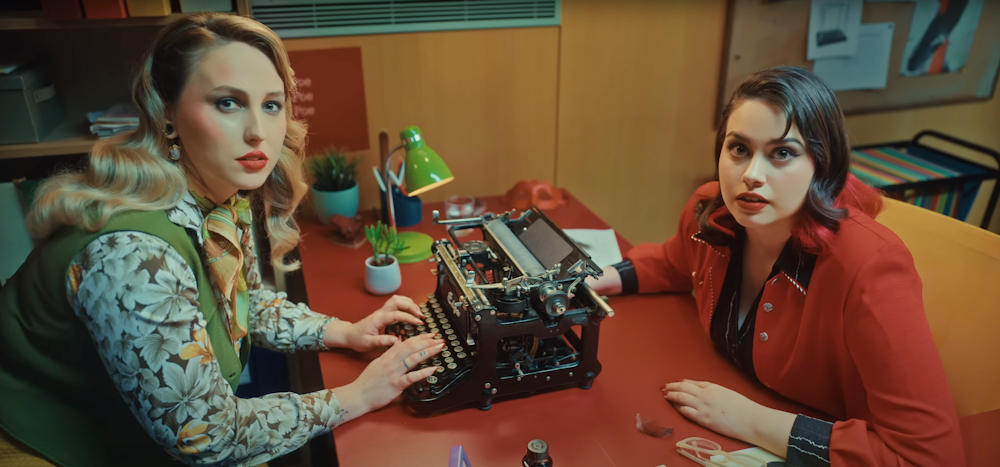 Teya and Salena.
Image: YouTube
Teya and Salena.
Image: YouTube
Poe was writing before the spiritualist boom, but he was fascinated with how human consciousness might transcend the boundaries of bodily death. In The Facts in the Case of M. Valdemar (1845), a man is placed in a mesmeric trance at the point of death and inexplicably affirms “I say to you that I am dead!”, after which his body gruesomely disintegrates.
Scholars have read this short story as a commentary on writing itself – if someone can communicate from beyond the grave, what might be the possibilities for posthumous authorship or artistic creation?
Today we can bring back the voices of the dead through sampling and even AI. But the dead might also be said to survive in the creative responses they continue to inspire. So when Teya and Salena take to the Eurovision stage in Liverpool next week, their song may be new, but their story of ghostly authorship and spirit possession comes straight from Poe’s work itself.


