

For the first time, astronomers have detected a radio signal from the massive explosion of a dying white dwarf
- Written by The Conversation
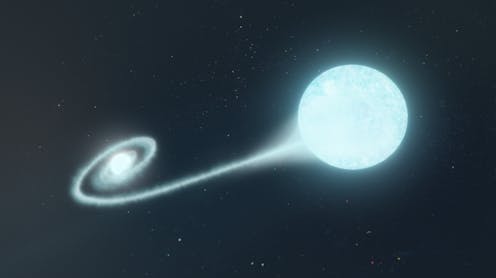
When stars like our Sun die, they tend to go out with a whimper and not a bang – unless they happen to be part of a binary (two) star system that could give rise to a supernova explosion.
Now, for the first time, astronomers have spotted the radio signature of just such an event in a galaxy more than 400 million light-years away. The finding, published today in Nature, holds tantalising clues as to what the companion star must have been like.
An explosive star death
As stars up to eight times heavier than our Sun start to run out of nuclear fuel in their core, they puff off their outer layers. This process gives rise to the colourful clouds of gas misleadingly known as planetary nebulae, and leaves behind a dense, compact hot core known as a white dwarf.
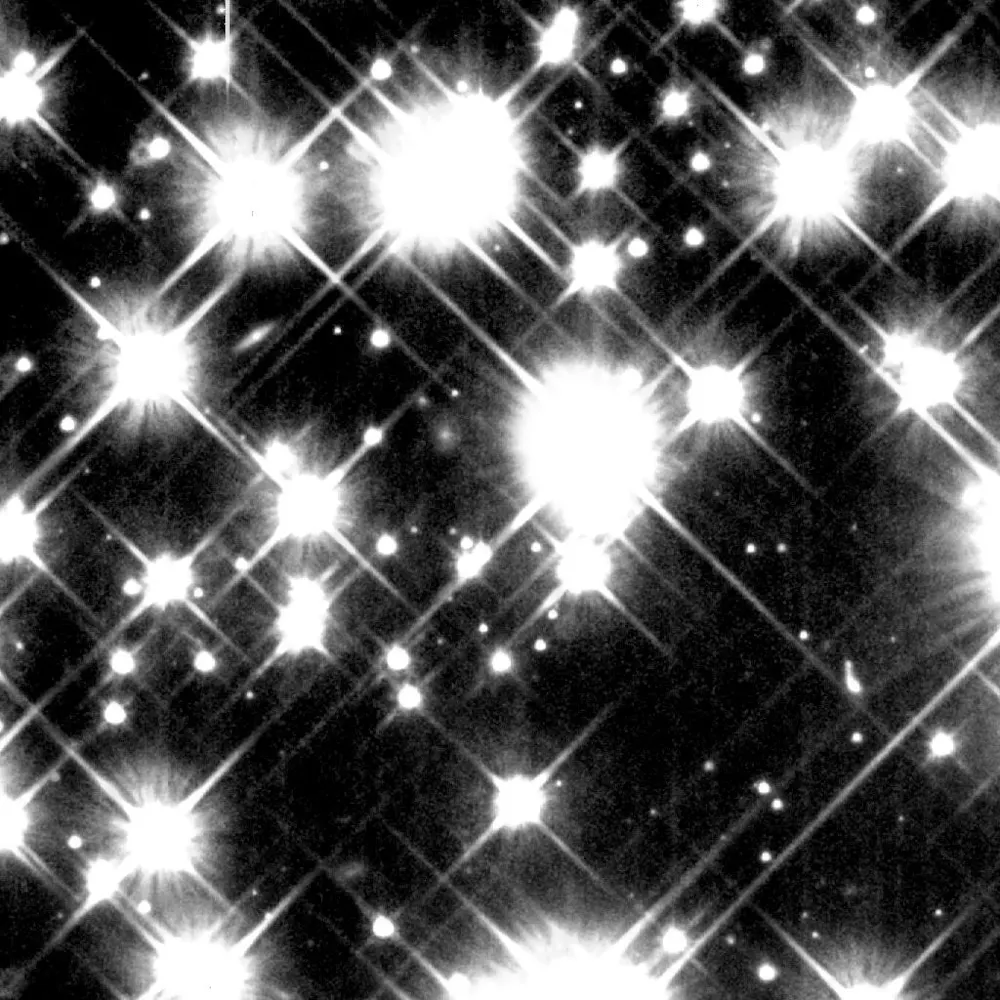
Our own Sun will undergo this transition in 5 billion years or so, then slowly cool and fade away. However, if a white dwarf somehow puts on weight, a self-destruct mechanism kicks in when it gets heavier than about 1.4 times the mass of our Sun. The subsequent thermonuclear detonation destroys the star in a distinctive kind of explosion called a Type Ia supernova.
But where would the extra mass come from to fuel such a bang?
We used to think it could be gas being stripped off a bigger companion star in a close orbit. But stars tend to be messy eaters, spilling gas everywhere. A supernova explosion would shock any spilt gas and make it glow at radio wavelengths. Despite decades of searching however, not a single young Type Ia supernova has ever been detected with radio telescopes.
Instead, we began to think Type Ia supernovae must be pairs of white dwarfs spiralling inwards and merging together in a relatively clean fashion, leaving no gas to shock – and no radio signal.
Read more: White dwarf merger is set to prove supernova theory
A rare type of supernova
Supernova 2020eyj was discovered by a telescope in Hawai'i on March 23 2020. For the first seven weeks or so it behaved in much the same way as any other Type Ia supernova.
But for the next five months, it stopped fading in brightness. Around the same time, it began to show features indicating gas that was unusually rich in helium. We began to suspect Supernova 2020eyj belonged to a rare subclass of Type Ia supernovae in which the blast wave, moving at more than 10,000 kilometres per second, sweeps past gas that could only have been stripped off the outer layers of a surviving companion star.
To try to confirm our hunch, we decided to test if there was enough gas being shocked to produce a radio signal. As the supernova is too far north to observe with telescopes like the Australia Telescope Compact Array near Narrabri, we instead used an array of radio telescopes spread across the United Kingdom to observe the supernova about 20 months after the explosion.
To our great surprise, we had the first-ever clear detection of an “infant” Type Ia supernova at radio wavelengths, confirmed by a second observation some five months later. Could this be the “smoking gun” that not all Type Ia supernovae are caused by the merger of two white dwarfs?
Patience pays off
One of the more remarkable properties of Type Ia supernovae is that they all seem to reach pretty much the same peak brightness. This is consistent with them all having reached a similar critical mass before exploding.
This very attribute allowed astronomer Brian Schmidt and colleagues to reach their Nobel Prize-winning conclusion in the late 1990s: that the universe’s expansion since the Big Bang is not slowing down under gravity (as everyone had expected), but is accelerating due to the effects of what we now call dark energy.
Read more: Nobel laureate Brian Schmidt's big ideas for how Australia funds and uses research
So, Type Ia supernovae are important cosmic objects, and the fact we still don’t know exactly how and when these stellar explosions occur, or what makes them so consistent, has been a worry to astronomers.
In particular, if pairs of merging white dwarfs can range in total mass up to almost three times the mass of our Sun, why should they all release about the same amount of energy?
Our hypothesis (and radio confirmation) that Supernova 2020eyj occurred when enough helium gas was stripped off the companion star and onto the surface of the white dwarf to push it just over the mass limit, provides a natural explanation for this consistency.
The question now is why we haven’t seen this radio signal before in any other Type Ia supernova. Perhaps we tried to detect them too soon after the explosion, and gave up too easily. Or maybe not all companion stars are as helium-rich and prodigious in shedding their gaseous outer layers.
But as our study has shown, patience and persistence sometimes pays off in ways we never expected, allowing us to hear the dying whispers of a distant star.


