

Not just a youth movement: history too often forgets older protesters
- Written by The Conversation
Recent sustained anti-coal action by Blockade Australia in the Hunter Valley has brought public protest back into the news cycle. Activists have occupied trains, railway lines and machinery in an attempt to obstruct coal production and broadcast their message about the climate crisis.
Under recent anti-protest legislation in New South Wales, which has been matched by similar laws in other states, some protesters have been charged by police for their activism.
Internationally, protesters faced with arrest have devised new ways to protest. Recently, Iranian activists have started engaging in “micro-protests”, which are small-scale protests over a shorter period of time, to evade arrest.
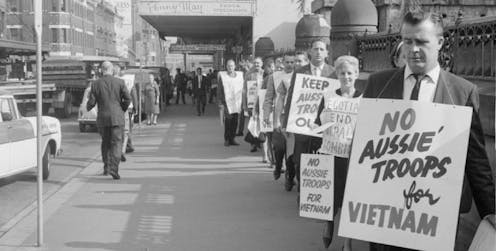
My historical research into the infrastructure of protest, using the anti-Vietnam War campaign in New South Wales as a case study, has found that many Australians who did not or could not actively or publicly protest similarly found “quieter” ways to express their opposition to the conflict.
The youth are revolting
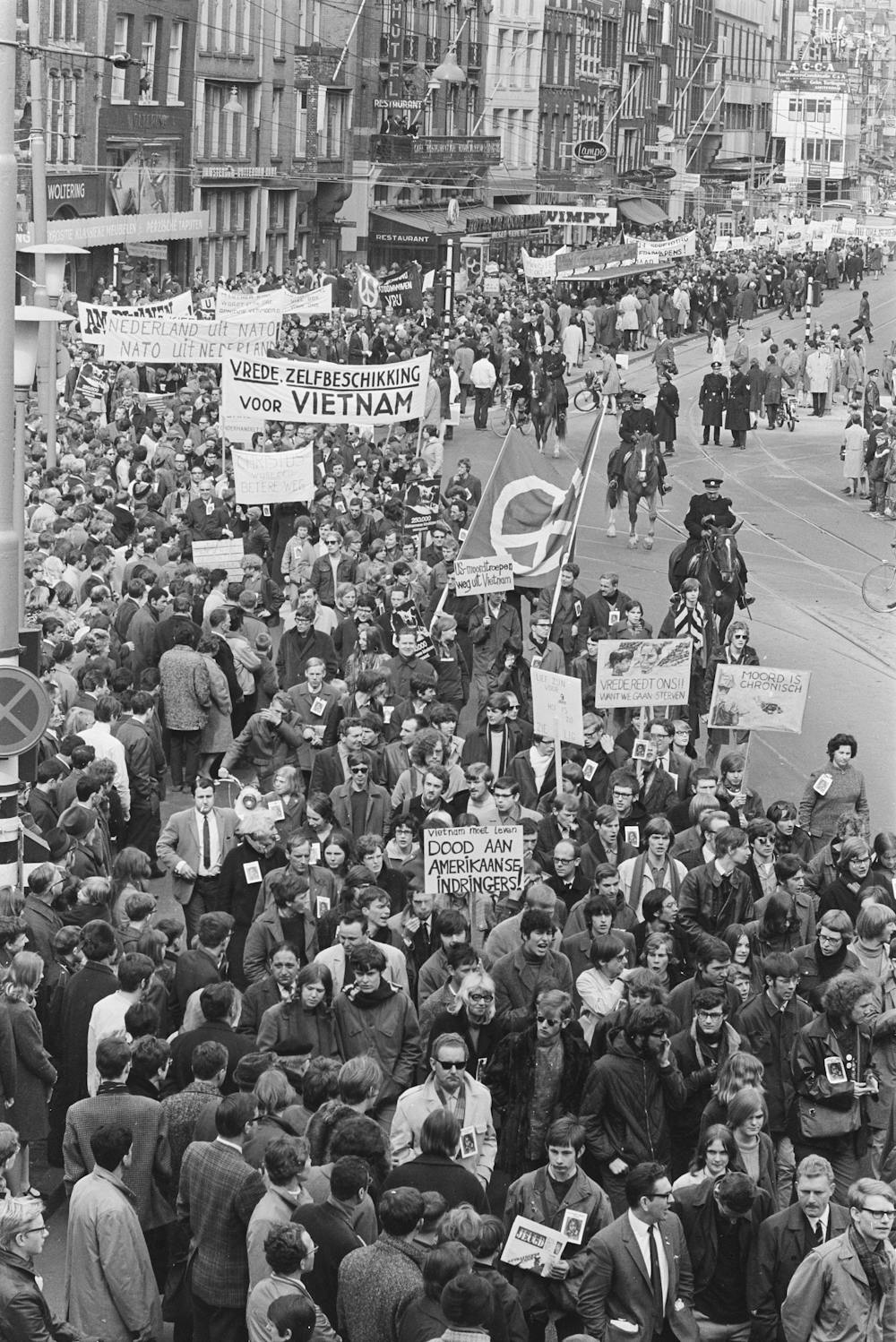
In the popular Australian imagination, it seems the protester is a young person creating a public spectacle – holding up a sign, occupying a building or marching down a city street, even though older activists regularly play a part in protest movements.
Many might think of figures like Lidia Thorpe disrupting the 2023 Sydney Gay and Lesbian Mardi Gras Parade or ongoing protests by School Strike 4 Climate, which have shown how willing young people are to agitate for their collective futures.
But, in fact, one of the two anti-coal activists charged on last month for occupying a train in Singleton, New South Wales, is 64 years old.
My research shows our public memory of protest doesn’t come close to capturing everyone who used their energies to protest Australian involvement in Vietnam in the 1960s and 1970s, so we need to shift our idea of both protest and the protester to understand the potential scope of activism.
Quiet protest
Vietnam War-era protest organisations, such as the Association for International Cooperation and Disarmament, Save Our Sons, Youth Campaign Against Conscription and the Vietnam Moratorium Campaign, were aware of how important “quiet protest” was to the wider movement.
They continually appealed to supporters for help selling buttons, putting up posters, selling raffle tickets, filling envelopes, leafleting and other clerical work. These were all carried out by people who were opposed to the war, and are all considered acts of protest.
Social movement theorists agree that time and availability are crucial in drawing people to protest. As far back as 1974, the sociologist Anthony Orum wrote:
Without people who have time on their hands, great revolutions would probably never get off the ground.
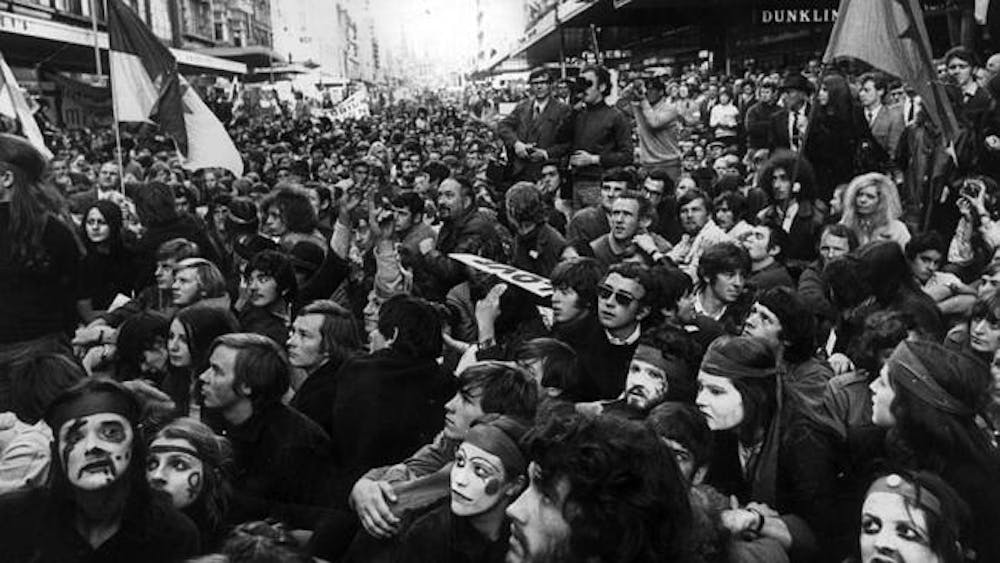 Anti-war protest in Melbourne, 1970.
Wikipedia
Anti-war protest in Melbourne, 1970.
Wikipedia
Time and capacity
But what of those who did not have the time or capacity to march on streets, but who still saw themselves as part of the anti-Vietnam War movement?
The administrative records of protest organisations held in the State Library of New South Wales let us into the lives of such people.
These include Ian Robertson, a full-time Macquarie University student, whose parents had banned political activity because they feared it would disrupt his studies. Another silent protester was a Mrs Thomson, who was too busy organising her daughter Sue’s wedding to participate in anti-Vietnam protest activities. Public servants were also not permitted to publicly support the movement.
Most such records come from elderly members of the movement. In November 1969, Mabel Wilson, who in her words was “six years an octogenarian,” sent $5 to the Committee in Defiance of the National Service Act, writing:
I admire your courage and am completely in sympathy with your ideals. Alas! I am very old […] As you can see I can be of practically no use to you – or anyone […] My heart is with you all the way.
Similarly, on March 21 1970, Doris J Wilson of Asquith sent a donation to the Northern Districts Vietnam Moratorium Group with a letter saying:
I am past the age where I can do very much more than be just a voice.
On September 14 1970, L.T. Withers sent the same group a letter saying:
Congratulations for what you have accomplished. I feel rather guilty at being so useless […] myself and my wife are not as energetic as we used to be as the years are catching up on us a bit. I have enclosed a small donation to your local funds […] I would also be grateful if you could keep me informed of your activities.
Ruth Fryer of Hornsby sent a letter on February 9 1971 with a $3 donation:
Sometimes you wish you were young & strong again! But the hard work seems to be left to the young ones.
These Australians, among many others, were interested in the anti-Vietnam campaign and wanted to be involved as much as they could, given their limitations.
The infrastructure of historical protest
Studying the infrastructure of historical protest organisations shows us that we need to expand our idea of what a protest movement is and who it includes if we want to achieve the present-day goals of activist campaigning.
These findings are exciting because they capture a larger group of Australians in the protest tradition, and move past a limited, and often ableist and ageist, vision of protest to incorporate many others who feel just as strongly about the issues governing their lives.


