

What is atrial fibrillation, the heart condition US President Joe Biden lives with?
- Written by The Conversation
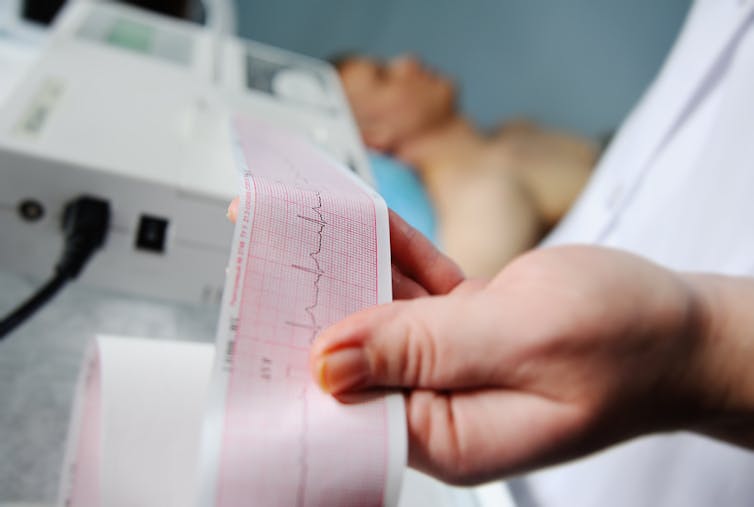
US President Joe Biden has the heart condition atrial fibrillation. This increases his risk of having a stroke five-fold and doubles the risk of a heart attack or dementia.
More than 37.5 million people globally also have atrial fibrillation, but many don’t realise they have it.
For most, the condition has few symptoms and does not limit daily life. However, identifying it and treating it is the only way to reduce its serious health consequences.
Our research, just published in the journal Heart, looks at the importance of managing blood pressure in reducing such risks.
Read more: Health Check: what do my blood pressure numbers mean?
What is atrial fibrillation?
Atrial fibrillation is when the heart beats irregularly, sometimes fast, sometimes slow. It’s the most common heart rhythm disorder and is more common as you get older. But some people develop it in their 30s and 40s.
The abnormal heart rhythm starts in the top chambers of the heart, meaning the heart does not propel the blood forward properly. This, and the erratic movements of these heart chambers, result in blood pooling, and occasionally clots.
The heart can go into atrial fibrillation for short periods of time, and then return to normal rhythm, or stay in this abnormal heart rhythm continuously.
Here’s what happens if you have atrial fibrillation and your heart beats irregularly.How do I know if I have it?
Some people have lots of symptoms, such as heart palpitations (a feeling of fluttering or pounding heart), breathlessness or even discomfort, and know exactly when they have gone into atrial fibrillation. Their symptoms can stop what they would normally do. But others have no symptoms and don’t know they have atrial fibrillation. We know very little about why some people have symptoms and others do not.
If you have symptoms, discuss these with your GP. Your GP will ask about triggers for your symptoms, your general health and other risk factors, and will likely organise an electrocardiogram (also called an ECG). This is a type of non-invasive test where 12 leads are attached to your chest to measure the electrical activity of the heart.
Generally, your GP will refer you to a cardiologist (heart specialist) or a hospital clinic if they suspect you have a heart rhythm problem, including atrial fibrillation, for further testing and treatment.
Some people say you can detect atrial fibrillation using consumer wearables, such as smartwatches. However, it’s not clear how accurate these are.

Read more: Is this love ... or an arrhythmia? Your heart really can skip a beat when you're in love
What happens after you’re diagnosed?
Once diagnosed with atrial fibrillation, you will be assessed for serious potential complications, such as an increased risk of stroke.
You’ll be advised to manage any risk factors that worsen atrial fibrillation and increase your risk of stroke. This includes cutting down on alcohol, managing your weight and doing more exercise.
Some people at higher risk of a stroke will be started on blood thinning medicines. Some people may also need to take medicines to control their heart rhythm or have a procedure called “ablation”. This is when wires are passed into the heart to identify and treat the electrical origin of the condition.
Read more: What should my heart rate be and what affects it?
How about high blood pressure?
More than three in five people with atrial fibrillation also have high blood pressure (hypertension). This is another major cause of stroke and heart attack. So managing blood pressure is very important.
In our new research, we analysed data from the electronic medical records from about 34,000 Australian GP patients with both atrial fibrillation and hypertension. We found one-in-three had poorly controlled blood pressure. This places a group already at a high risk of stroke at an even greater risk.
When someone’s blood pressure is poorly controlled, this is usually because their medicines are not adequately bringing down their blood pressure. This could be because doctors are not increasing the number of different types of medicine when needed, or because patients cannot afford their medicines, or forget to take them.
We also found that people who visited the same GP regularly were more likely to have their blood pressure controlled, so were at lower risk of stroke.
 Our research highlighted the importance of seeing the same GP regularly.
Shutterstock
Our research highlighted the importance of seeing the same GP regularly.
Shutterstock
Read more: How to recognise a stroke and what you should know about their treatment
Why is this important?
It is important people at the highest risk of stroke – such as those with both atrial fibrillation and high blood pressure – are receiving appropriate treatment to minimise their risk.
Strokes, heart attacks and dementia are still leading causes of death and ill health in Australia. Prevention is so much better than treating them when they develop.


