

I've spent 40 years studying Antarctica. The frozen continent has never needed our help more
- Written by The Conversation
After decades immersed in Antarctic science, I’ve learned that physical and biological changes rarely occur smoothly. More often than not, they unfold in sharp steps. Right now, Antarctica’s climate and ecosystems are experiencing disturbing changes.
Much of this winter’s sea ice is missing. A crucial ocean current is slowing down, and glaciers and ice shelves are disintegrating.
On land, fragile moss ecosystems are collapsing. Majestic emperor penguins may be headed for extinction. And pollution from human activity in Antarctica has left a toxic legacy.
It’s almost certain things will get worse. On Friday, hundreds of international scientists called for an urgent expansion – not contraction – of Southern Ocean science in response to the emerging climate crisis. This adds to the scientific chorus claiming we have only a narrow window to save the planet.
I’ve spent 40 years in Antarctic and subantarctic research. Some 22 of those were spent at the federal government’s Australian Antarctic Division; my final day there was last Thursday. No longer a public servant, I feel compelled, as a private citizen now, to publicly stand up for the icy continent and the benefit of Antarctic science to society.
Read more: Antarctic alarm bells: observations reveal deep ocean currents are slowing earlier than predicted
Crucial to life as we know it
Antarctica matters. What happens there affects global weather patterns and sea levels.
But Antarctica’s climate is changing. Record-breaking stored heat is melting ice shelves from underneath, setting off a chain reaction. Without the buttressing of the ice shelves, glaciers flow faster to the sea. In West Antarctica, the Thwaites “doomsday glacier” is melting faster than predicted. In East Antarctica, lesser-known ice shelves have collapsed and glaciers are shrinking, adding to sea-level rise.
Read more: Antarctica's 'doomsday' glacier: how its collapse could trigger global floods and swallow islands
Antarctica is governed by the Antarctic Treaty, negotiated by 12 countries, including Australia, during the Cold War in 1959. Australia’s territory in Antarctica comprises 42% of the continent.
In my view, the treaty is magnificent. It represents a grand vision: a continent set aside for conservation, peace and science.
But Antarctica remains under threat. And the biggest threat of all is climate change.
In June this year, all treaty nations, including Australia, collectively stated:
changes in Antarctic and Southern Ocean environments are linked to, and influence, climate impact drivers globally.
They added “further irreversible change is likely” without “accelerated efforts” to reduce greenhouse gas emissions.
Scientific research is crucial in the face of these threats, to help better understand these changes now and over the longer term, and to feed into policy interventions.
Surprisingly a budget shortfall appears to be inadvertently curtailing plans for science this summer, according to the Guardian Australia.
In July, the ABC reported the Antarctic Division told staff A$25 million in budget savings was needed this financial year. This led to a review of plans for field research this summer. Reportedly, two out of three permanent research stations (Mawson and Davis) will not be filled with the normal number of scientists this season. That means some planned and approved projects will not be going ahead this year, including surveys on sea-ice thickness and landfast sea ice.
Read more: Fractured foundations: how Antarctica's 'landfast' ice is dwindling and why that's bad news
The Greens claim the $25 million hit to the Antarctic Division represents a 16% cut to its operating budget for the current financial year.
Seizing an opportunity, the Greens and Liberal Party established a Senate inquiry into what they refer to as funding cuts, to report by November 30.
Generally speaking, Antarctic activities receive overwhelmingly bipartisan support. For many decades Australia’s record in Antarctic protection has been impressive. For example, Environment Minister Tanya Plibersek recently tripled the size of the marine protected area around Macquarie Island.
Former Labor environment minister Peter Garrett advanced whale conservation. He was instrumental in the campaign against so-called “scientific whaling” in the Antarctic, backed by government scientists, which culminated in Australia’s successful challenge to Japanese whaling in the International Court of Justice in 2014.
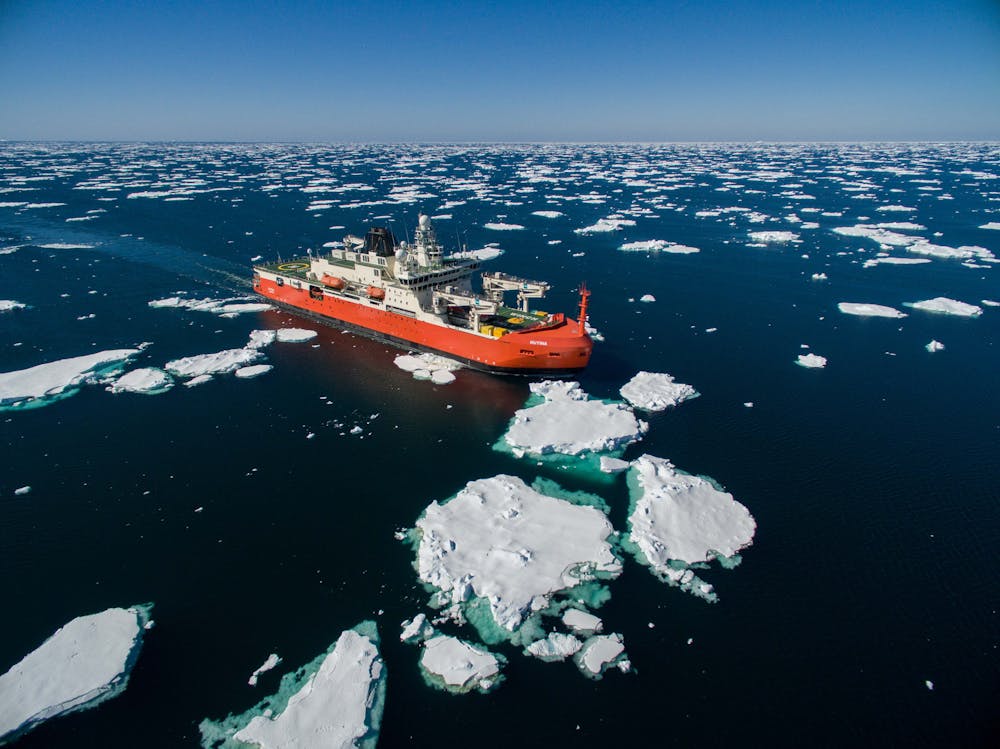
Liberal prime minister Malcolm Turnbull funded Australia’s new icebreaker and feral pest eradication from Macquarie Island. And Labor prime minister Bob Hawke, with treasurer Paul Keating, collaborated with French prime minister Michel Rocard in 1991 to ensure a mining ban and sign the Madrid Protocol to protect Antarctic ecosystems.
Support for Antarctic Division activities contributed to curtailing the illegal toothfish fishing in Antarctic waters. A regulated, sustainable industry is now in place. Krill fisheries operate according to science-based decisions. Efforts to reduce albatross bycatch in longline fishing were also led by Antarctic Division scientists.
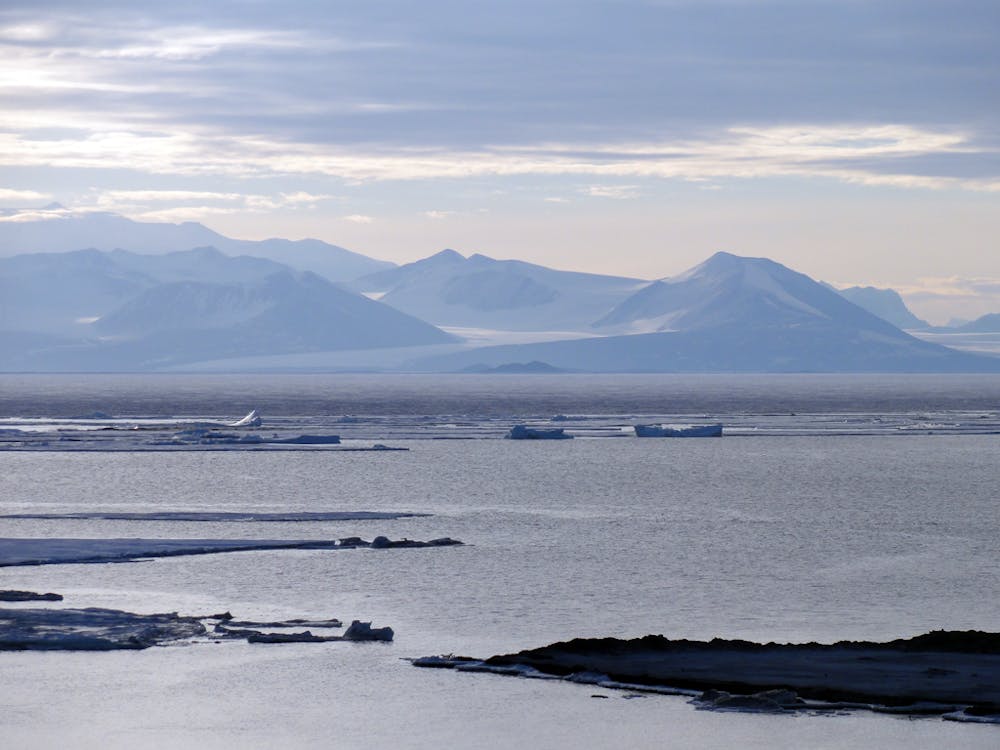 Mount Martin looms over the Ross Sea in east Antarctica.
Dana M Bergstrom
Mount Martin looms over the Ross Sea in east Antarctica.
Dana M Bergstrom
Cleaning up the mess in Antarctica
The story of Antarctica serves as a compelling reminder humanity must end our reliance on fossil fuels. We must also do a far better job of environmental stewardship – including paying for the scientific research so urgently needed.
Failing to fully support vital Antarctic science in a rapidly unfolding climate emergency, in my view, is unwise.


