

What's to stop Philip Lowe moving to a private bank after he leaves the RBA? It's what his predecessors did
- Written by The Conversation
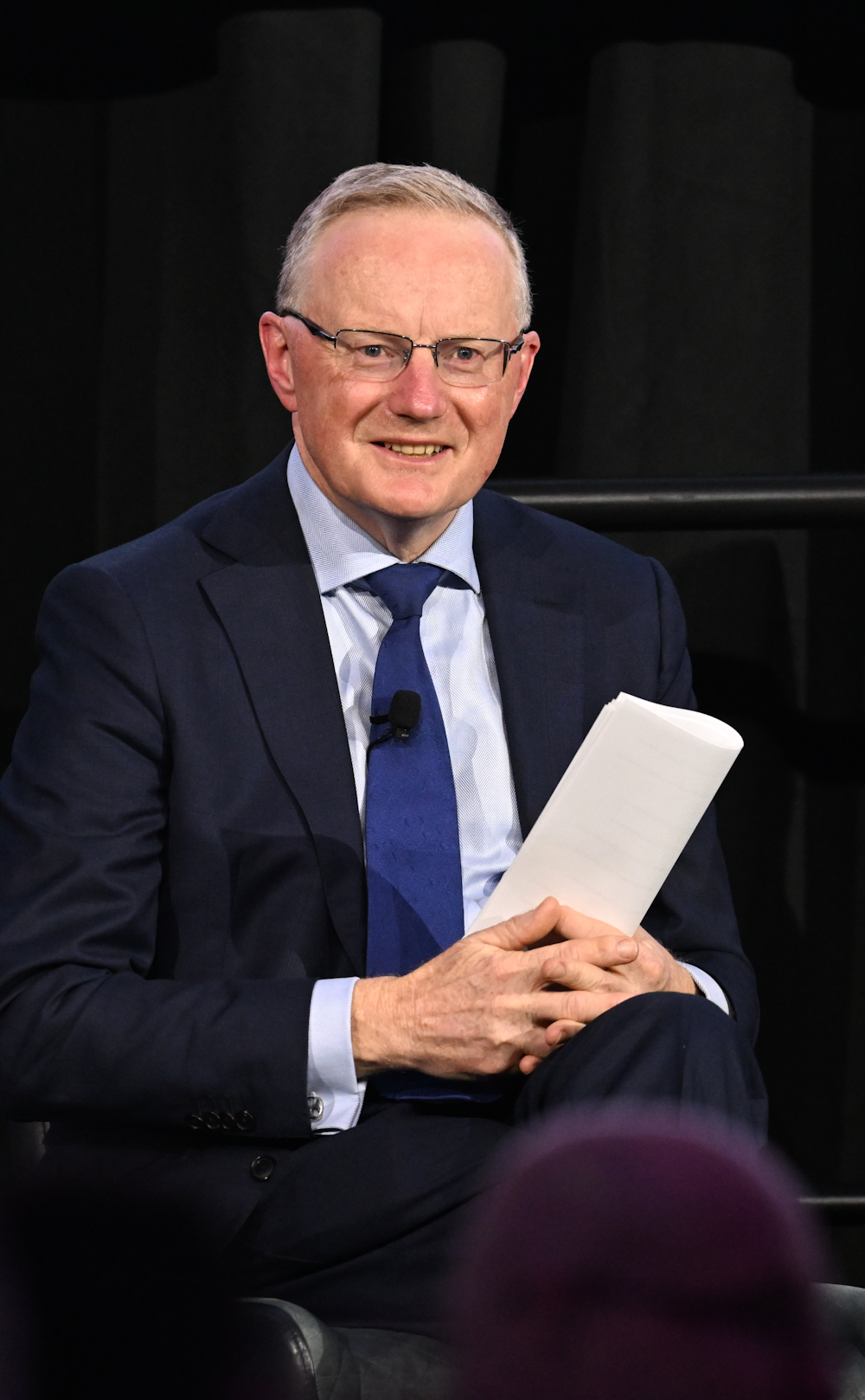
Surely Reserve Bank Governor Philip Lowe won’t move to a private bank after his term as governor ends next week.
After having chaired his last board meeting on Tuesday, there’s nothing to stop him, and – as shabby as it seems – he wouldn’t be the first.
There are three reasons why he shouldn’t join the board of or become chair of a private bank, all alluded to in the public service code of conduct.
One is concern that the former employee would reveal confidential Commonwealth information (which would be unlikely for someone as cluey as Lowe) or “provide other information that would give the new employer an advantage in its business dealings”, which would be more likely, even if unintentional.
Banks don’t seek out former Reserve Bank chiefs unless they think there’s something in it for them.
Another concern set out in the code of conduct is that the former employee would exploit their knowledge of the Commonwealth to lobby, or otherwise seek advantage for their new employer in dealing with the Commonwealth.
Banks such as Westpac, NAB, the ANZ and Macquarie Bank deal with the Reserve Bank all the time. It runs the payments system, it is responsible for the financial system, and it sets interest rates.
Every one of the four banks I just mentioned has employed either a former Reserve Bank Governor or Treasury Secretary.
Even where these high-profile hires don’t help the banks in their relations with the regulator, the public service code of conduct points to the “perception” that they will have a greater ability to influence regulators than other hires.
The third concern identified in the code of conduct – in my view the most important – has been labelled “ingratiation” by a public service specialist at the Australian National University, Richard Mulligan.
It’s the possibility that while still in the public service, the employee will use their position to go soft on an organisation (or type of organisation) they see as a potential future employer.
The Reserve Bank’s own code of conduct is silent on the question of taking up employment with the banks it regulates, although it does say that where there is a perception of conflict of interest, the employee has to discuss it with the relevant department head or governor.
Read more: The RBA has kept interest rates on hold. It'll be cautious from here on
The government’s lobbying code of conduct in place since 2008 purports to ban heads of department from engaging in lobbying activities relating to any matter with which they have had official dealings for 12 months after they have left office.
But former governors needn’t lobby, and 12 months isn’t long to wait.
 Governor Glenn Stevens, joined Macquarie Bank.
Dean Lewins/AAP
Governor Glenn Stevens, joined Macquarie Bank.
Dean Lewins/AAP
Philip Lowe’s predecessor, the man to whom he was deputy, Glenn Stevens, finished up as Reserve Bank Governor in September 2016 and joined the board of the Macquarie Bank and Macquarie Group in December 2017. He has been chair of Macquarie Bank and Macquarie Group since 2022.
Stevens’ predecessor as governor, Ian Macfarlane, finished as head of the Reserve Bank in September 2006 and joined the board of the ANZ bank in February 2007.
The governor he replaced, Bernie Fraser, finished at the Reserve Bank in September 1996 and joined the board of the industry funds that became Australian Super in the same year, becoming chair of the super-fund-owned ME Bank in 2000.
Ken Henry stepped down as head of the Australian Treasury (and a member of the Reserve Bank board) in April 2011 and in November that year joined the board of the National Australia Bank. In 2015 he was made its chair.
 Treasury Secretary Ken Henry, joined the National Australia Bank.
AAP
Treasury Secretary Ken Henry, joined the National Australia Bank.
AAP
The man Henry replaced at the Treasury, Ted Evans, stepped down in April 2001 and joined the board of Westpac that year, becoming its chair in 2007.
I’ve dealt with each of these people while they were governors or treasury secretaries and I’ve never seen anything that made me doubt their integrity.
And yet in my view, none of them should have gone on to work for the type of organisations they used to regulate.
All of them were paid extraordinarily well. In 2021–22 Philip Lowe was on a package of $1.037 million including superannuation and a salary of $890,252.
None needed another high-paying job straight away, and (because of public service super) all had a generous income to look forward to in retirement.
I understand their need to continue to do interesting things, but I don’t think it’s too big a sacrifice to ask former regulators to do those things away from the types of organisations they had the privilege of regulating.
On retiring from the Reserve Bank in 1968, its first governor HC Coombs, chaired the Council for the Arts and the Council for Aboriginal Affairs. He made an ever-greater contribution to Australia without doing what the Japanese call amakudari, or “descending from heaven” to work for the organisations he once regulated.
A profile of the practice includes the admonition “don’t snicker”.
When Lowe took the governor’s job in 2016 I wrote a profile of him for The Age and the Sydney Morning Herald, speaking to former teachers and colleagues off the record. Repeatedly, unprompted, they mentioned his moral compass.
Lowe is about to turn 62. He has years of useful work ahead of him. I don’t expect him to descend from heaven to do it.


