

Every country can make a difference – but carbon reductions need to be realistic and fair
- Written by The Conversation
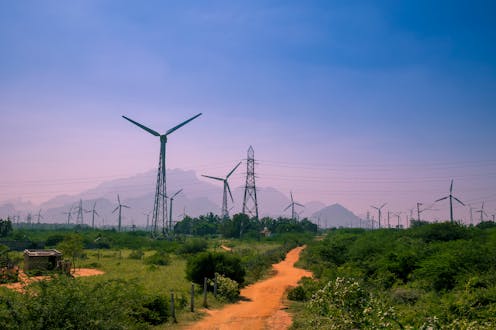
This weekend, the world’s major economies will convene in Delhi for the G20 summit. On the table will be the common goal of limiting global temperature rise as climate chaos becomes ever more evident.
When we talk about limiting climate change, we’re really talking about the global carbon budget set by the Intergovernmental Panel on Climate Change. Basically, we have a two-thirds chance of holding global heating to 1.5℃ if we keep future emissions under 400 gigatonnes of carbon dioxide. At current emission rates, we’ve got just under five years left before we blow through that limit.
As our new research shows, getting to net zero isn’t going to be the same in each country. There are commonalities – halting new fossil fuel projects and funding renewables, storage and energy efficiency. But there will be significant differences in how manufacturing giants like China zero out emissions compared to India or Australia.
And then there’s the question of fairness. Some countries have emitted vastly more than others. If we divide up the remaining carbon budget while taking historic emissions into account, we find countries like America, France, Germany, Saudi Arabia, Japan and Australia have already gone past their fair carbon budgets.
Meanwhile, countries which have industrialised later like Mexico, China, Argentina, Turkey, India and Indonesia are sitting below their fair carbon budgets.
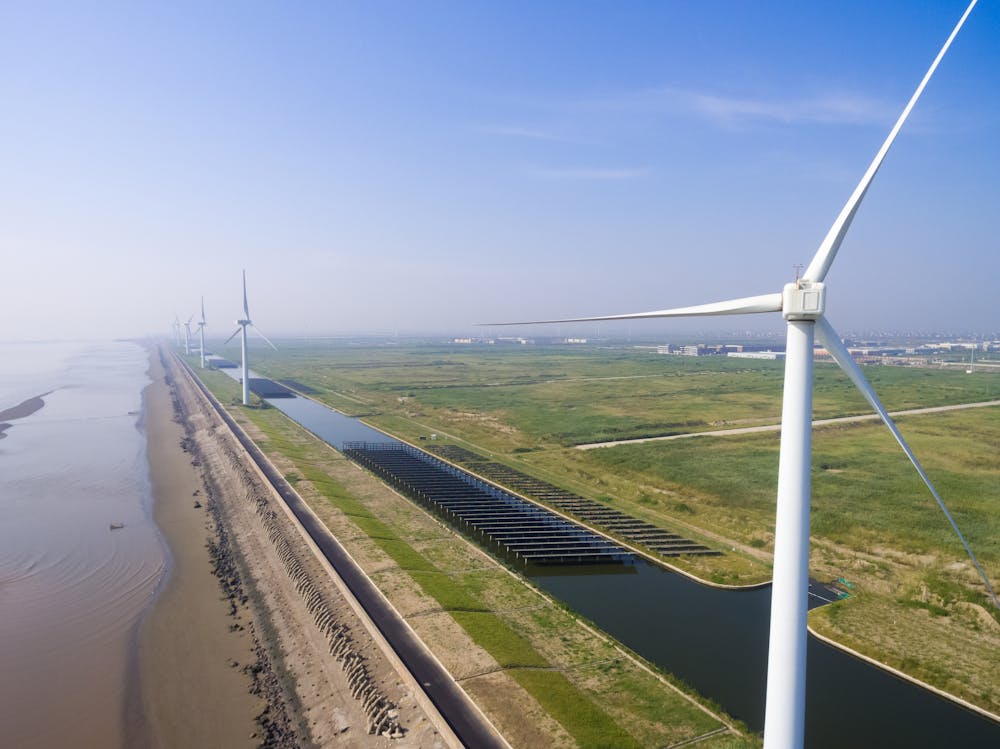
What’s new about this?
The G20 account for 80% of the world’s emissions. If each of these countries ended their reliance on fossil fuels and other emissions sources, we’d be most of the way to tackling the climate crisis.
We took into account how much each country has emitted historically, from industrialisation to 2019, and population size. Then we devised a per capita carbon index, which gives developing countries with little historic responsibility for climate change a fair distribution of carbon from 2020 to 2050. We did this to show how every country can make this energy transition in a timeframe realistic to their circumstances.
India: minimal historic impact but rising fast
The world’s most populous country has historically been a very low emitter, producing just 25% of China’s emissions from 1750–2019. But in recent decades, it has begun to emit more and its future emissions might rise substantially.
India has relied heavily on coal power, but its renewable sector is growing exceptionally fast. It’s now the fourth largest market for solar, biomass and wind power
Steelmaking is rapidly growing. If this industry relies on old coal technology, it will add to emissions and eat away at the global carbon budget. New build steel plants should turn to hydrogen or other green steelmaking techniques.
Power sector: not yet on track but positive trend
Industry: not on track.
Read more: Africa has vast gas reserves – here’s how to stop them adding to climate change
China: giant of emissions, manufacturing – and renewables
China produces over 30% of the world’s emissions with 18% of its population, making it the world’s biggest.
The North Asian nation’s cement, steel, chemical and aluminium industries rely heavily on coal, producing 60% of the global energy-related emissions from each of these sectors – vastly more than America’s 10%.
Cleaning up its enormous industrial sector through green steelmaking and other new techniques will be actually be harder than getting off coal power.
On the positive side, China has emerged as the world’s leading nation in solar and wind energy deployment and manufacturing. It’s surging forward on electric cars and long-distance rail.
Power sector: decarbonising slowly, not yet on track
Industrial sector: well off track
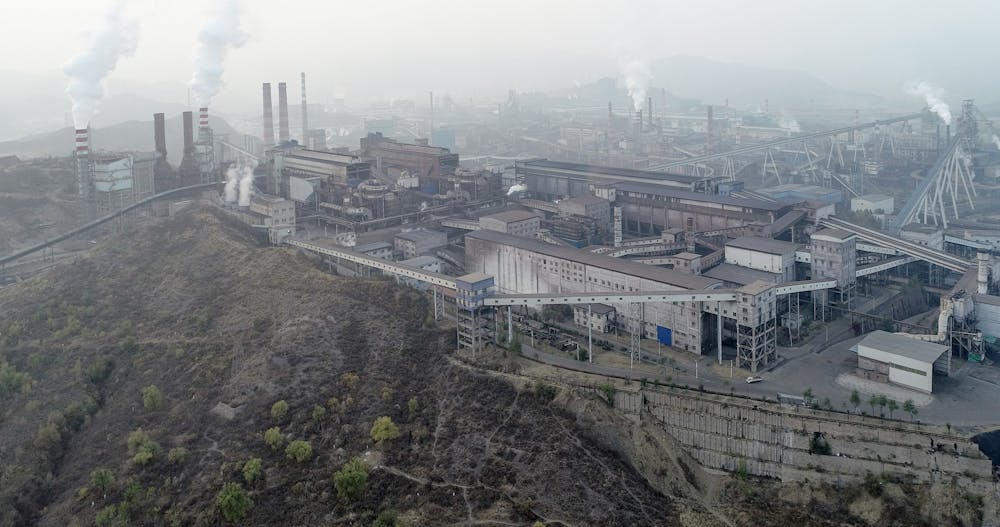 China’s heavy industry will be hard to clean up.
Shutterstock
China’s heavy industry will be hard to clean up.
Shutterstock
America: gas, inefficient cars and a clean energy boom
The United States is the world’s largest single emitter of carbon emissions in the power sector, both historically as well as per capita.
Fossil gas plays a major role for power and heat generation, while America’s cars and trucks are the most inefficient in the world. The nation has just 4% of global population but its vehicles emit almost 25% of the world’s emissions from road transport.
The nation’s building sector accounts for 15% of all global emissions from buildings, due to large, inefficiently built houses and heating systems.
These sectors – power, transport and buildings – still need urgent attention. But, thankfully, America’s much-vaunted Inflation Reduction Act has triggered an enormous investment boom in energy efficiency and renewable energy.
Power sector: well on track to be largely decarbonised by 2040
Transport and building sectors: not yet on track
Australia: rich in renewables – and gas and coal
Australia is one of the top five per capita emitters in the G20, both historically and today. Our relatively small population means we’re not one of the largest overall emitters.
Huge coal and gas reserves mean Australia has long profited from fossil fuel income. We’re the second largest coal exporter and one of the top liquefied natural gas exporters.
On the upside, Australia has some of the world’s best and largest solar and wind resources. We could play a leading role in the transition towards green steel and green hydrogen. At the rate things are going, we could decarbonise domestic energy supply in just over a decade.
Power sector: broadly on track
Transport sector: not yet on track
 Big battery installations at the site of former coal plants like Hazelwood show the pace of Australia’s power transition – but other sectors aren’t yet on track.
Engie
Big battery installations at the site of former coal plants like Hazelwood show the pace of Australia’s power transition – but other sectors aren’t yet on track.
Engie
Fair is possible – and necessary
This weekend’s G20 summit gives an opportunity to build political momentum and formulate plans for concrete action among high-emitting countries.
An agreement to fairly split up the remaining carbon budget is unlikely, however, given debate over whether cutting carbon will damage economic development in developing countries at the recent G20 meeting of foreign ministers.
It might be hard. But it is possible. Many rich countries have already broken the link between GDP growth and energy demand. Developing countries can decarbonise while continuing to grow.
Read more: COP27 roundup: how the world can stick to its carbon budget fairly


