

How – and why – did homosexual behaviour evolve in humans and other animals?
- Written by The Conversation
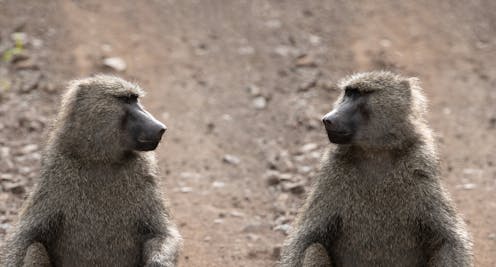
Since gay couples have fewer children, the high frequency of same-sex relationships in humans is puzzling from an evolutionary point of view. Perhaps there are social advantages such relationships confer on a group, or perhaps “gay genes” are selected for other reasons.
A group of Spanish researchers have studied same-sex sexual behaviour and social relationships in more than 250 species of mammals – and in a recent paper in Nature Communications, they conclude it arose independently many times, and is related to other kinds of social behaviour.
Darwin’s paradox
Research has shown the basis of male homosexuality in humans is at least partially genetic. I know of no work on a genetic basis for female–female sexual behaviour.
Why then is male–male sexual behaviour so common? You’d think, because gay couples have fewer children, these gene variants would be passed on rarely, and their frequency would decline over time.
Geneticists, sociologists and psychologists have advanced many possible explanations for this conundrum.
One is that gay genes are really “male-loving genes”. In this case, though gay males have fewer children, their female relatives who share these gene variants may be more inclined to mate earlier and have more children, making up the deficit.
Read more: Born this way? An evolutionary view of 'gay genes'
Other hypotheses referenced in the new paper propose that same-sex behaviour has beneficial effects for human groups. One idea is that same-sex relationships are important for forming and maintaining bonds and alliances within the group. This predicts same-sex behaviour should be more frequent in social species than in non-social species.
Alternatively, same-sex behaviour may help to diminish conflict between members of the same sex, and contribute to establishing social hierarchies. If this is so, we would expect same-sex behaviour to be more common in species where aggression and killing among members is also common.
The big picture of same-sex relationships
Human aren’t the only mammals to show a high frequency of same-sex relationships. There are reports of same-sex behaviour (courtship, mounting, genital contact and copulation, pair bonding) in 261 (out of 5,747) mammal species.
Mostly this behaviour is frequent and overt, occurs in the wild, and in half the species is displayed by both sexes. It is very widespread. These species represent about half of all mammal families.
Primates are strongly represented. Fifty-one species, from lemurs to great apes, show same-sex sexual behaviour.
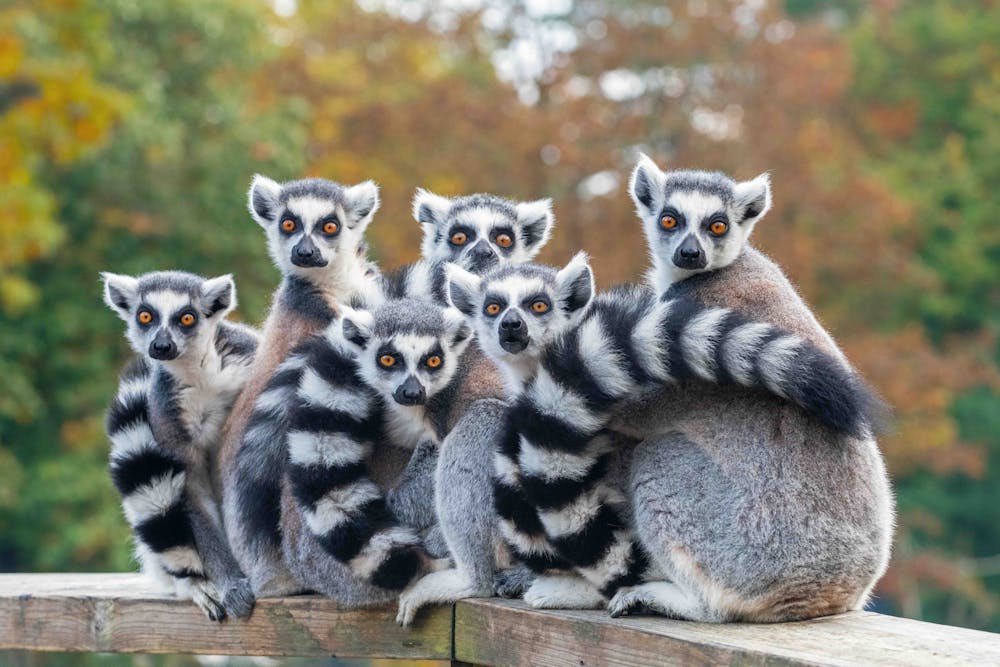
The even bigger picture is given by studies on many other animals, which reveal same-sex behaviour in birds, reptiles, frogs and fish, as well as many invertebrates.
Most studies of same-sex relationships focus on a particular species, which makes it hard to test these competing hypotheses.
The new research explores same-sex relationships across a wide range of mammals. It asks whether this behaviour was ancestral to all mammals, or whether it evolved independently in response to the establishment of different social systems.
Same-sex sexual behaviour evolved many times and quite recently
It has been proposed that the common ancestor of mammals indulged in indiscriminate sexual behaviour, which manifested as a mix of same-sex and heterosexual relationships. The new study contradicts this.
Using a tree of relationships of mammals to each other – confirmed with DNA sequence comparisons – the patterns of same-sex sexual behaviour were mapped onto the relationships between species. The distribution of same-sex behaviour over all mammals didn’t fit the pattern we would expect if it were present in the common ancestor of all mammals, and was retained in some lineages but not others.
Read more: Homosexuality may have evolved for social, not sexual reasons
A better explanation for the evidence is that same-sex sexual behaviour was rare in mammalian ancestors overall, but evolved independently many times in many different families. Species exhibiting same-sex sexual behaviour had shared ancestors much more recently than species not showing the behaviour. This suggests same-sex sexual behaviour has been gained and lost many times, and quite recently, during mammalian evolution.
Different lineages showed different times at which same-sex sexual behaviour evolved. It became more frequent in Old World monkeys (those found in Africa and Asia today) and increased again during the evolution of the great apes.
Same-sex sexual behaviour and social organisation
Next, the researchers examined the correlation of same-sex sexual behaviour to different measures of social organisation in different mammal species. They compiled information about sociality (how the animals live together) and aggression between members of the same species, and tested for correlations with male or female same-sex sexual behaviour.
The study found same-sex sexual behaviour, both male and female, was more common in more social species. This suggests same-sex sexual behaviour was selected for in social species.
The frequency of male, but not female, same-sex sexual behaviour was also correlated with the frequency with which animals of the same sex attacked and killed each other. This supports the hypothesis that homosexuality evolved to mitigate male–male aggression in mammals.
We conclude from this study that same-sex sexual behaviour in both males and females evolved as species shifted from solitary living to sociality. It helps to establish and maintain social relationships and alliances, resolve conflicts and avoid aggression.
The high frequency of same-sex sexual behaviour in ape and monkey species suggests it was present in a social great ape ancestor, and maintained in present day social species, including humans.
Everybody might be right
Establishing that homosexuality confers selective advantages in social species such as humans and other great apes does not rule out other explanations.
There may still be fertility advantages accruing to the other sex who inherit “male-loving” or “female-loving” gene variants, for example. These benefits are not necessarily the same in different mammal lineages, and may include others that have not yet been investigated.
In any case, the ubiquity and frequency of same-sex sexual behaviour in mammals means homosexuality cannot be considered aberrant or maladaptive in humans, or any other species. It was selected because it confers different and overlapping social and fertility benefits.


