

The government just killed 50 infrastructure projects – what matters is whether it will fund them on merit from now on
- Written by The Conversation
The federal government has just announced a list of projects to be abandoned as a result of an independent strategic review of its infrastructure investment program.
The review found the cost of the A$120 billion, ten-year program had blown out by $32.8 billion, half of which was in projects not yet under construction.
But the flaws in national infrastructure planning go much deeper than the question of whether or how projects are listed on a spreadsheet, and how much their costs blow out.
A national framework built around Infrastructure Australia was supposed to resolve differences between the states and the federal government on projects before they get approved.
Read more: Infrastructure review recommends culling 82 planned projects
In the late 1990s and early 2000s, as Australia was recovering from recession, demands for new infrastructure funding grew.
Sydney, which had been “full up” according to then NSW Premier Bob Carr and had economised on spending in the runup to the 2000 Olympics, desperately needed new infrastructure.
With their budgets constrained, states began pitching projects to the federal government, but incoherently and without a national framework.
The Rudd Labor government went to the 2007 election promising to bring coherence and rationality to national infrastructure planning.
Independent advice was meant to fix things…
Rudd and the then infrastructure minister Anthony Albanese established Infrastructure Australia as an independent statutory authority to provide advice on national needs and project priorities. The idea of it being independent came from technocratic bodies such as the Reserve Bank and the Productivity Commission.
Infastructure Australia was diligent in its approach.
It undertook national infrastructure audits to determine key areas of need, prepared uniform criteria by which projects should be assessed, and compiled priority lists of projects assessed on merit against those criteria.
Final decisions on funding would rest with ministers, but they would have the benefit of Infrastructure Australia’s independent advice.
…but big projects are inherently political
But large infrastructure projects addressing public and business needs are unavoidably political.
As desirable as an independent body assessing projects on merit seems, retail politics militate strongly against delegating decisions to technocratic bodies.
But conversely, a minister who is seen to reject official independent advice is politically exposed. This gives both the agency and the minister strong imperatives to preserve each other’s modesty.
From the mid-2010s to the early 2020s, the Australian public service became increasingly politicised, resulting in hollowing out of expertise, loss of independence, and scandals such as robodebt.
‘High priority’ versus mere ‘priority’
Infrastructure Australia, while independent of the core public service in the same way as is the Reserve Bank, became subject to political pressure.
This is exemplified by the case of Victoria’s East-West Link toll road. The Abbott Commonwealth government committed to the project ahead of the 2014 Victorian election, despite the project having a benefit-cost ratio of less than one, meaning that its benefits were less than its costs.
Under the pressure to resolve the contradiction, Infrastructure Australia created a “high priority” list in addition to its existing “priority” list.
The new “high priority” list would include only the projects assessed as having the greatest value to the nation. The existing repurposed “priority” list could house the politically important but less meritorious projects, allowing politicians to claim these projects were “priorities”, even if their absolute merit was doubtful.
East-West Link funded then cancelled
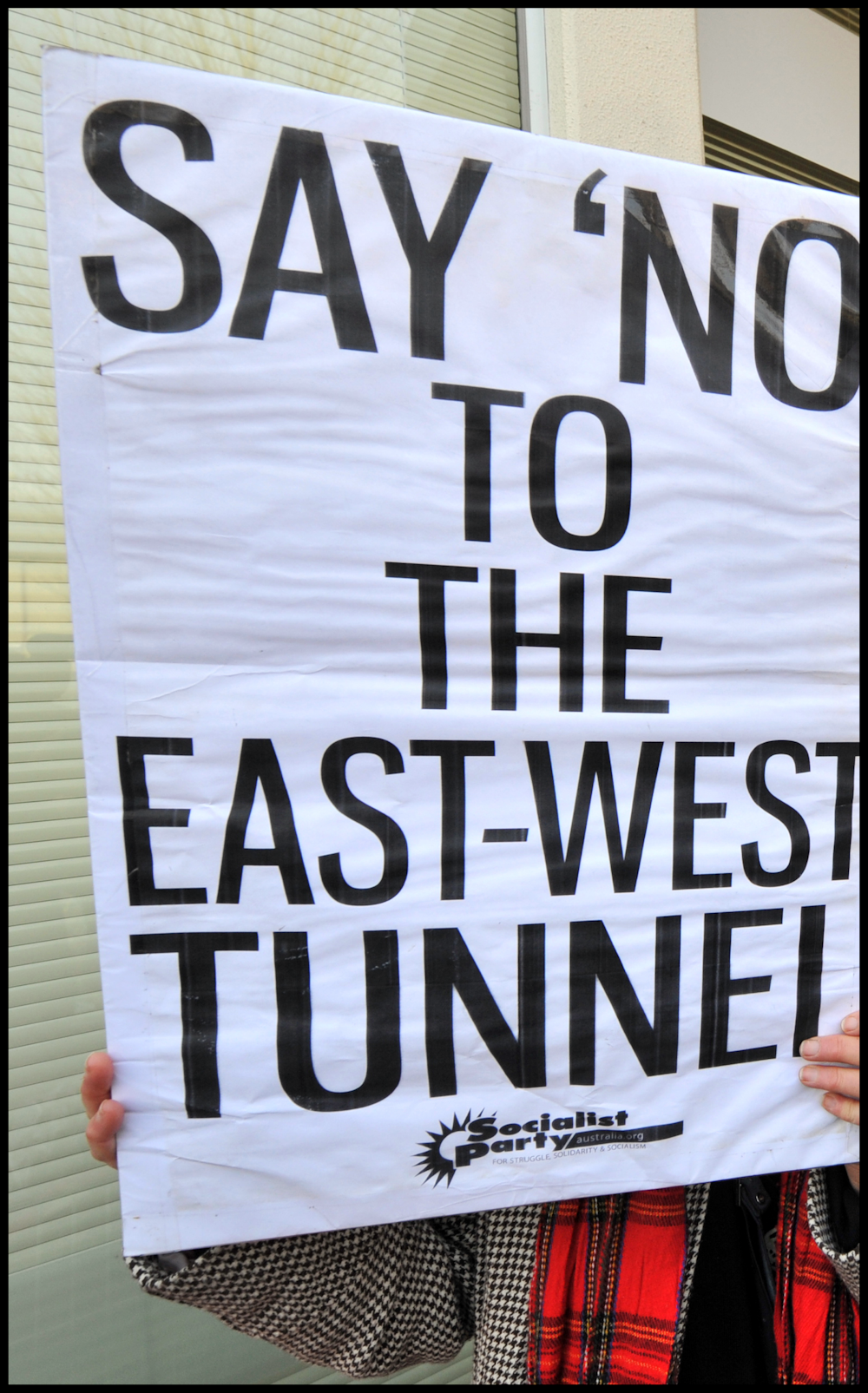
The 2014 Victorian election result rescued some modesty after the newly elected Dan Andrews abandoned the East-West Link, but the interplay between political needs and technical rationality has if anything gotten worse.
Andrews’s $200 billion Suburban Rail Loop was endorsed electorally at the 2018 and 2022 state elections despite not appearing in any formal metropolitan or statutory transport plans.
At the time of the 2022 federal election, it hadn’t been submitted to Infrastructure Australia for assessment. But the federal Labor opposition, now the government, committed $2.2 billion to it.
Victoria has since submitted the Suburban Rail Loop to Infrastructure Australia, but the assessment is unfinished. Yet it appears on the updated federal infrastructure funding list released by the minister today.
Is Infrastructure Australia independent enough to reject the Suburban Rail Loop if it fails its assessment criteria?
‘Not demonstrably merit-based’
The Suburban Rail Loop is not alone as an infrastructure project promoted well in advance of its assessment. In the leadup to the 2019 election, the Morrison government released proposals for car parks at suburban rail stations.
This scheme was never submitted to Infrastructure Australia and was later found by the Commonwealth Auditor General to be “not demonstrably merit-based”, a finding Labor categorised as “sports rorts on steroids”.


